Aluminum Fence Wind Ratings & Application Guide
Engineered Wind-Resistant Fence Performance for High-Wind & Coastal Environments
When specifying a wind-resistant fence for wind-exposed environments, performance is not optional—it's critical.
The SLEEKFENCE system is engineered as a fully integrated architectural fencing solution, designed to withstand demanding wind conditions across North America, including coastal regions, elevated structures, and hurricane-prone zones (HVHZ).
This guide provides a clear, specification-ready overview of wind ratings, installation conditions, and application limitations, enabling architects, designers, and contractors to confidently evaluate system suitability for high wind fence applications and identify the best fence for high winds across a range of project conditions.
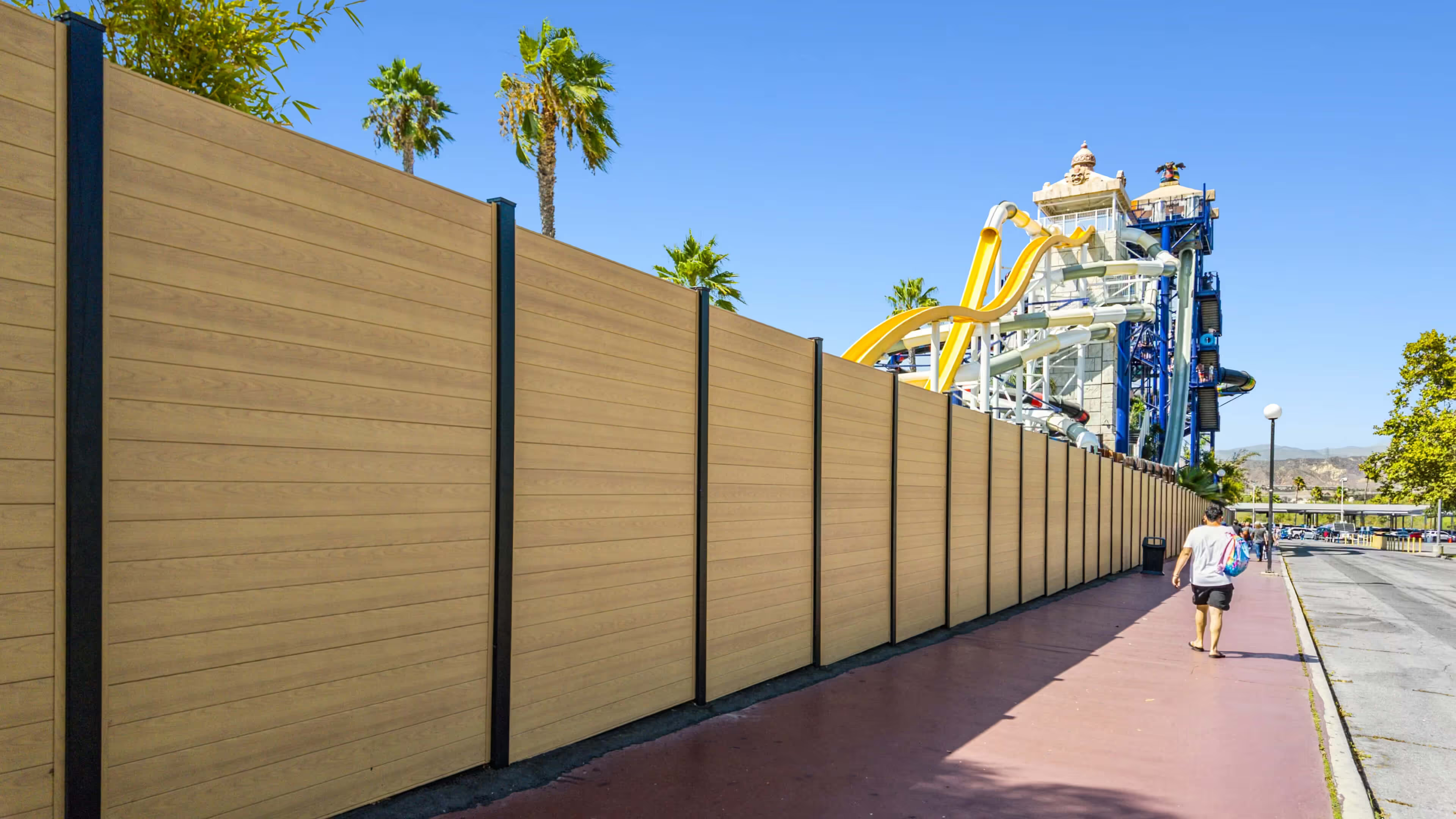
Project Application Charts, Disclaimers & Wind Ratings Guidelines
These are general installation guidelines; project-specific engineering is required.
• These structural calculations and wind load fence ratings are strictly based on SLEEKFENCE™ systems and may not be applied to outside or generic fencing systems.
• Wind force loading and fence design ratings are based on our max screw distances being adhered to when mounting panels to posts (see screw distances chart below), and it assumes posts are securely mounted/set in the ground.
• Dig & set post requirements assume that concrete footings are placed to the local frost line depth. Structural engineering is recommended on a per-project basis to determine the best footing design (width, depth, and cement type).
• Direct concrete mount requirements assume that posts are securely fastened to a structurally sufficient concrete host. Structural engineering is also recommended on a per-project basis to determine the best anchor size and type.
• Guard Rails, Balcony Railing, and Pool Fencing requirements may vary per application.
Online Table Notes
Information presented above shall be for general reference of SLEEKFENCE™ system fence wind ratings and does not constitute a site-specific project design.
Before project fabrication and installation, the fence system shall be reviewed on a site-specific basis, and include a certified Engineer's drawing.
Fence post calculations consider a 6′ 4″ O.C. Maximum Post Spacing. Greater wind speeds & design conditions may be achievable with shorter post spacing.
Existing host structure suitability for fence attachment shall be determined by the Structural Engineer on a site-specific basis.
Fences used as life-safety guardrails (Adjacent to dropoffs greater than 30″) and surrounding pools are subject to additional codes and requirements.
Frequently Asked Questions
Why do taller fences have lower wind ratings?
Because wind load increases exponentially with surface area. Taller, solid panels act like a sail, increasing pressure on posts and connections.
What does HVHZ mean, and why does it matter?
HVHZ (High Velocity Hurricane Zone) refers to regions—such as coastal Florida—where building codes require systems to withstand extreme wind forces and impact conditions. Fence systems in these areas must be carefully selected and engineered to meet stricter performance criteria.
Is this a hurricane-proof fence suitable for hurricane zones (HVHZ)?
No fence is fully hurricane-proof, but SLEEKFENCE™ systems can be engineered for hurricane zones with proper system selection. Screen systems and lower heights typically perform best in extreme wind conditions.
Do I need an engineer for my project?
Structural engineering is strongly recommended for all applications to validate footing design, anchoring, and compliance. Especially important when selecting fences over 6’ tall and for rooftop or hurricane zone applications.
What is the difference between in-ground and surface-mounted performance?
In-ground posts transfer loads into the earth through embedded concrete footings, resulting in higher wind resistance. Surface-mounted (baseplate) systems rely on anchors and the structural slab, which typically reduces allowable wind loads.
Are SLEEKFENCE systems compliant with building codes in the U.S. and Canada?
The system is designed to align with common North American code principles; however, compliance depends on site-specific conditions, local regulations, and engineering validation. Always confirm with the authority having jurisdiction (AHJ).
Can aluminum fencing be used for rooftop or elevated applications?
Yes, but these installations require careful engineering. Elevated conditions increase wind exposure, and anchoring must be designed to suit the structural substrate. Screen-style panels are typically recommended for improved wind performance.
How does panel design affect wind performance?
Solid (privacy) panels create higher wind loads due to increased surface area, while screen or slatted designs allow airflow to pass through, significantly improving wind resistance.
What factors most impact fence performance in high winds?
Key variables include:
- Fence height (critical variable)
- Panel type (privacy vs. screen)
- Post spacing
- Fastener spacing
- Installation method (in-ground vs. surface mount)
- Soil conditions and footing design
Do wind ratings account for gusts or sustained winds?
Wind ratings are typically based on standardized testing or calculations that simulate peak loads, which may include gust conditions depending on the methodology. Project engineers should verify how these values apply to local code requirements.
Is additional engineering required for permit approval?
In most cases, yes—especially for commercial, multi-family, or high-wind applications. Engineers will review wind loads, footing design, anchoring, and code compliance.
Can fence height or configuration be modified to meet higher wind requirements?
Yes. Reducing height, switching to a screen configuration, or adjusting post spacing can improve performance. These changes should be evaluated during the design phase.
How do frost conditions affect fence installation in Canada and northern climates?
Posts must be installed below the frost line to prevent heaving, which can compromise structural integrity and long-term performance. Footing depth should align with local geotechnical and code requirements.
What maintenance is required to maintain performance over time?
Aluminum systems are inherently corrosion-resistant, but periodic inspection of fasteners, anchors, and connections is recommended—especially in coastal or high-wind environments.
Can this system be used for pool fencing and guardrails?
Select configurations meet pool and guardrail requirements, depending on height, spacing, and installation method. Always verify against local codes and project-specific conditions.
What happens if installation guidelines are not followed?
Deviation from specified installation methods—such as improper fastener spacing or inadequate anchoring—can significantly reduce wind performance and may void warranties or engineering assumptions.
Let’s Discuss Your Project
From early planning through installation, our team provides clear technical guidance and coordinated project support.