Cedar Fencing for Commercial Projects: Where It Falls Short
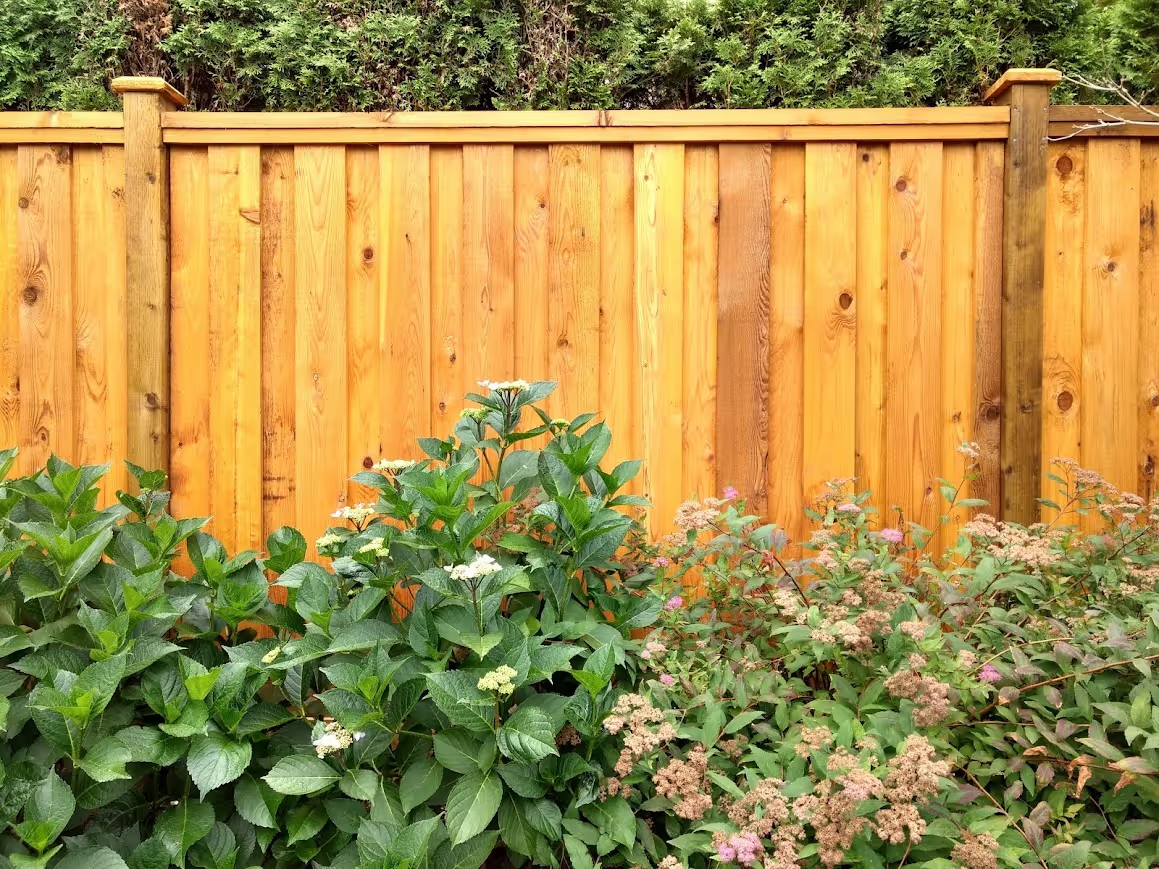
Cedar fencing has its place. It can look great when it’s new, and for certain residential applications where a natural aesthetic is the priority, it still makes sense. But when you start looking at commercial projects—especially higher-profile applications where wind load, structural performance, surface mounting, and long-term consistency matter—it becomes a very different conversation.
The key issue with cedar isn’t how it performs on day one. It’s how it performs over time.
Cedar is a natural material, which means it is constantly moving. It absorbs moisture, dries out, expands, and contracts with changing conditions. Over time, boards will warp, twist, cup, and shrink. That’s not a defect, that’s just how wood behaves. On a residential fence, this might be acceptable. On a commercial project where clean lines and consistency matter, it quickly becomes a problem.
At the same time, rot is unavoidable. Anywhere the wood is exposed to moisture, especially at the base of posts, at grade, or at cut ends—degradation starts to happen. Once it starts, it doesn’t stop. You can slow it down with maintenance, but you’re never eliminating it. Over time, you’re dealing with a fence that is not only changing visually but also breaking down structurally.
This is where cedar really falls apart from a commercial standpoint. A wood fence may meet engineering requirements at installation, but those requirements do not account for material decay. Every structural connection in a cedar fence—every screw, every fastener, every joint—is relying on the integrity of the wood. As the wood dries, cracks, softens, and deteriorates, those connections weaken.
Posts are the most critical failure point. Whether they are installed in soil or set in concrete, they are constantly exposed to moisture at the base. Over time, they lose strength where the loads are highest. Once that happens, the fence starts to lean, shift, and lose its structural integrity.
So, while a cedar fence might technically pass engineering at the start, it will not maintain that performance over time. On high-profile commercial projects, that creates real risk—because the fence is no longer doing what it was designed to do.
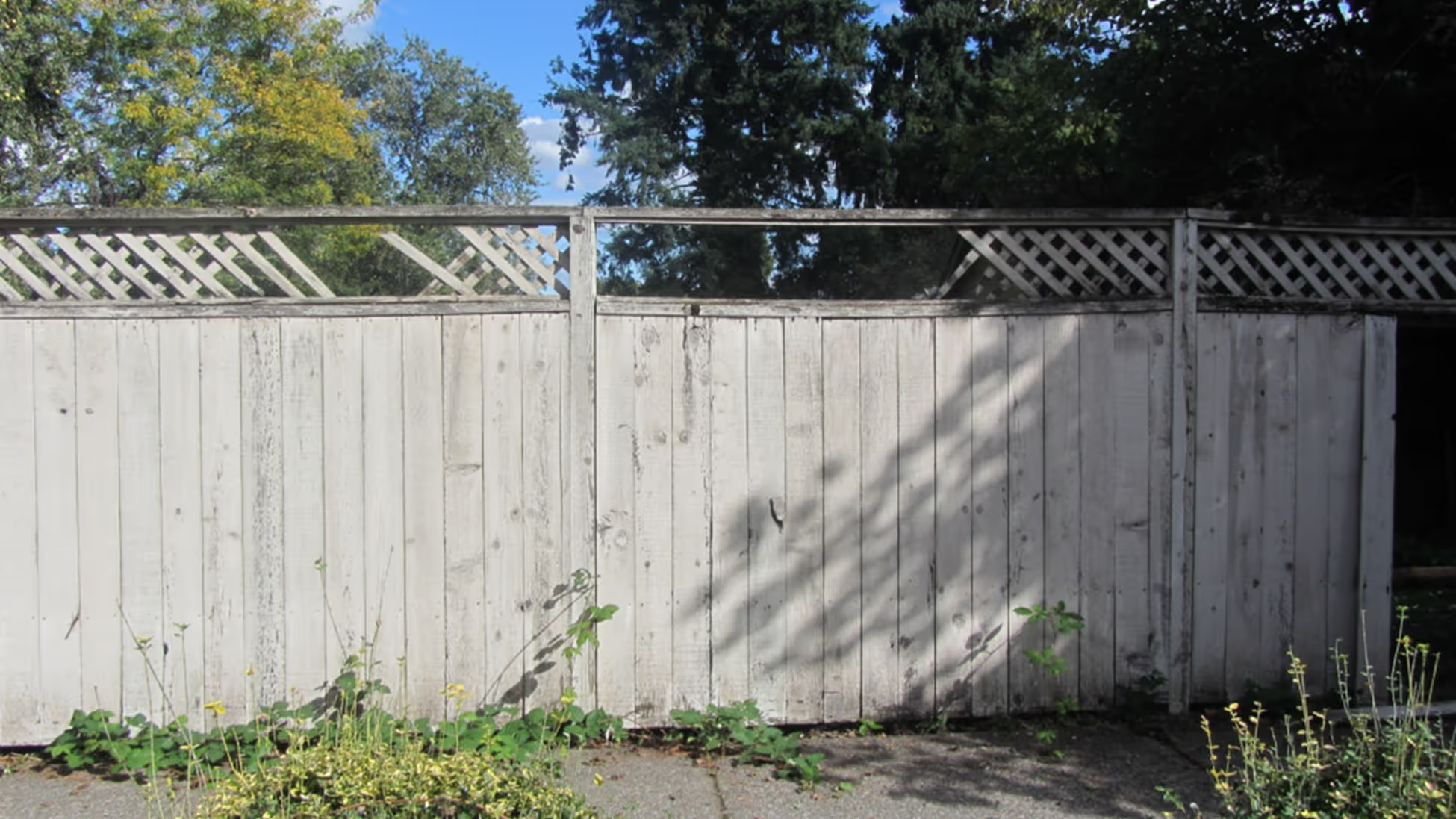
Then there’s maintenance. Cedar requires ongoing attention just to hold its condition. Cleaning, sealing, staining, replacing boards, tightening connections, this becomes a cycle that continues for the life of the fence. Even with that effort, the material continues to age. It fades, it grays, it becomes inconsistent across the run. After 15–20 years, most cedar fences no longer align with the original design intent, even if they are still standing.
Why Aluminum Is Typically Selected
When you step into commercial applications, especially projects that require engineering, higher wind loads, rooftop installations, or surface-mounted conditions, the material choice becomes much more straightforward.
Aluminum is a structural, engineered system. It doesn’t rely on a material that is going to degrade over time. It doesn’t absorb moisture, it doesn’t rot, and it doesn’t lose strength at its connection points. What you install is what remains in place.
With properly designed aluminum systems, you can engineer for wind loads, height, and specific project requirements, and have confidence that the system will continue to meet those requirements years down the line. That’s the key difference. You’re not just designing for day one—you’re designing for the life of the project.
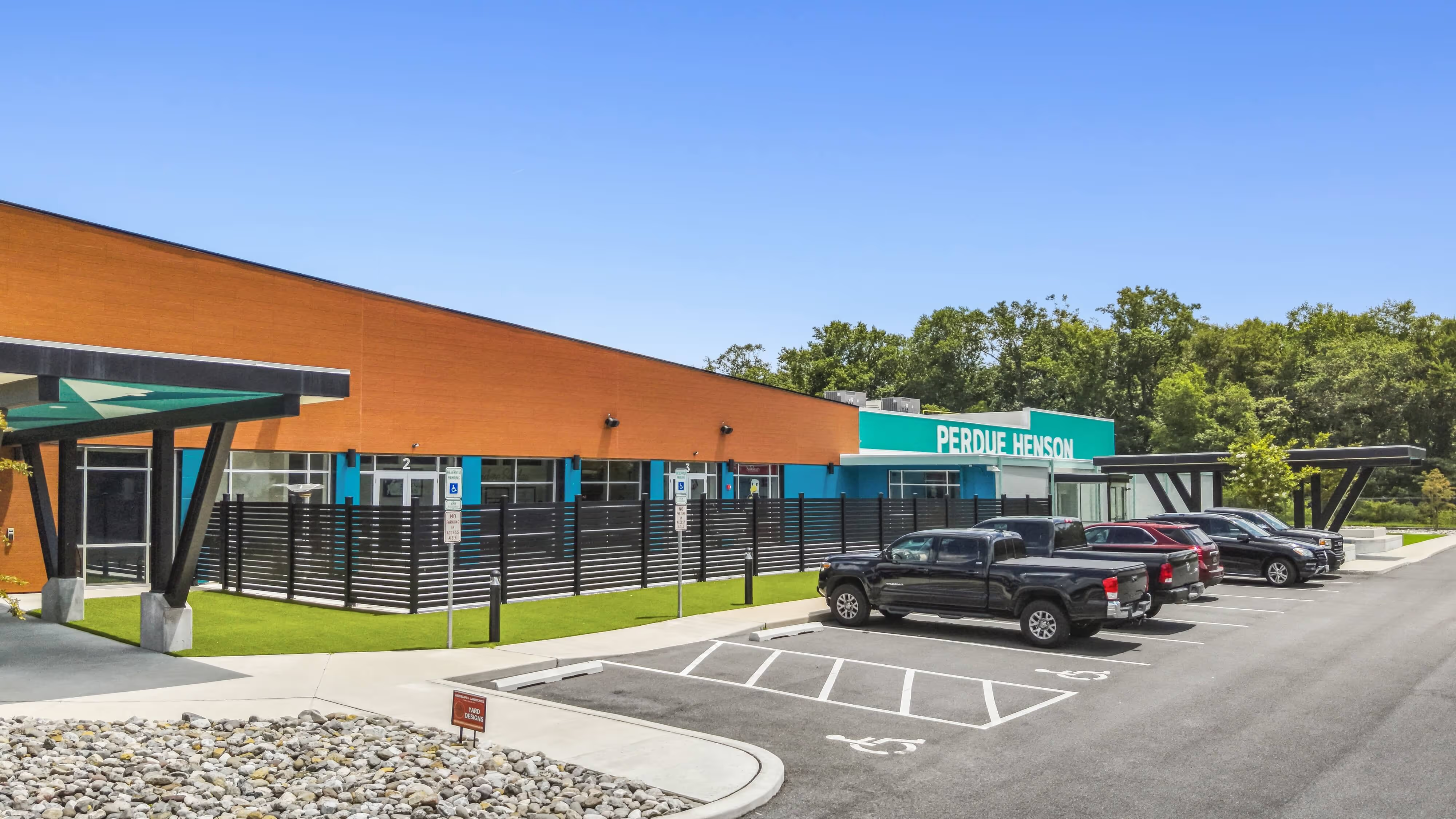
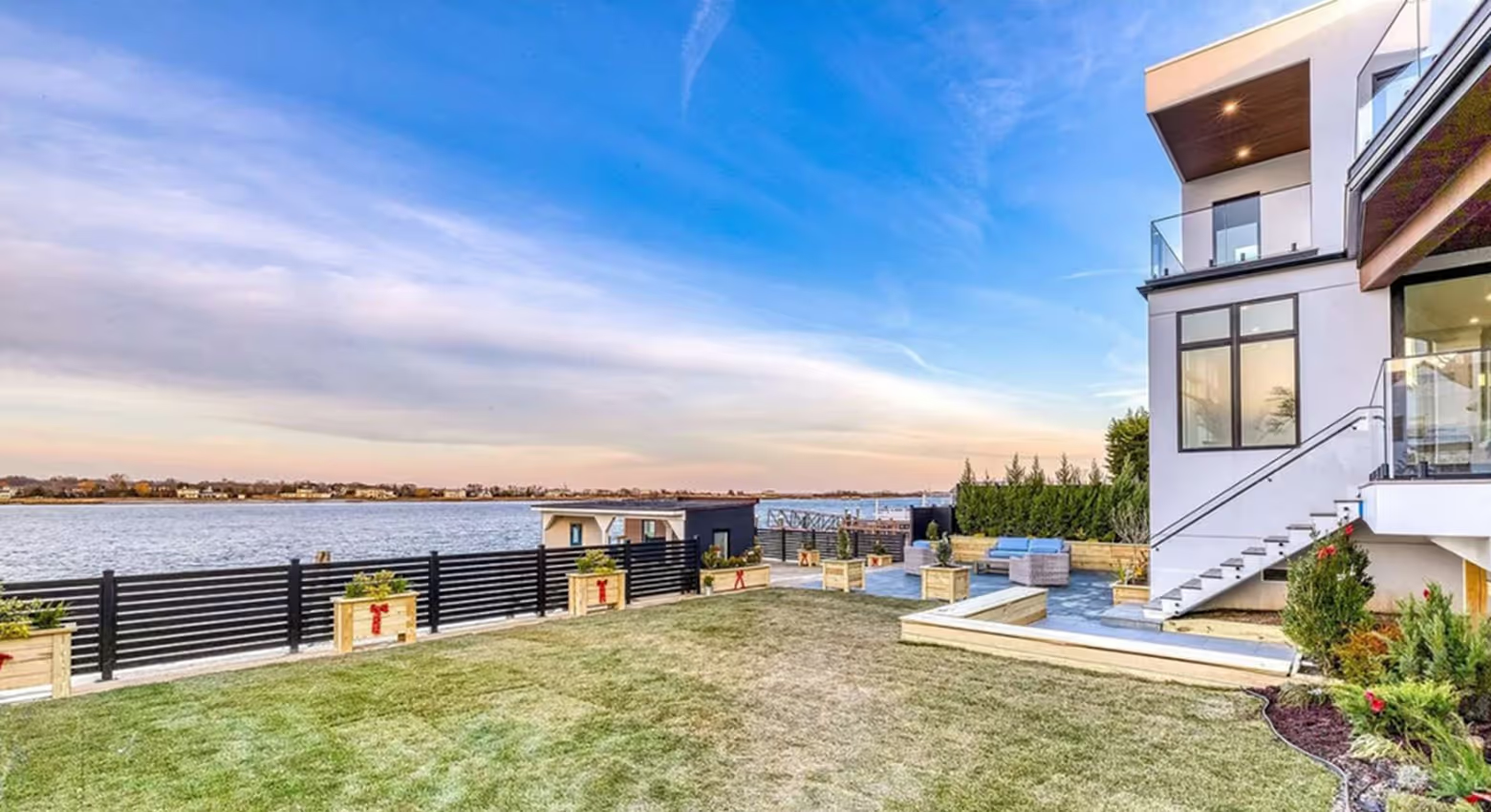
From a finish standpoint, powder-coated aluminum maintains its appearance without the maintenance cycle that comes with wood. There’s no staining, no sealing, no repainting. The system stays consistent visually, which matters on commercial projects where the fence is part of the architecture, not just a boundary.
It also opens up more design flexibility. You can achieve clean, modern profiles, consistent spacing, and a range of configurations—without being limited by the physical constraints of wood.
At the end of the day, cedar is really a niche solution. It works if you specifically want a natural wood look and the project does not have meaningful structural or long-term performance requirements. That typically limits it to certain residential applications.
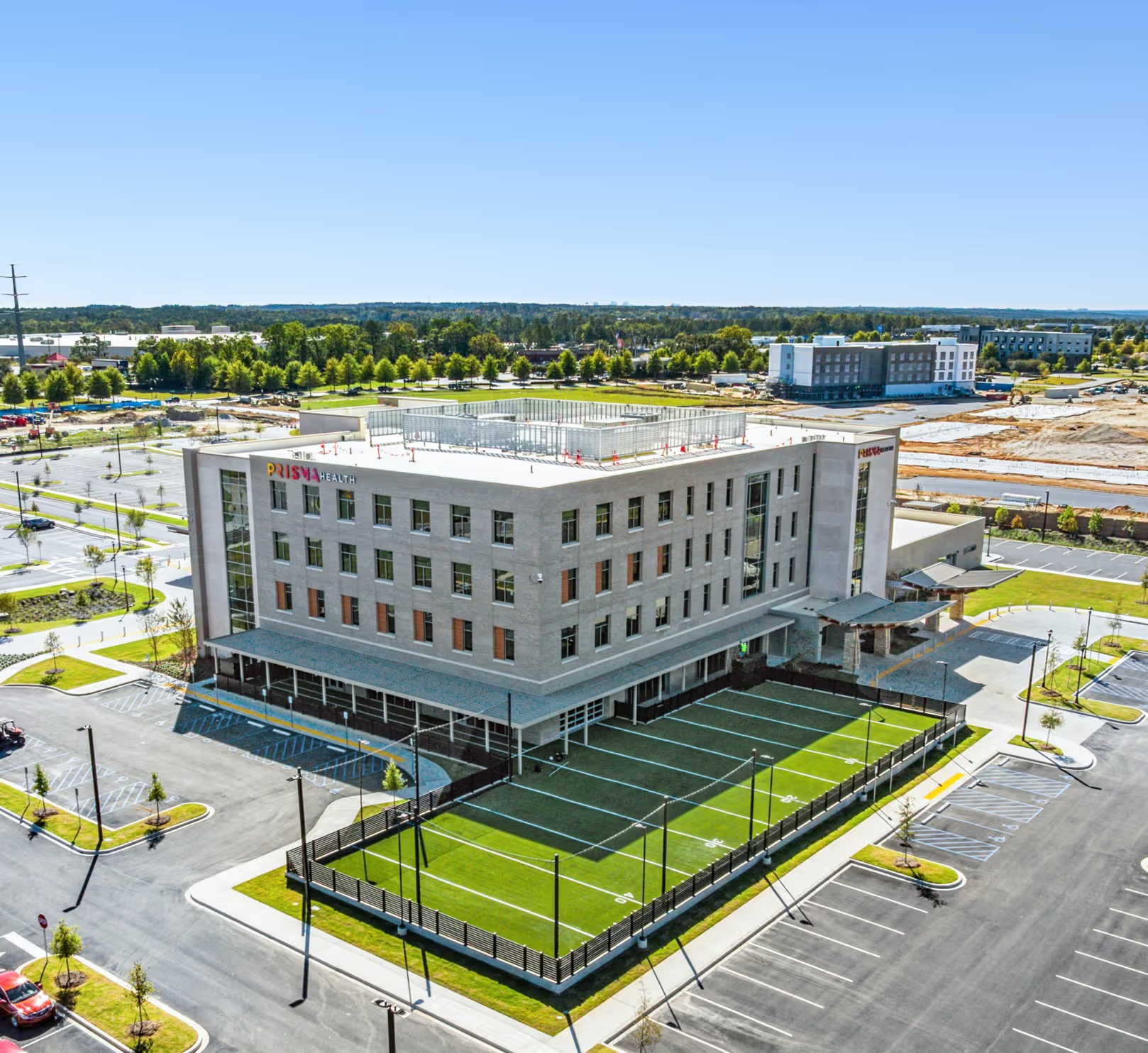
For commercial projects—especially anything high-profile, engineered, or expected to perform long-term—aluminum is the more reliable, more consistent, and ultimately safer choice.
If you’re planning a project and want to make sure the fence system is aligned with your site conditions, layout, and engineering requirements, contact us so our team can help review your plans and provide guidance early in the process.
Related Posts

Let’s Discuss Your Project
From early planning through installation, our team provides clear technical guidance and coordinated project support.