Concrete vs. Aluminum Fencing for Commercial Projects
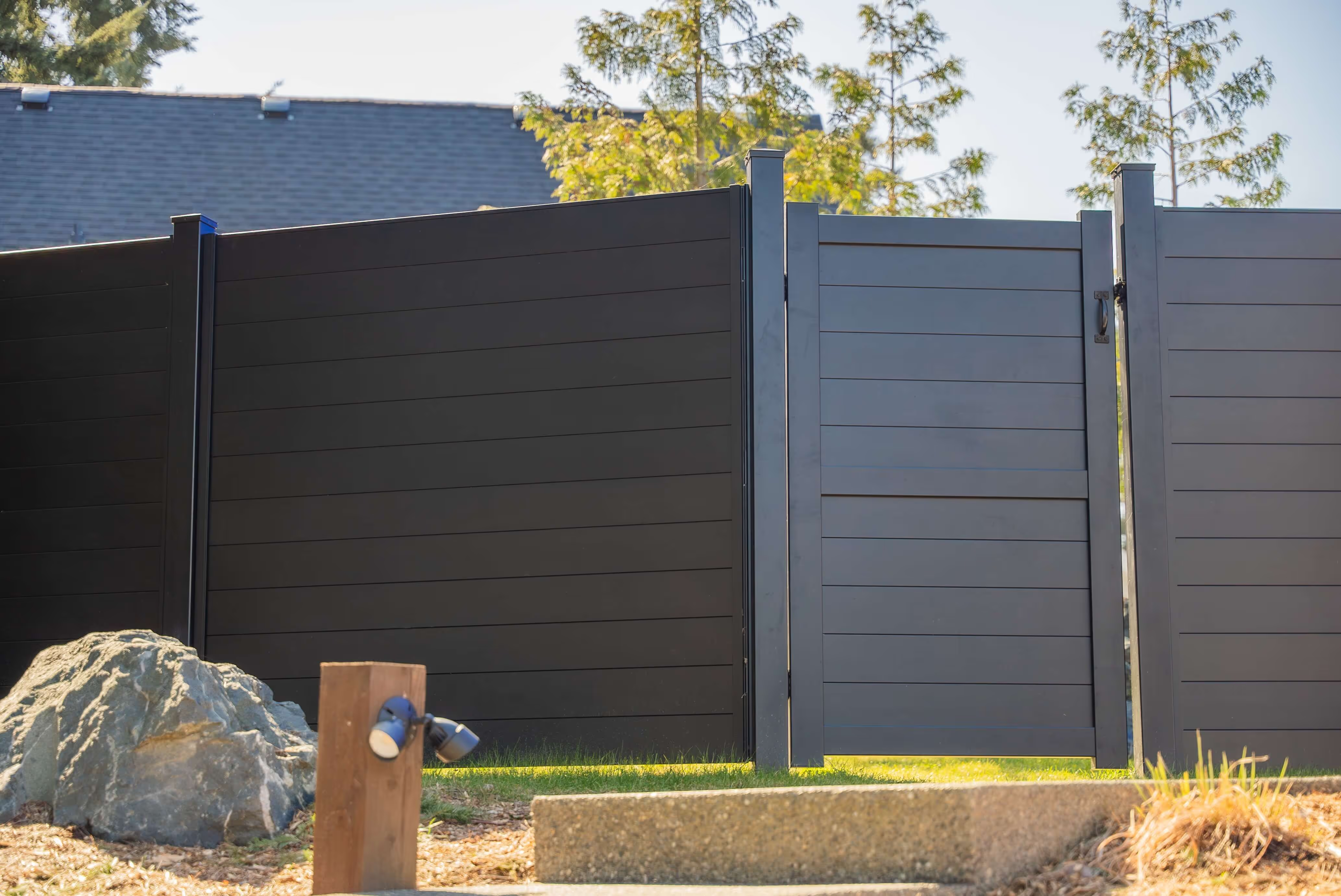
When concrete gets specified on commercial projects, it’s usually for one of two reasons—perceived durability or noise control. But once you get into constructability, cost, and long-term performance, it’s worth taking a closer look at how it compares to modern aluminum systems.
Concrete Fencing
Concrete isn’t one single system. There are multiple ways it shows up on commercial projects.
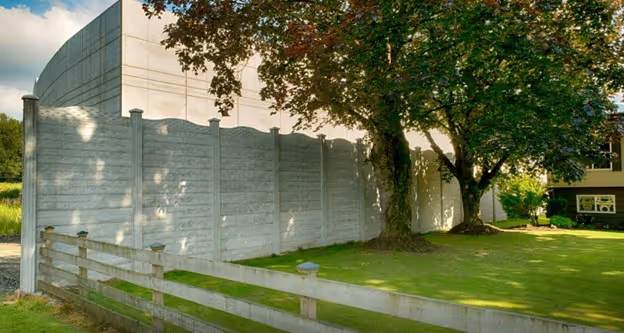
You’ll see precast concrete panels stacked between H-style posts, full poured-in-place walls, formed and poured structural walls, and cinder block (CMU) walls built up course by course. On top of that, there are aesthetic variations—wood grain textures, stone finishes, brick patterns—all trying to soften the look of raw concrete.
From a design standpoint, it can work. But there are some practical limitations.
First is cost. For privacy fencing applications, concrete is generally more expensive than aluminum. In a lot of cases, we’ve seen projects originally designed with CMU or precast walls get value-engineered into aluminum systems to bring costs back in line without giving up the intent of a solid privacy barrier.
Then there’s finishing. Concrete can’t be powder coated—it has to be painted if you want a consistent, finished look. If it’s left raw, it weathers unevenly and is prone to staining. Over time, especially in exposed conditions, you’ll see mold, mildew, and permanent discoloration. Pressure washing helps, but it also erodes the surface and changes the texture.
Once you paint it, you’ve introduced an ongoing maintenance cycle. Repainting becomes part of the lifecycle cost, and on large commercial runs, that adds up quickly.
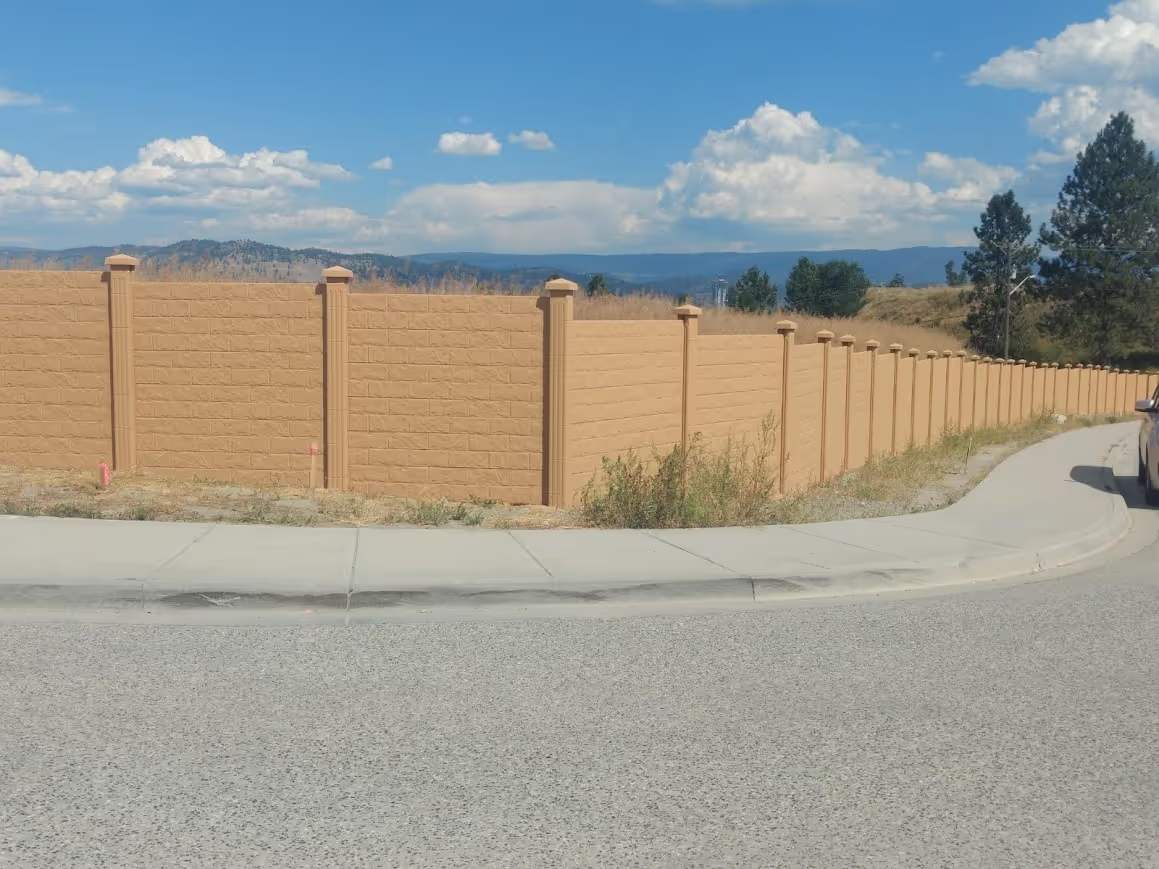
Concrete is also heavy and rigid in terms of construction. Precast systems come in fixed panel sizes, which limits flexibility on site. Adjustments are difficult. Poured walls require significant forming, coordination, and time. And because of the weight, you need substantial footings to support the system.
That weight also limits where concrete can be used. Rooftop applications or surface-mounted conditions are generally not practical without major structural considerations.
One area where concrete does have an advantage is sound. Because it’s dense and thick, it has a higher STC rating and performs better at blocking noise. For projects directly adjacent to highways or major noise sources, that can be a factor.
Another limitation is gates. You can’t build a functional gate out of concrete, so gates end up being fabricated from metal anyway. That creates a mismatch in materials and design unless the entire system is coordinated around it.
Aluminum Fencing:
Aluminum approaches the same problem from a completely different angle. It’s a modular, engineered system that’s easier to work with and more adaptable to commercial projects.
From a construction standpoint, aluminum is far more flexible. Systems are modular, so you can adjust lengths and layouts on site without being locked into fixed panel sizes. Installation is faster and requires significantly less structural support compared to concrete.
Weight is a big factor. Aluminum is much lighter, which means smaller footings and the ability to use it in applications where concrete simply doesn’t work—like rooftops or surface-mounted conditions.
Despite being lighter, it can still be engineered to perform. Solid aluminum privacy fencing systems can be designed to handle wind loads and reach heights of 10–12 feet while still meeting commercial requirements.
On the finish side, aluminum uses powder coating. That gives you a wide range of color options, including darker tones and woodgrain finishes, without introducing a repainting cycle. The finish holds up over time and avoids the staining and weathering issues you see with raw or painted concrete.
Maintenance stays low—no repainting, no surface degradation—and the appearance stays consistent.
From a noise standpoint, aluminum doesn’t match concrete’s density, but modern solid privacy systems with dual-wall or hollow slat designs still provide meaningful sound reduction. In many outdoor applications, especially where there’s some distance from the noise source, that level of reduction is sufficient for property owners.
Design-wise, aluminum keeps everything consistent. Panels, posts, and gates are all part of the same system, so you don’t end up mixing materials or compromising the look of the project.
Bottom Line
Concrete can make sense where maximum sound reduction is the primary goal or where a heavy, permanent wall is required.
But it comes with tradeoffs—higher cost, less flexibility, ongoing maintenance, and limited applications due to weight and construction requirements.
Aluminum gives you a more adaptable solution. It installs easier, works in more environments, maintains its appearance, and still delivers the privacy and performance most commercial projects need.
In many cases, it ends up being the more practical and better-looking solution, especially when the goal is to balance design, cost, and long-term performance.
If you’re working on a project with specific wind load, mounting, or design requirements, contact us so we can support with system recommendations and help ensure everything is aligned with engineering and specification needs.
Related Posts


Let’s Discuss Your Project
From early planning through installation, our team provides clear technical guidance and coordinated project support.