Why Architects Are Reconsidering Traditional Fence Materials
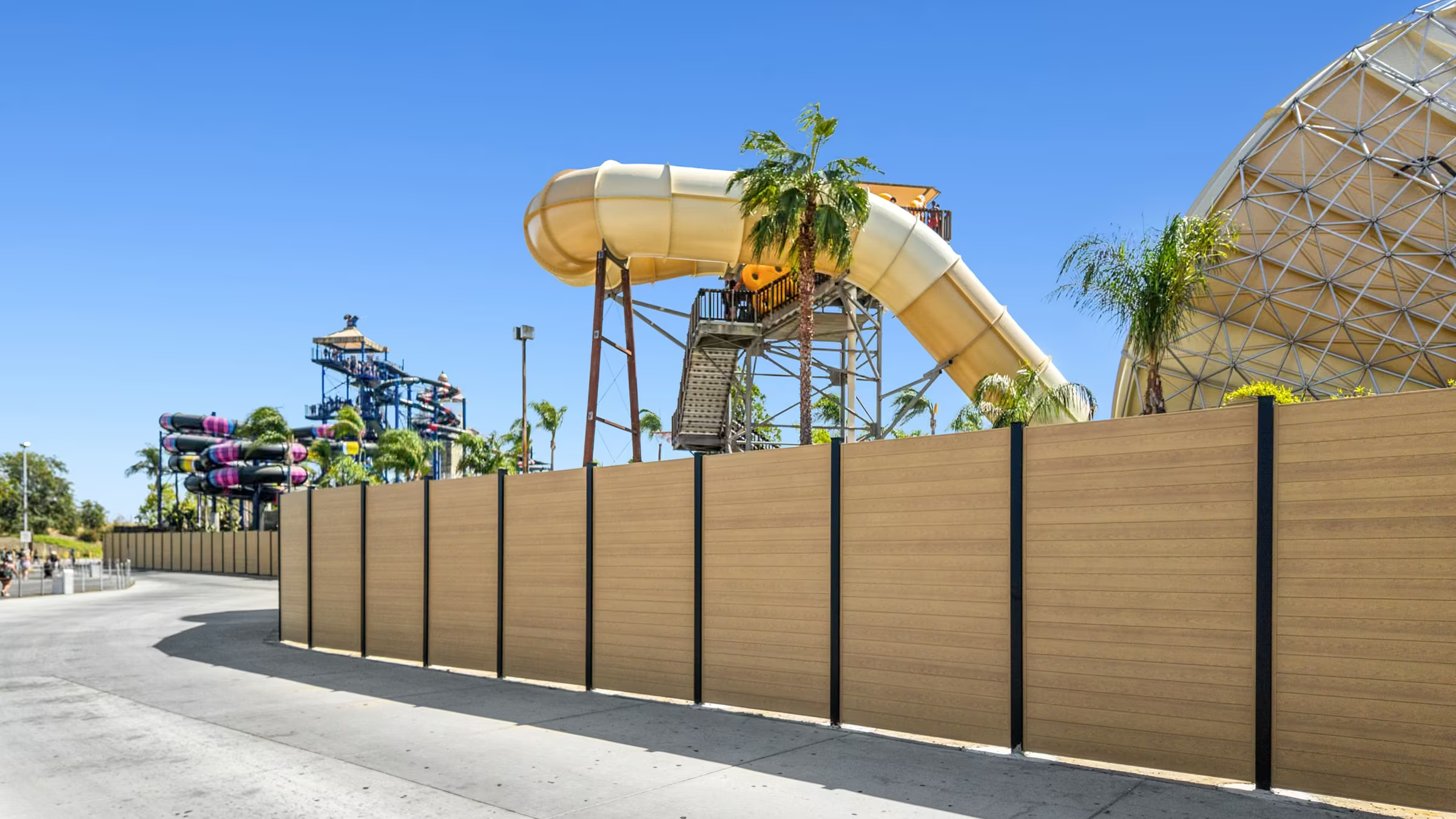
Fencing used to be treated as a simple boundary. Something to separate one space from another. That is changing. On high-end residential and commercial projects, fencing is now often part of the design itself. It affects how a property feels, how long it stays looking sharp, and whether the finished project feels current or dated.
That is why the aluminum fence vs vinyl conversation matters. It is not just a material comparison. It is a question of whether the fence supports the project, or quietly holds it back.
Why Architects Are Reconsidering Traditional Fence Materials
A good architect wants the project to stand out. Not in a loud way, but in a way that shows the design was thought through properly. The best projects don’t use default materials just because everyone else does. They use products that make the building, the site, and the owner look better over time.
Traditional fence materials all have limitations. Wood looks good at the start, but it moves, rots, twists, and needs constant upkeep. Vinyl is low maintenance, but it often looks like plastic and has limits with dark colors, heat, and long-term appearance. Steel can be strong, but if the coating gets compromised, rust becomes a real issue. Concrete is durable, but heavy, expensive, hard to modify, and often brings its own maintenance cycle once it needs paint.
That is why more designers are looking beyond traditional choices. The fence is no longer just a functional barrier. On the right project, it is part of the architecture.
Aluminum vs Vinyl Fence: The Basic Material Difference
Vinyl fencing is made from PVC. It is typically chosen because it is lower cost, lightweight, and low maintenance. For simple residential projects where budget is the main driver, it can make sense.
Aluminum fencing is different. It is a metal system, typically made from extruded aluminum profiles and finished with powder coating. A properly designed aluminum fence is not just a panel. It is a system of posts, panels, fasteners, gates, coatings, and reinforcement options that all work together.
That is the real difference. The aluminum vs vinyl fence decision should not be based only on what the materials look like on day one. It should be based on how the system performs over time.
Structural Performance and Longevity
Vinyl has some practical limits. It expands and contracts with temperature. Darker colors absorb more heat, which can create warping or deformation if the system is not designed for it. In colder climates, vinyl becomes less flexible and can be more vulnerable to cracking from impact.
Vinyl can also feel flexible and lightweight. In many systems, metal reinforcement is needed inside rails, posts, or gates just to make the product work properly. That is an important point. If the plastic fence needs hidden metal to perform, it tells you something about the limitation of the material.
Aluminum is already structural. It is rigid, does not rot, does not rust, and can be engineered for more demanding applications. With the right post system and reinforcements, aluminum fencing products can be designed for high wind loads, taller fence heights, rooftop conditions, and surface-mounted applications.
For commercial projects, that matters. A fence may pass an initial visual test, but the real question is whether it will still be straight, solid, and good-looking years later.
Aesthetics and Architectural Integration
Vinyl has a look. For some projects, that look is acceptable. But for high-end residential, commercial, or architect-led work, it can be limiting.
The biggest issue is that vinyl often reads as plastic. Even when the design is clean, the material can still feel suburban or builder-grade. It is also limited when it comes to darker colors, because dark vinyl absorbs heat and requires more careful formulation.
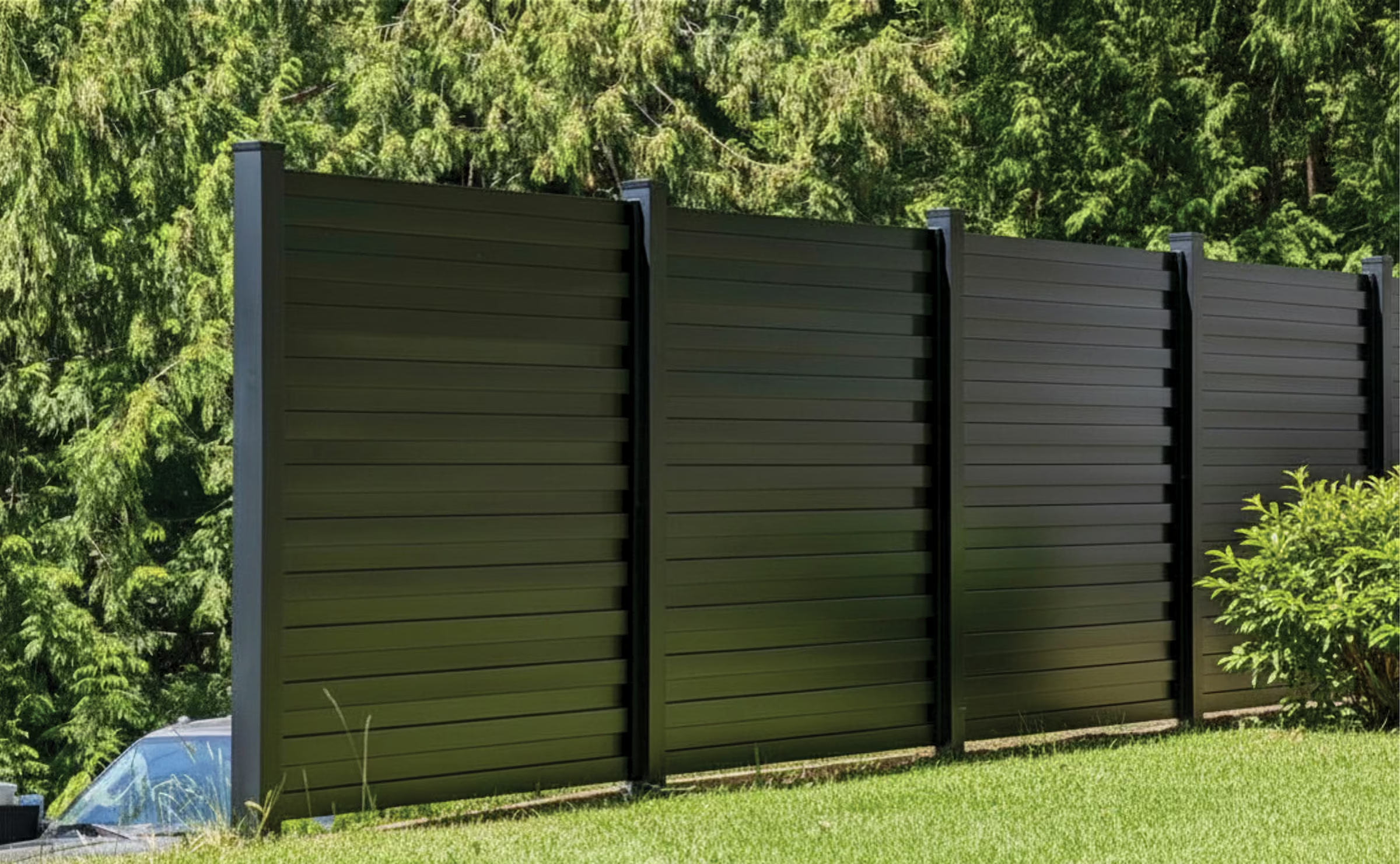
Aluminum gives architects more freedom. Dark colors are not a problem in the same way. Powder coating allows for rich blacks, soft whites, custom colors, and woodgrain finishes. The profiles can be clean, modern, and minimal. The finished result feels more intentional.
That is important because a fence can either disappear into the project in a good way, or it can drag the whole property down.
Is an Aluminum Fence Cheaper Than Vinyl? Evaluating True Cost
Usually, no. At installation, vinyl is typically cheaper.
For example, on a ground-level commercial privacy project with roughly 500 linear feet of 6' high fencing, vinyl may land around $37,000 to $41,000. Aluminum privacy fencing for a similar project may range from $80,000 to $100,000, depending on design, height, site conditions, and engineering requirements.
So if the only question is upfront cost, vinyl wins.
But that is the wrong question for a serious project.
The better question is whether the fence needs to look good in 10, 20, or 30 years. If the property is being built only to sell, maybe the long-term fence performance is not a priority. But if it is a long-term investment property, a high-end residence, an HOA, a commercial site, or a repeat-location brand, the lifecycle cost matters more than the first invoice.
Aluminum vs vinyl fence cost looks very different when you factor in replacement, repairs, aging, fading, and the cost of the property looking tired.
Maintenance and Lifecycle Considerations
Both aluminum and vinyl are considered low maintenance, but they do not age the same way.
Vinyl may only need cleaning in the beginning, but over time, it can fade, yellow, crack, warp, or age inconsistently. Some panels look different from others. Some sections take more sun. Some areas become brittle sooner. After 20 to 25 years, a vinyl fence may still be standing, but that does not mean it still looks good.
Aluminum requires periodic cleaning, but it does not have the same material breakdown issues. A properly powder-coated aluminum fence is designed to maintain its appearance for decades. It does not need staining, sealing, repainting, or hidden reinforcement to act like a structural material.
So when deciding between an aluminum or vinyl fence, the right answer depends on the project horizon. If it needs to be cheap today, vinyl may work. If it needs to look good for the lifetime of the property, aluminum is usually the better choice.
Fire, Wind, and Environmental Resilience
For commercial and high-end residential projects, environmental performance matters.
Vinyl is a plastic product. It can soften, deform, or melt under extreme heat. It also has more limitations in high-wind applications, especially with solid privacy systems where the fence acts like a sail.
Aluminum is non-combustible as a material, does not rust, and is much better suited to engineered wind-load applications. This becomes especially important on rooftops, exposed sites, coastal properties, and hurricane-prone regions.
But again, the key is not just the aluminum itself. The full system matters. Post size, reinforcement, mounting method, panel assembly, fastener spacing, and gate design all affect performance.
That is where a properly engineered aluminum fencing system separates itself from commodity materials.
When Vinyl Still Makes Sense
Vinyl does have a place.
It can make sense on budget-driven residential projects where the owner wants a light-colored fence, does not need a high-end look, and is not overly concerned with how the fence will age over several decades.
It can also work where the fence is purely functional and not a major part of the property’s appearance.
But for high-profile projects, the aluminum fence vs vinyl decision usually comes down to expectations. If the fence is part of the design, if the owner cares about long-term appearance, or if the site has real performance requirements, vinyl starts to feel like the compromise.
Why Forward-Thinking Architects are Choosing Aluminum
This is where the conversation gets less about fence material and more about design leadership.
A good architect or designer wants to bring the client a better solution. Something that feels current, performs properly, and makes the project stand apart.
Traditional materials do not always do that. Wood, vinyl, steel, and concrete each have their place, but they also come with familiar problems. Everyone has seen those fences age poorly. Everyone has seen warped vinyl, rotting wood, rusted steel, or painted concrete that needs constant upkeep.
Aluminum gives designers a cleaner path. It supports modern lines, dark finishes, privacy systems, open designs, gates, and engineered applications without the same long-term compromises.
If the goal is to lead the pack, the fence cannot feel like an afterthought.
FREQUENTLY ASKED QUESTIONS
Which material looks more modern?
Aluminum. Vinyl can look clean when new, but aluminum supports sharper lines, darker finishes, woodgrain options, and more architectural profiles. It fits modern residential and commercial design better.
Can aluminum fencing provide the same privacy as vinyl?
Yes. Aluminum privacy systems can provide full privacy with no line-of-sight gaps, while also offering better rigidity and long-term durability.
Does aluminum require more maintenance than vinyl?
No. Both are low maintenance, but aluminum is generally more stable over time. Vinyl may need more cleaning, and aging issues like fading, yellowing, cracking, or warping can lead to replacement sooner.
Is an aluminum fence cheaper than a vinyl fence?
Usually not at installation. Vinyl is generally cheaper upfront. Aluminum is the stronger long-term value when appearance, lifespan, structural performance, and reduced maintenance matter.
Which is better for commercial projects?
For most high-end commercial projects, aluminum is the better fit. It is more rigid, more design-flexible, and can be engineered for demanding site conditions.
Why is aluminum typically selected?
Vinyl works when the goal is low upfront cost and basic function.
Aluminum is selected when the fence needs to be part of the project, not just around it. It gives architects, developers, and high-end property owners a better long-term solution - cleaner design, stronger performance, better finish options, and a fence that can still look right decades later.
If you are working on a project where appearance, longevity, or engineering requirements matter, our team can help review the application and recommend the right aluminum fencing system for the site.
Related Posts
Let’s Discuss Your Project
From early planning through installation, our team provides clear technical guidance and coordinated project support.