Vinyl vs. Aluminum Fencing for Commercial Projects
When we’re looking at fencing for commercial projects, the real question isn’t just upfront cost—it’s how the material performs over time, how it looks in 10–20 years, and whether it actually fits the design intent.
Vinyl and aluminum get compared a lot. They’re not really in the same category once you dig into it.
Vinyl Fencing:
Vinyl (PVC) fencing is typically chosen in residential applications because it’s lower cost and marketed as low maintenance. That’s true to a point—but there are some real limitations, especially on commercial work.
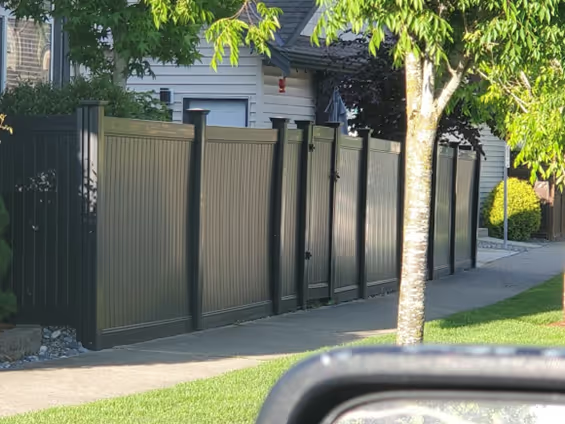
First is heat. Vinyl is a PVC product, which means it naturally expands and contracts with temperature changes. Darker colors absorb more heat, so they put more stress on the material. Manufacturers do use additives and UV technology to improve performance, but darker vinyl still requires more care in formulation and system design than lighter colors. As per the image below, the panels are visibly bowing between posts — that’s expansion from heat with nowhere to go.
Second is durability. In colder weather, vinyl becomes less flexible. That means it is more susceptible to cracking when hit or stressed, especially from impact. On commercial projects, where fencing is more exposed to golf balls, carts, debris, equipment, or general abuse, that matters. Vinyl is also not truly structural on its own. Many privacy systems rely on reinforcement, especially in posts, rails, and gates. That becomes even more important where wind loads are higher or conditions are more demanding. Some vinyl systems can be engineered for wind, but performance depends heavily on reinforcement, span, and installation details.
Then there’s long-term appearance. Vinyl tends to fade over time, and not always evenly. You’ll see yellowing, inconsistent color between panels, and general aging that makes the fence look tired. After 20–25 years, most vinyl fences don’t look great if appearance matters.
Maintenance is still relatively low, mostly cleaning, but you are still left with the look and feel of plastic. For more design-driven commercial work, that can be a limitation. And from an environmental standpoint, old vinyl fencing is difficult to recycle and often ends up as waste.
As a rough benchmark, a 6' high privacy vinyl fence over about 500 linear feet will often land around the $37,000 to $41,000 range installed, depending on layout and site conditions.
Aluminum Fencing:
Aluminum is a different category. It’s a structural material, and it behaves like one.
First, performance. Aluminum can handle significantly higher wind loads, which is why it’s used on commercial applications like rooftops or taller privacy walls. You can build 10'–12' high systems and still meet engineering requirements. That’s not realistic with vinyl.
It’s also rigid. Aluminum systems hold their shape—no flexing, no “floppy” panels. What you install is what stays in place.
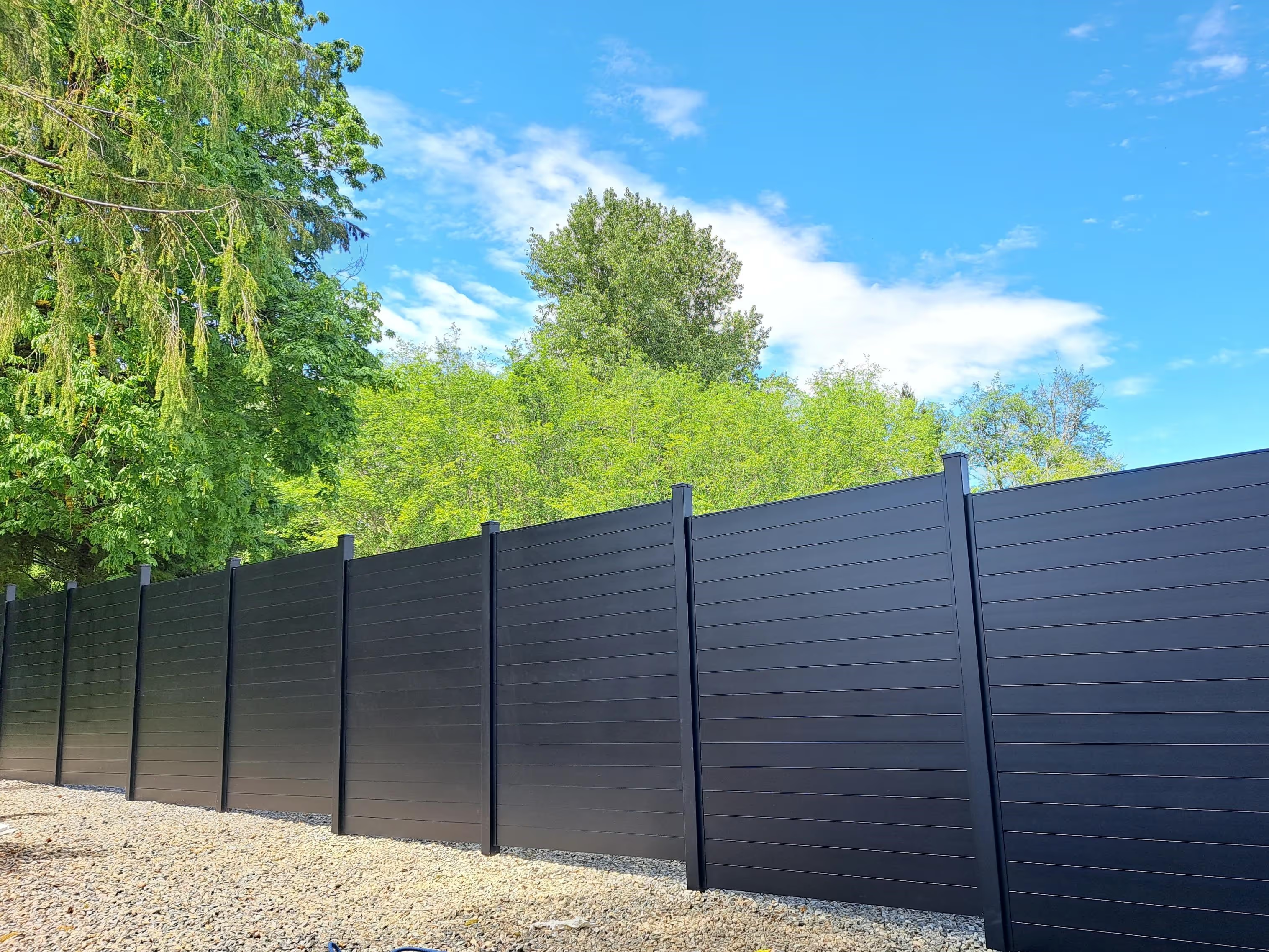
On the finish side, aluminum uses powder coating. That opens up a much wider range of color options, including darker tones and woodgrain finishes, without the performance issues vinyl has. Black, charcoal, bronze—no problem. And the finish holds up over time without the same fading or yellowing.
From a design standpoint, aluminum fits high profile commercial work better. Clean lines, horizontal slats, consistent profiles—it actually supports the architecture instead of working against it.
It’s also inherently structural. There’s no need to reinforce it with hidden steel components like vinyl systems—aluminum already does the job.
From a sustainability standpoint, aluminum is fully recyclable. If a site changes in the future, the material retains value. Vinyl doesn’t—most of it ends up as waste.
And then there’s lifespan. Aluminum is typically chosen by property owners who want something that still looks good decades later. A properly finished aluminum fence can perform for 50+ years. By comparison, vinyl often needs replacement around the 20–25 year mark if you care about appearance.
Cost reflects that difference. For a similar 500 linear foot commercial project at 6' high privacy, aluminum will typically be in the $80K–$100K range installed. Higher upfront—but it’s built to last.
Why Aluminum Is Typically Selected on Commercial Projects
Vinyl works when budget is the main driver and expectations are lower. It can make sense for lighter-duty applications where the goal is simply to create a boundary at the lowest upfront cost.
Aluminum makes more sense when the fence is part of the project, not just around it. If the design matters, if darker colors are required, if the site is exposed, or if the owner wants something that still looks right decades from now, aluminum is usually the better choice.
On most commercial projects, it ends up being the more durable, more flexible, and more architecturally appropriate long-term solution.
If you’re working on a project with specific wind load, mounting, or design requirements, contact us so we can support with system recommendations and help ensure everything is aligned with engineering and specification needs.
Related Posts


Let’s Discuss Your Project
From early planning through installation, our team provides clear technical guidance and coordinated project support.