Fencing on Sloped Terrain: Design Methods That Actually Work on Real Projects
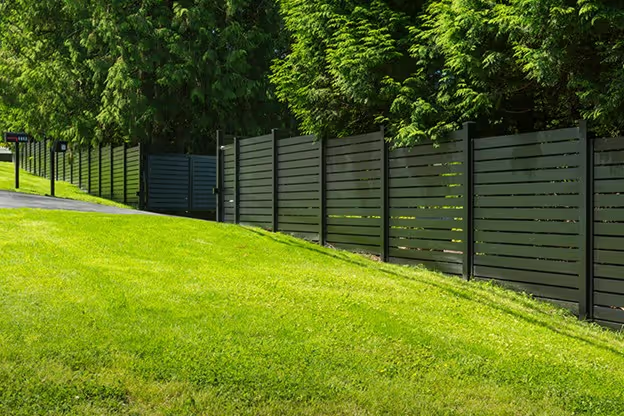
Sloped terrain is where most fence systems start to fall apart.
What looks clean on a flat plan quickly becomes awkward in the field. Gaps under panels, inconsistent lines, or a fence that fights the grade instead of working with it. This is especially noticeable on commercial projects and high-end residential builds where the expectation is a clean, intentional finish.
The reality is simple - if the fence system isn’t designed to accommodate slope, the installer is forced to improvise.
That’s where most problems start.
The three ways to handle a slope
There are only a few real ways to deal with grade changes. The right approach depends on how steep the slope is and what the design intent is.
- Stair-stepped (stepped panels)
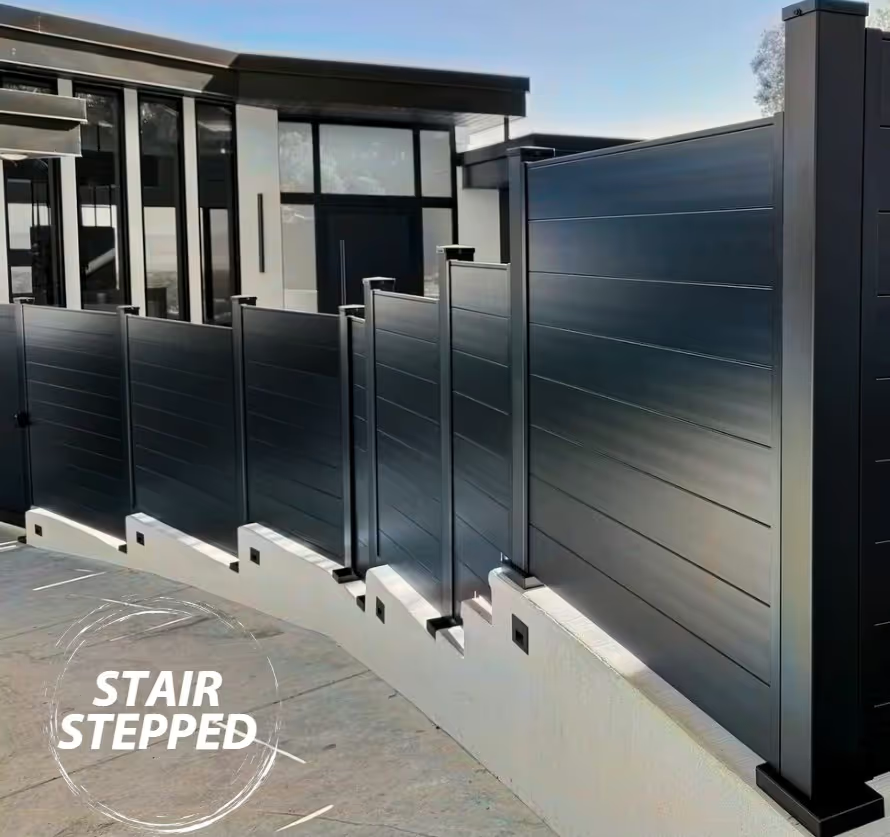
This is the most common method. Panels remain level, and each section steps down as the grade drops.
It works well for moderate slopes and is simple to plan, but visually it creates a staircase effect. On some projects, that’s acceptable. On higher-end applications, it can look segmented and less refined.
- Angled bottom with level top
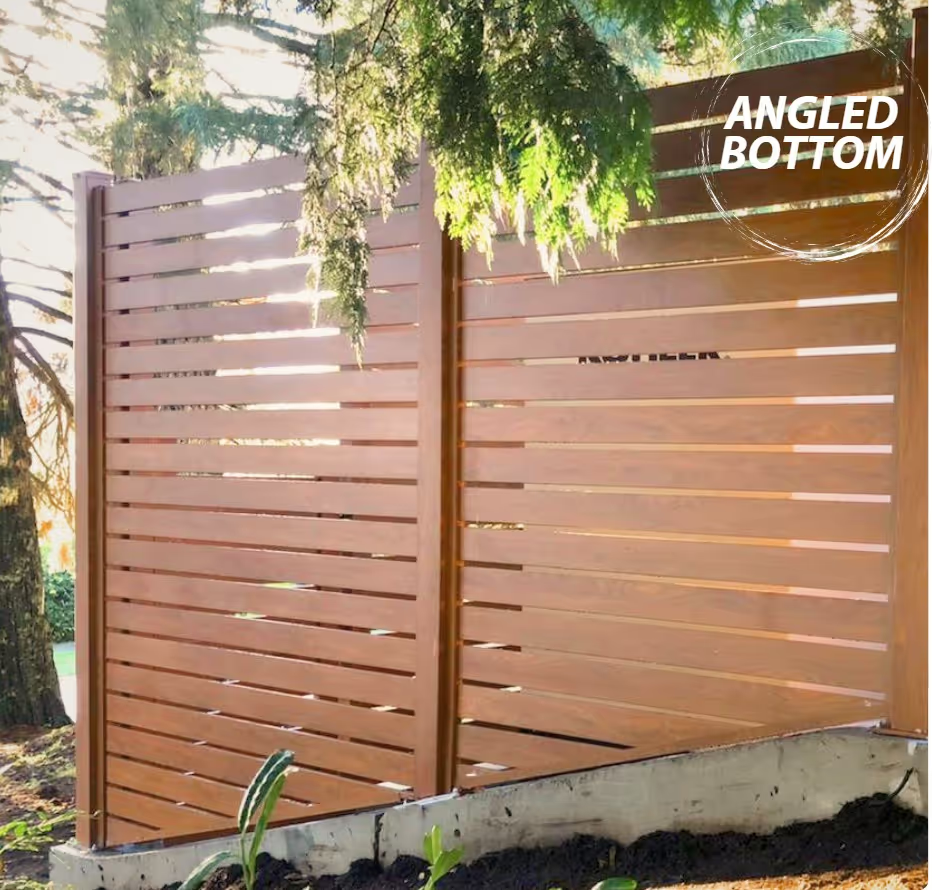
This approach keeps the top line of the fence consistent while trimming the bottom of the panel to follow the slope.
It produces a much cleaner visual result, especially on privacy fencing, because the top line stays straight while the fence adapts to the terrain below.
This requires a system that can be modified cleanly without compromising structure or finish.
- Racked fence (follows the slope)
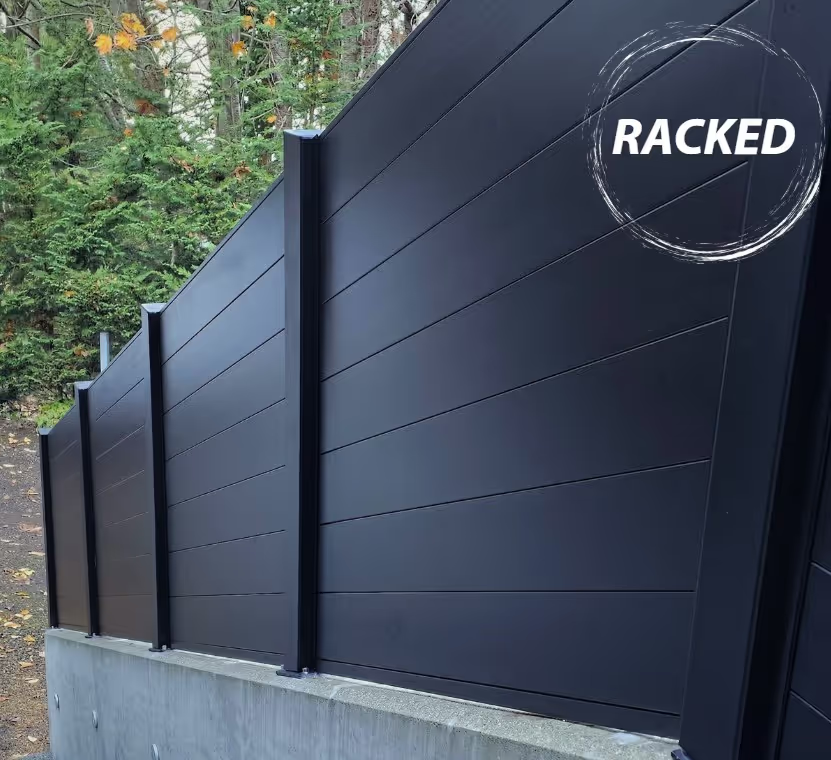
With a racked system, the entire panel follows the slope, maintaining consistent spacing while angling with the grade. This requires assembling each fence panel onsite.
Why most fence systems struggle on slopes
The issue isn’t the slope itself - it’s how the system is built.
Many fence products are rigid by design. Panels are fixed, connections are limited, and any adjustment requires cutting, welding, or field modification that affects both appearance and performance.
That’s where you start to see:
- uneven gaps under the fence
- inconsistent panel alignment
- exposed or unfinished cut edges
- compromised structural integrity
On commercial projects, that level of inconsistency stands out quickly.
Where a properly designed system makes the difference
The ability to handle slope properly comes down to how the fence is designed at a system level.
With a mechanically assembled aluminum system, panels can be modified on-site without breaking the integrity of the design.
For example:
- panels can be cut on an angle to match grade
- side channels can be reapplied to cover and protect cut edges
- connections remain consistent because the system is fastened, not welded
This allows the fence to adapt to the terrain while still looking intentional and finished.
One of the advantages of horizontal slat designs is that they lend themselves well to this type of adjustment. The proportions remain clean, and modifications can be made without drawing attention to them.
There are also more advanced applications. On projects with stairs or tiered transitions, panels can be notched to follow step patterns while still maintaining structural integrity.
This is not something most systems can accommodate cleanly.
Why this matters on real projects
On paper, slope looks like a minor detail. In practice, it’s one of the biggest visual and installation challenges on a project.
If it’s not handled properly:
- the fence looks inconsistent
- installation time increases
- field fixes introduce long-term issues
On larger projects, those small inconsistencies repeat over hundreds of feet and become very noticeable.
That’s why the ability to adapt cleanly to terrain is not just a design feature - it’s a system requirement.
Why aluminum fencing systems are typically selected for sloped applications
When the goal is a clean, long-lasting fence on uneven terrain, material and system design both matter.
Wood can be adjusted, but it introduces long-term maintenance and inconsistency. Steel systems are often too rigid or require field fabrication to adapt properly.
A well-designed aluminum fence system allows for:
- clean on-site adjustments
- consistent finishes even after modification
- long-term durability without maintenance concerns
Combined with a system that is designed to be configurable, this makes it possible to handle virtually any slope condition without compromising appearance or performance.
Bringing it all together
There’s no single way to handle a sloped yard. The right approach depends on the terrain, the design intent, and the system you’re working with.
The key is choosing a system that allows you to adapt without improvising.
Because once installation starts, the slope isn’t optional. The only question is whether the fence is designed to handle it properly.
If your project involves slopes, elevation changes, or challenging site conditions, we can help determine the best approach and ensure the system is configured properly before installation begins.
Related Posts


Let’s Discuss Your Project
From early planning through installation, our team provides clear technical guidance and coordinated project support.