Best Fence for Extreme Weather (Wind, Storms, and High-Exposure Conditions)
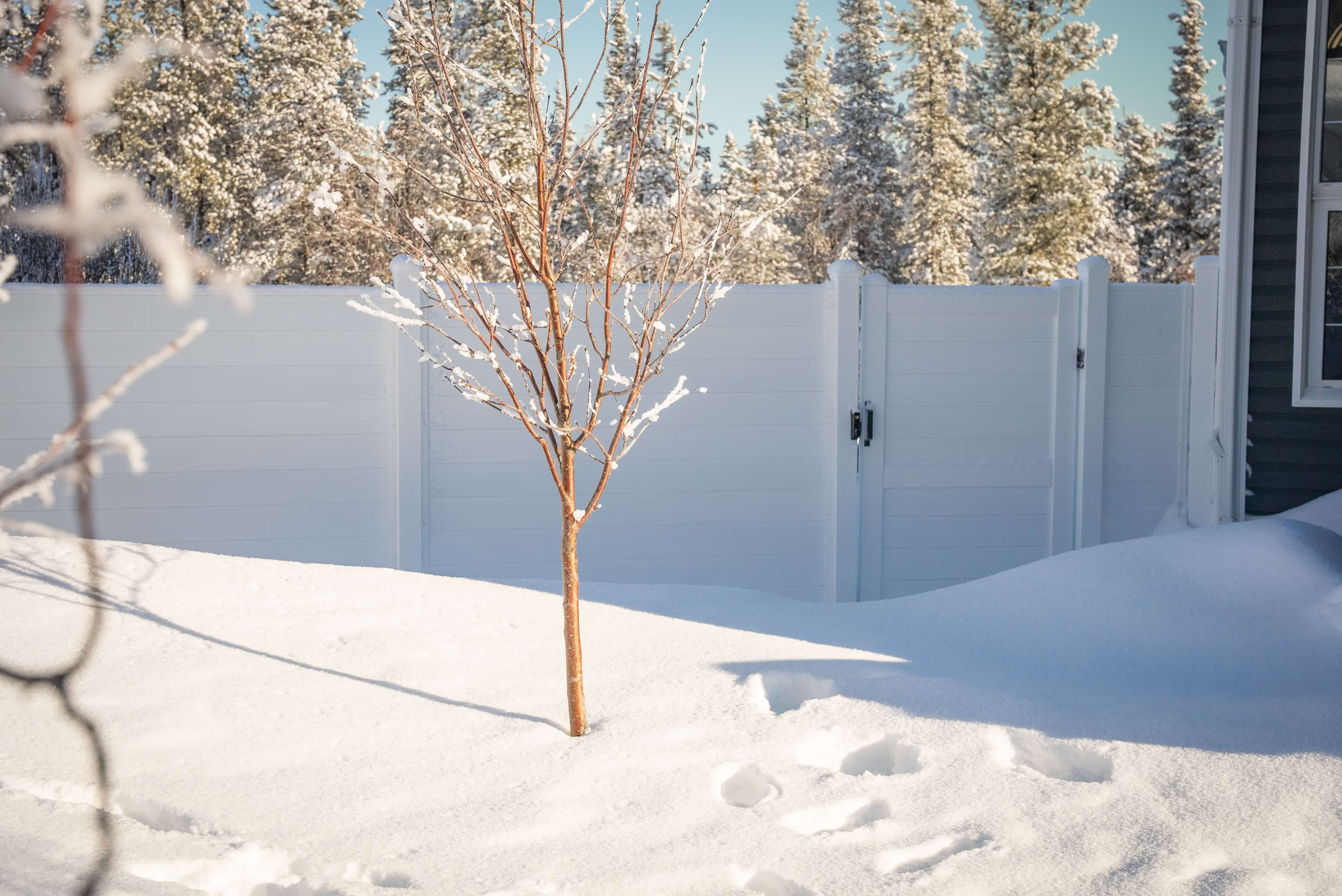
Extreme weather doesn’t usually fail a fence in one clean moment. In high-wind and exposed environments, failure is cumulative—wind loading, water saturation, temperature swings, and impact all working the system from different angles.
A lot of installations are designed around a single concern—privacy, aesthetics, maybe even wind—but real-world exposure is layered. A storm brings wind and rain. Hurricanes add debris and uplift. Hail introduces impact and snow drifts and ice add weight. Each condition tests a different part of the system.
Wind is typically the starting point. It applies constant pressure, but more importantly, it repeats. That repetition is what loosens fasteners, racks panels, and exposes weak connections. Systems that allow a bit of airflow—rather than stopping it entirely—tend to reduce that peak stress and move more predictably under load.
Rain brings a different challenge. It’s less about force and more about persistence. Water finds its way into joints, around fasteners, and into the ground supporting the posts. Over time, that leads to swelling, corrosion, or soil movement—depending on the material and install method. Drainage and spacing start to matter here. Even small gaps that allow water to pass through instead of collect can reduce long-term wear.
In heavier events—tropical storms or hurricanes—you start combining forces. Sustained wind, pressure changes, and flying debris all come into play. At that point, rigidity and connection integrity become critical. Panels can’t be flexing independently, and connections can’t rely on friction alone. The system has to behave as one piece, distributing load rather than concentrating it.
Then there’s impact and temperature. Hail introduces sudden, localized force. Materials that are brittle or already stressed tend to show it quickly. Temperature swings—especially in exposed regions—cause expansion and contraction cycles that loosen connections and distort less stable materials over time.
This is where material choice starts to separate outcomes. Wood moves, absorbs moisture, and gradually loses consistency. Steel can perform well structurally but becomes vulnerable as coatings wear and corrosion sets in. Extruded aluminum behaves differently—it’s stable, corrosion-resistant, and allows structural shape to be built directly into the profile. That consistency matters when conditions are constantly changing.
What often decides performance, though, is how everything is put together. Extreme weather amplifies movement. Systems that depend on clips or light engagement points tend to loosen as those cycles repeat. Mechanically fastened assemblies—where each component is positively secured—hold alignment and structural integrity longer because movement is controlled, not absorbed at a single weak point.
By the time you step back and look at what actually works across these conditions, a pattern shows up:
- Some level of airflow, so wind pressure doesn’t spike
- Spacing and drainage, so water doesn’t sit and degrade the system
- Rigid, consistent materials that don’t shift unpredictably
- Mechanical connections that stay locked under repeated stress
That combination is why modular aluminum systems have been gaining traction in more demanding environments. When the components are fully extruded, mechanically fastened, and designed to work together, the fence doesn’t just check one box—it performs across conditions. Wind is managed, water moves through, and the structure stays aligned even as loads change.
Extreme weather isn’t an outlier anymore in a lot of regions—it’s part of the baseline. Designing for it upfront usually means fewer issues later, and a fence that still performs the way it was intended to after seasons of real exposure.
If you’re working on a project with specific wind load, mounting, or design requirements, contact us so we can support with system recommendations and help ensure everything is aligned with engineering and specification needs.
Related Posts

Let’s Discuss Your Project
From early planning through installation, our team provides clear technical guidance and coordinated project support.