Chain Link vs. Aluminum Fencing for Commercial Projects
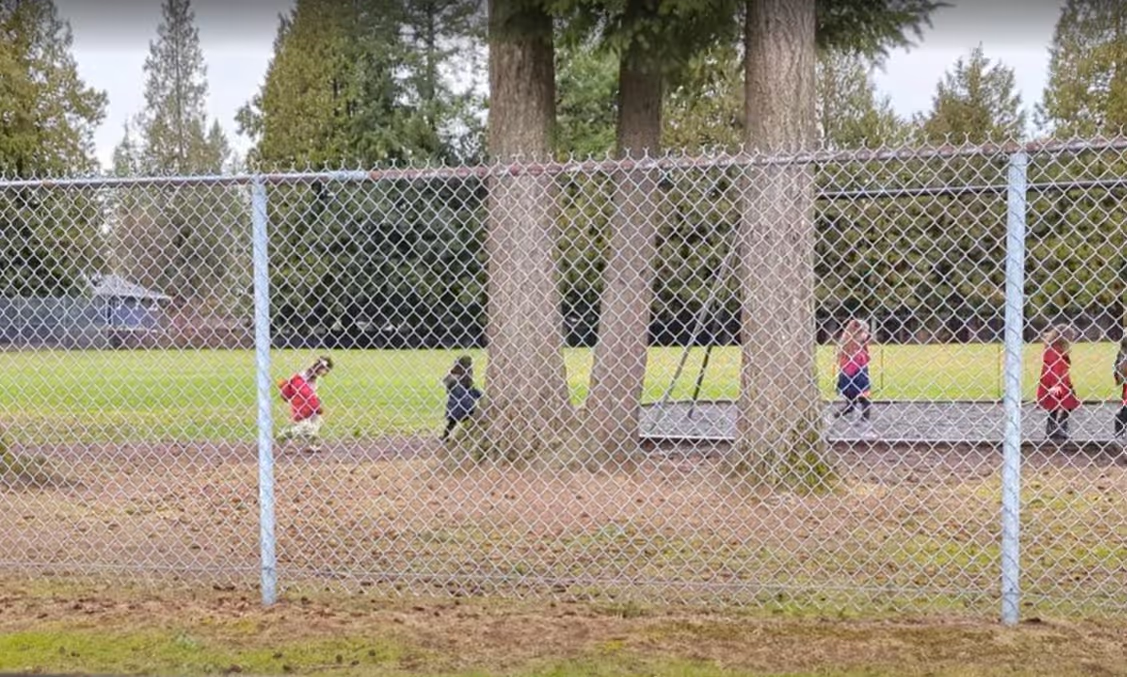
Chain link fencing has been used for decades and is still common, mainly because of cost. But on modern commercial projects—especially anything high-profile or design-driven—it’s not really comparable to aluminum. They solve very different problems.
Chain Link Fencing
Chain link is a basic boundary system. It defines a property line, but beyond that, it falls short—especially on security.
The mesh is made from interwoven wire, and if a single wire is cut, it can be unraveled from the pattern. That creates a full opening in the fence with minimal effort. It’s also easy to climb. For any project where access control actually matters, this is a major weakness.
Privacy isn’t built into the system. The typical workaround is plastic slats inserted into the mesh, but that creates a mixed-material solution that looks inconsistent and still doesn’t provide true privacy. You’re left with something that doesn’t perform well and doesn’t look right.
From a design standpoint, chain link is purely utilitarian. It doesn’t contribute to the architecture of a project, and on higher-end commercial sites, it usually detracts from it.
Installation is more specialized than expected. The system requires proper tensioning, stretching of the mesh, and often specialized tools or welding depending on the application. At the same time, it’s becoming an outdated option, largely because of its limitations around security and design.
Durability is moderate. Galvanized or coated systems can last, but they tend to sag, deform, or corrode at stress points over time, and repairs are often patchwork rather than clean.
At the end of the day, chain link is suited to projects where cost is the primary driver and where security, privacy, and appearance are not priorities.
Aluminum Fencing
Aluminum is a different category. It’s an engineered system designed for commercial use.
From a security standpoint, you’re dealing with rigid, structural components rather than a woven mesh. That alone makes it significantly harder to breach, cut, or climb.
Design flexibility is also a major advantage. Aluminum can be used for open picket fencing or full privacy systems, in vertical or horizontal layouts, all within a consistent material system. You’re not mixing materials or introducing components that will weather differently—everything matches and performs together.
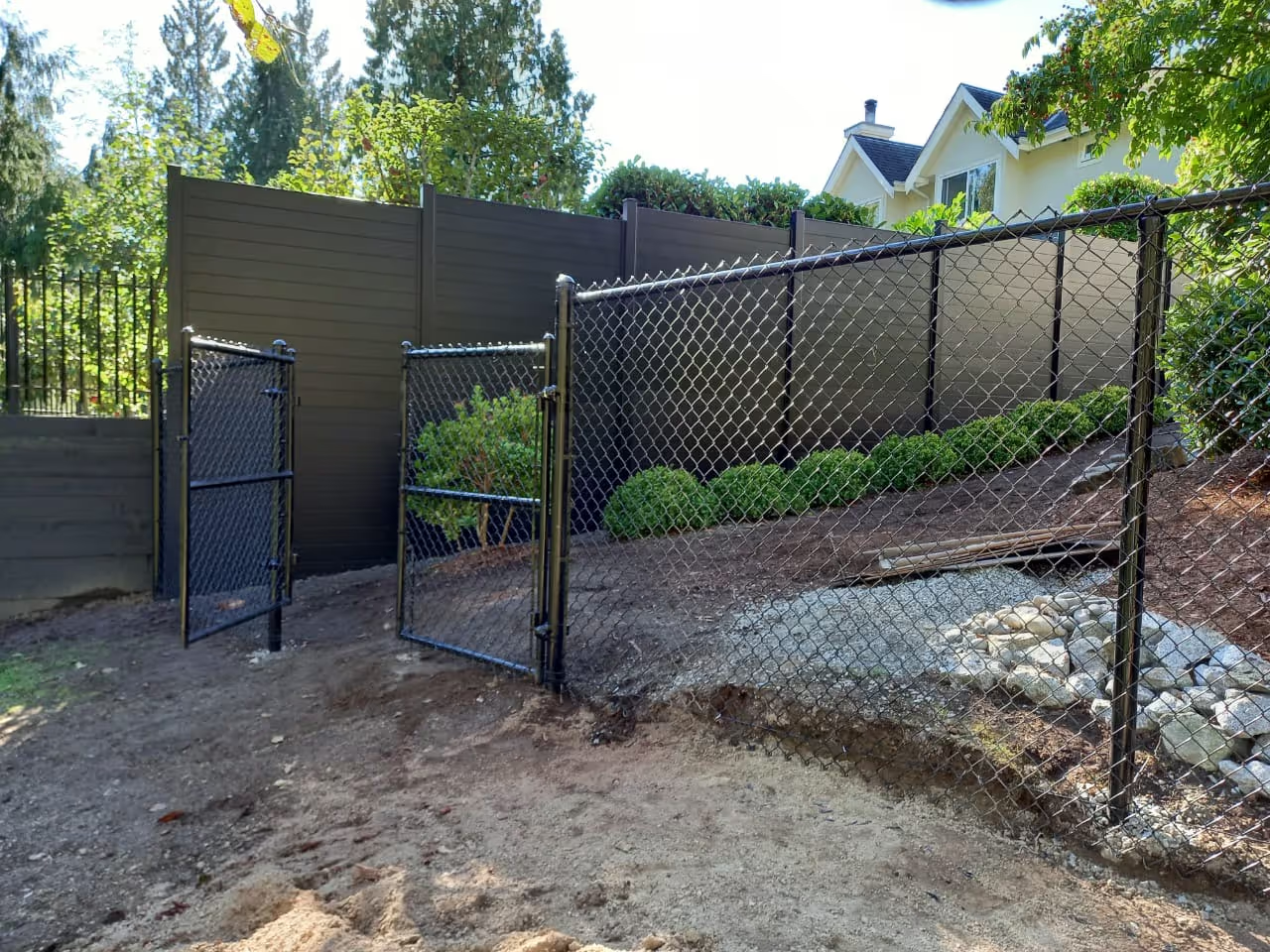
Structurally, aluminum can be engineered for wind loads, height, rooftop applications, and surface-mounted conditions. It’s designed to meet commercial requirements in a way chain link typically isn’t.
On the finish side, powder-coated aluminum holds its appearance. It doesn’t rust, sag, or degrade the same way, and maintenance is minimal. What you install is what stays in place.
Cost Comparison
Chain link is cheaper upfront. That’s the main reason it gets specified.
An open-style aluminum fence will typically be two to three times the cost of chain link. If you’re comparing privacy, aluminum systems can be closer to four to five times the cost of chain link with slats.
But it’s not a like-for-like comparison. Chain link with slats is a workaround, not a true privacy system. It doesn’t deliver the same performance, appearance, or long-term consistency.
Why Aluminum Is Typically Selected
On modern commercial projects, the requirements are clear—security, consistency, long-term performance, and alignment with the overall design.
Chain link doesn’t meet those requirements. It’s easy to compromise, limited in appearance, and not suited to higher-end applications. Aluminum is. It provides a system that can be engineered, designed, and installed with confidence that it will perform and still look right years later.
Chain link still has its place—but that place is limited to low-cost, low-requirement projects. For anything beyond that, aluminum is the more appropriate solution.
If you’re planning a project and want to make sure the fence system is aligned with your site conditions, layout, and engineering requirements, contact us so our team can help review your plans and provide guidance early in the process.
Related Posts



Let’s Discuss Your Project
From early planning through installation, our team provides clear technical guidance and coordinated project support.