Contemporary Horizontal Fencing: Navigating HOA Rules and Design Approval
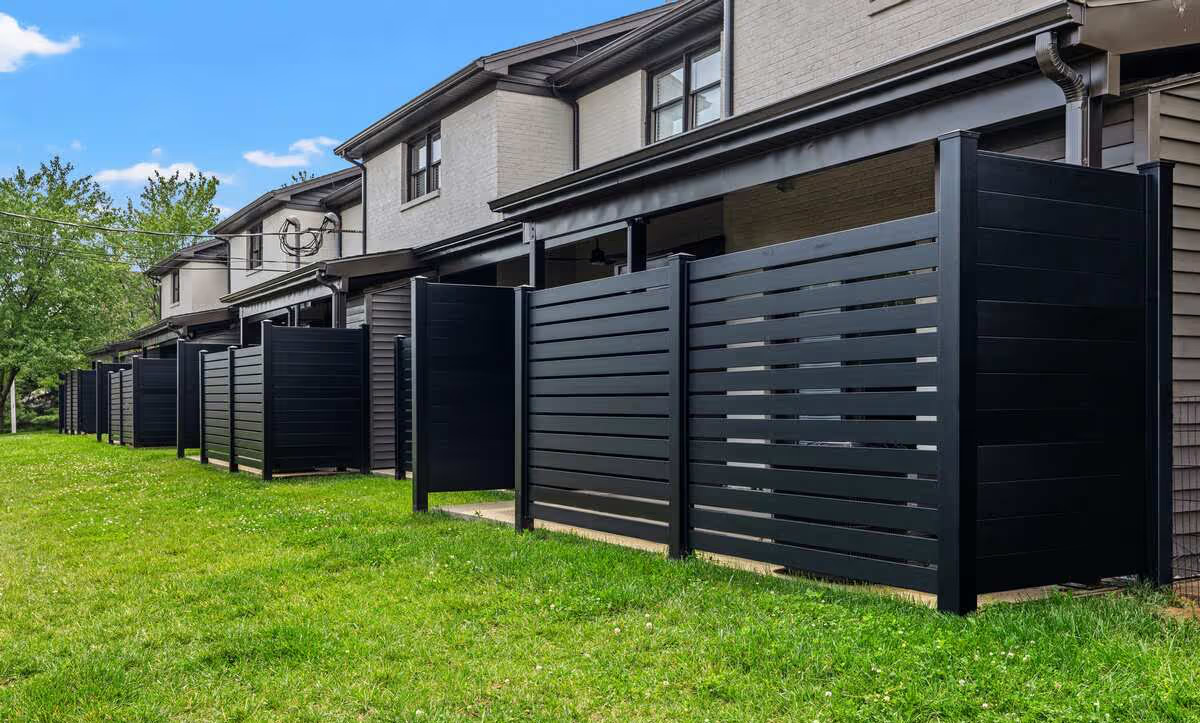
Contemporary horizontal fencing has become a defining feature in modern residential and commercial design. Clean lines, consistent finishes, and minimal profiles make it a natural fit for newer builds and high-end projects.
But in many cases, the challenge isn’t the fence—it’s getting it approved.
Whether you’re dealing with a homeowners’ association (HOA), an architectural review committee, or broader design guidelines on a development, horizontal fencing often runs into resistance. Not because it performs poorly, but because it doesn’t align with older or more traditional standards.
Understanding how to navigate that process is what determines whether the design moves forward.
Why Contemporary Fencing Gets Rejected
HOAs and design committees are typically focused on one thing: consistency.
Most guidelines were written around traditional fence styles: vertical boards, picket fences, lattice details. Anything outside of that can be seen as a risk to the overall aesthetic, even if the design itself is more modern and appropriate for the architecture.
In other cases, concerns come down to assumptions:
- That horizontal fences are easier to climb
- That newer materials won’t hold up over time
- That modern designs will stand out too much
The reality is, many of these concerns are outdated. Modern aluminum systems address durability, safety, and long-term performance in ways that older materials do not.
But approval rarely comes down to being “right.” It comes down to how the design is presented.
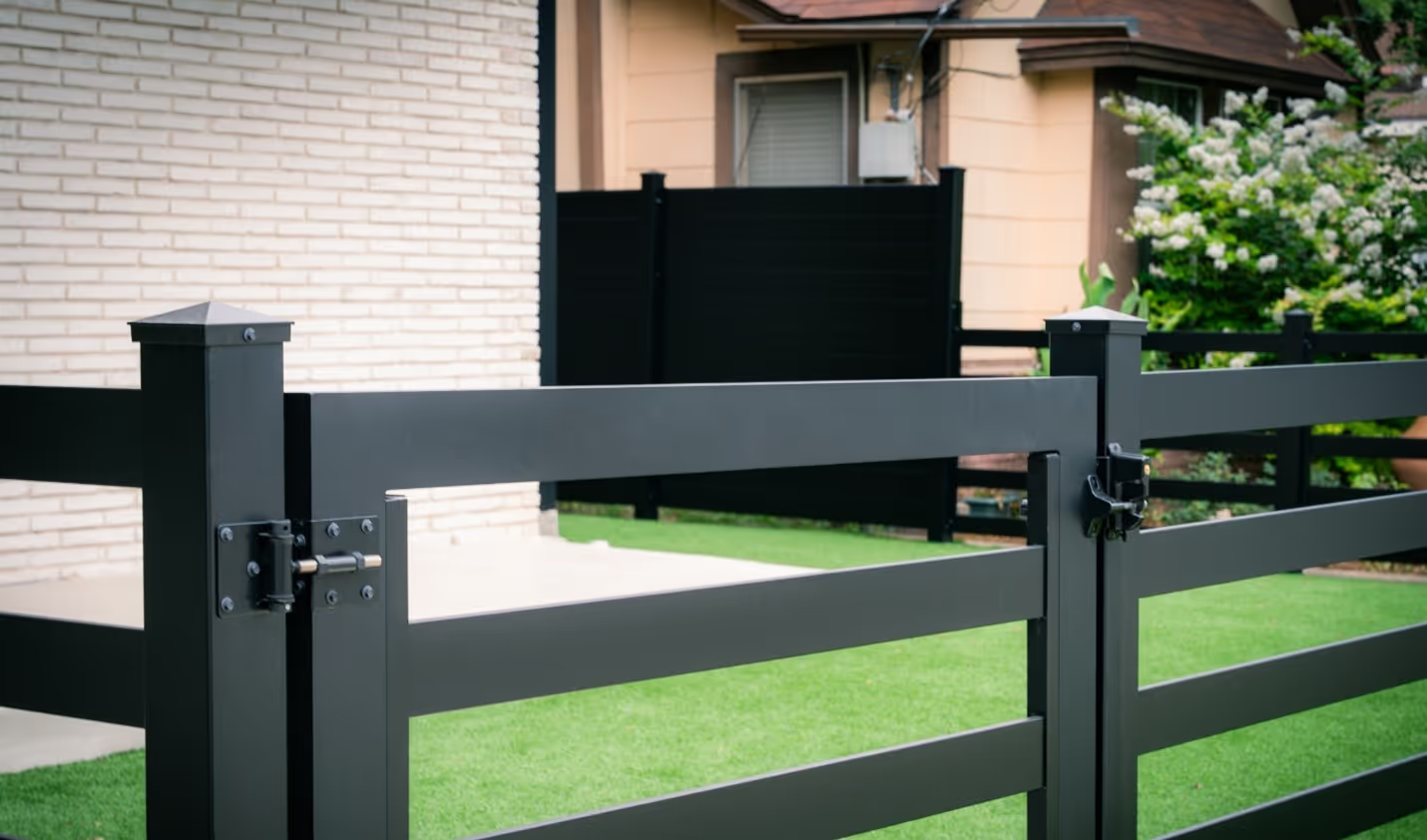
What to Review Before Moving Forward
Before committing to any fencing design, it’s important to understand the specific constraints of the project.
For HOA-controlled properties, this means reviewing the CC&Rs (Covenants, Conditions & Restrictions) and any architectural guidelines. For larger developments or commercial projects, this may involve design standards set by the architect, developer, or governing body.
Key items to look for include:
- Fence height limits
- Approved materials or restricted materials
- Orientation requirements (vertical vs. horizontal)
- Approved colors and finishes
- Setbacks and property line restrictions
In many cases, horizontal fencing isn’t explicitly prohibited, it’s simply not defined. That creates room for interpretation, which is where strategy becomes important.
How to Get a more Modern Fence Design Approved
Getting approval is less about the fence itself and more about how it’s positioned.
Design committees are typically risk-averse. The goal is to show that the proposed fence reduces risk rather than introduces it.
A few key ways to strengthen an approval submission:
- Provide clear visuals
Renderings, product images, or mockups help eliminate uncertainty. The more clearly the committee can see the outcome, the easier it is to evaluate. - Be precise with specifications
Outline materials, finishes, dimensions, and installation methods. A well-defined proposal signals that the system is intentional and controlled—not experimental. - Align with long-term consistency
One of the biggest concerns for HOAs is how something will look over time. Highlighting low-maintenance materials and finishes that maintain their appearance helps address this directly. - Position it within modern context
In many areas, horizontal fencing is already becoming standard in newer developments. Referencing that shift can help reframe the design as current, not disruptive.
Where System Design Makes Approval Easier
One of the most overlooked factors in approvals is consistency.
Fence systems that rely on field assembly or multiple materials can introduce variability in appearance over time. That inconsistency is often what design committees are trying to avoid.
More refined systems, those with consistent profiles, controlled finishes, and predictable installation outcomes—are easier to approve because they reduce uncertainty.
From a performance standpoint, materials also matter. Systems that are resistant to corrosion, require minimal maintenance, and maintain their appearance over time are more aligned with the long-term goals of most HOAs and design authorities.
This is where modern aluminum fencing systems tend to have an advantage. They offer a combination of durability, consistency, and clean design that fits both contemporary architecture and long-term maintenance expectations.
Why This Applies Beyond HOAs
While HOAs are the most visible example, this type of approval process exists across many project types.
Architect-led developments, multi-family projects, and commercial sites all operate under some form of design control. The same principles apply—consistency, durability, and alignment with the overall project vision.
Understanding how to position a fencing system within those constraints is often the difference between approval and redesign.
Why Aluminum Is Typically Selected in Controlled Environments
On projects where appearance and long-term performance both matter, aluminum fencing is often selected because it aligns well with the goals of design control.
It maintains a consistent finish, avoids issues like warping or corrosion, and can be designed to match both modern and traditional environments when needed.
More importantly, it reduces long-term variability—something that approval bodies are inherently trying to manage.
If the goal is to introduce a contemporary design while still meeting guideline expectations, the material and system need to support that outcome.
Bringing It All Together
Horizontal fencing is not inherently difficult to get approved. What makes it challenging is how it’s presented within a framework that may not have been written with modern design in mind.
By understanding the intent behind the rules—and positioning the system accordingly—it’s possible to achieve both design and approval.
We regularly work with property owners, architects, and project teams to help align modern fencing systems with approval requirements. In many cases, small adjustments in how a design is specified or presented make the difference between rejection and approval.
If you’re navigating HOA guidelines or project design constraints, it’s worth approaching it as part of the design process, not a barrier to it. Our team can help review your plans and provide guidance early in the process.
Related Posts


Let’s Discuss Your Project
From early planning through installation, our team provides clear technical guidance and coordinated project support.