Start With the Purpose of the Project
Most cost calculators are treated as a quick way to get a number. The SLEEKFENCE Cost Calculator does that—but the real value is understanding what that number represents in the context of your project.
Before using any calculator, the first question to answer is not “how much does it cost?” It’s “what does this project actually require over time?”
Because that’s what determines whether the number you’re looking at is high, low, or exactly right.
Start With the Purpose of the Project
There are two very different scenarios when it comes to fencing.
The first is short-term. A project where the fence needs to look good at completion—typically tied to a sale or turnover. In those cases, longevity is not the priority.
The second is long-term ownership. Commercial sites, multi-family developments, HOAs, institutional projects, or repeat-site operators. These owners live with the fence for years, and the cost of maintenance, repairs, and replacement becomes part of the equation.
The calculator gives you an upfront number, but it’s up to you to decide whether you’re optimizing for initial cost or long-term performance.
Using the Calculator Properly
The calculator is designed to give a fast, realistic starting point based on your actual site.
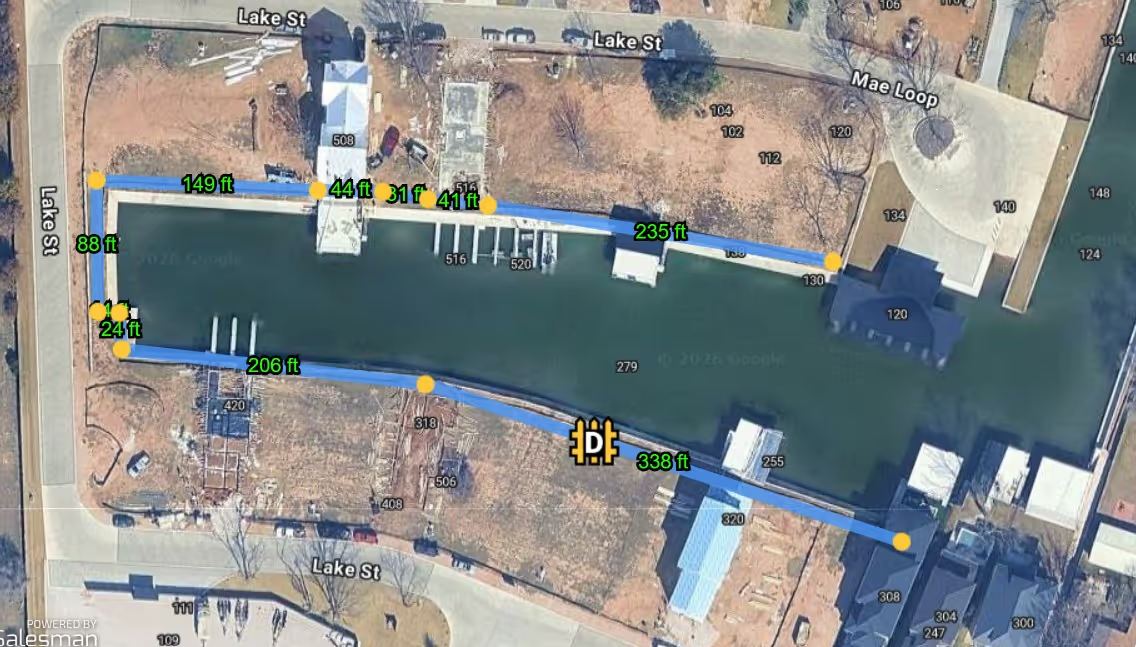
You begin by entering the project location and mapping out the fence line directly on a satellite view. This allows you to generate a true linear footage, rather than guessing.
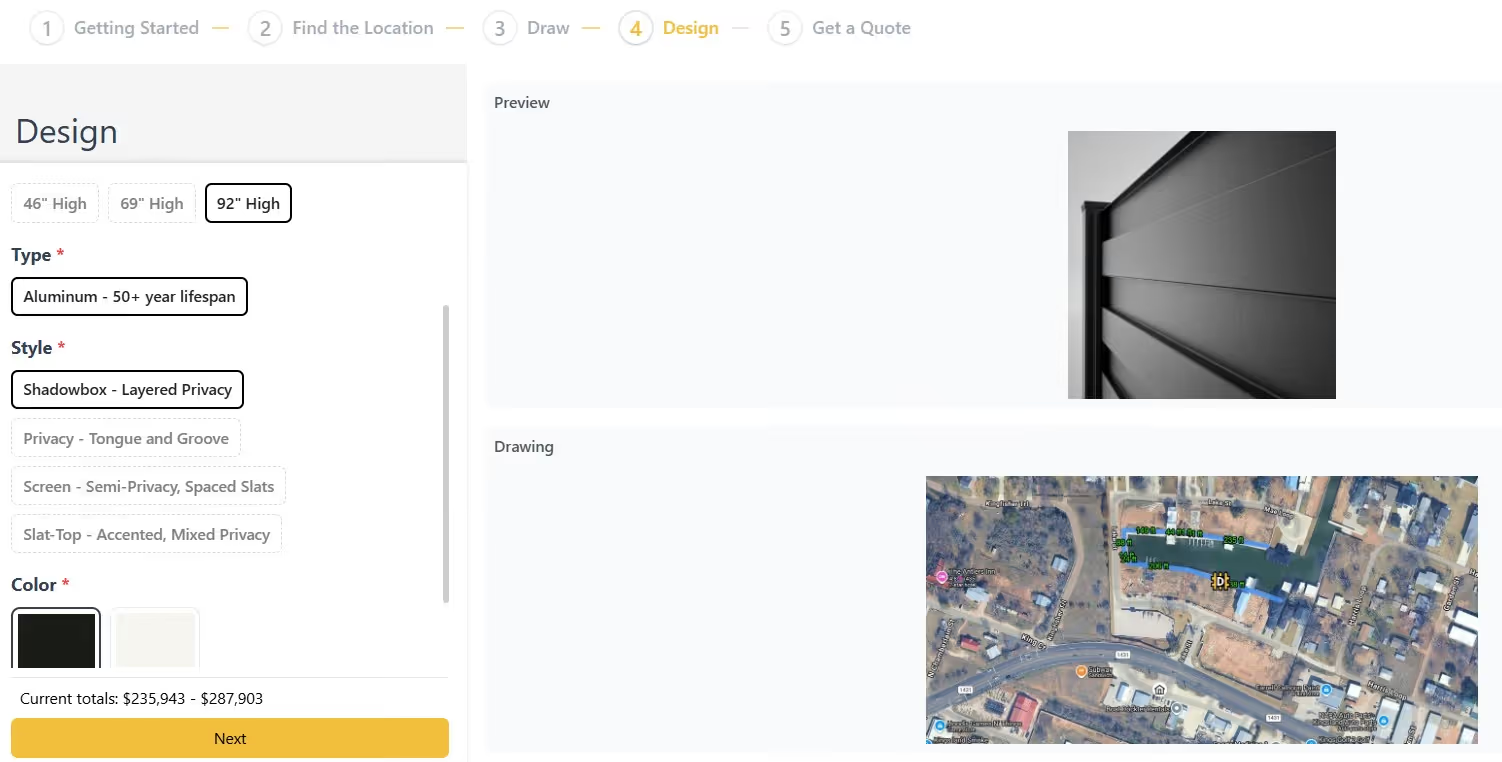
From there, you select the fence style, height, and color. Each of these choices affects cost in a meaningful way.
Privacy systems will naturally cost more than open styles because they use more material and require more structure. Taller fences increase costs not just because of material, but because of the added engineering required. Color can also play a role depending on finish type.
Once those inputs are selected, the calculator applies a per-linear-foot cost and generates a total project estimate.
That number is your baseline.
What the Calculator Doesn’t Show
The calculator is intentionally simple, which means it doesn’t capture everything.
It does not account for engineering requirements tied to wind load, height, or exposure. It does not fully reflect site-specific conditions like surface mounting, rooftop installations, or unusual layouts. And it doesn’t show the full range of system options available on more complex projects.
These factors can move the cost meaningfully.
For example, a tall privacy fence in a high-wind zone will require a very different system than a standard perimeter fence in a sheltered area. At that point, the fence is no longer just a product, it’s part of the building system, and it needs to be engineered accordingly.
This is where working directly with the manufacturer becomes important.
How to Interpret the Number
The most common mistake is treating the calculator output as a final price or comparing it directly to lower-cost materials without context.
Aluminum will almost always come in higher upfront than wood, vinyl, or chain link. That’s expected.
What matters is what that number represents over time.
If you’re replacing an existing fence, it’s worth looking at what has already been spent on maintenance, repairs, repainting, or replacement. In many cases, the total cost of ownership over time is significantly higher than the initial installation.
If this is new construction, the question is whether the fence needs to maintain its appearance and performance long after the project is complete.
The calculator gives you the upfront cost. It’s up to the project team to decide whether that aligns with the long-term goals of the property.
When to Go Beyond the Calculator
For straightforward projects, the calculator is a useful budgeting tool.
For anything more complex—commercial applications, higher fences, exposed sites, or projects with specific design requirements—it should be treated as a starting point, not the answer.
At that stage, it’s worth engaging with the manufacturer to review the project in more detail. This allows you to confirm engineering requirements, refine the system design, and ensure the fence will perform as intended.
Why This Matters
Fencing is often treated as a finishing detail, but on many projects, it plays a much bigger role. It defines the perimeter, contributes to security, and becomes part of the visual identity of the site.
The cost calculator helps you quantify the investment.
The real decision is whether you’re building for the short term—or putting in a system that will still look right and perform properly years from now.
That’s ultimately what the number needs to be evaluated against.
If you’re budgeting for a project and want a clearer understanding of system options and cost ranges, contact us so we can help walk through the variables and provide guidance based on your specific application.
Related Posts


Let’s Discuss Your Project
From early planning through installation, our team provides clear technical guidance and coordinated project support.