Pedestrian access vs vehicle access

When planning fencing for a commercial project, most of the attention goes toward the fence itself - layout, height, materials, and overall design. Gates are often treated as an afterthought.
In reality, gates are one of the most critical parts of the entire system. They control access, dictate flow, and are typically the first place where problems show up if they haven’t been planned properly.
One of the most common questions we get is how many gates a project actually needs. The better question is how the project is going to function day-to-day, and whether the gate layout supports that.
Start with how the space will actually be used
Every project is different, but the mistake is always the same - designing for how the space looks, not how it operates.
You need to think through:
- how many people are moving through the space daily
- where they are entering and exiting from
- whether there are peak times or events that increase traffic
- what type of access is required for maintenance, deliveries, or emergency services
On larger commercial sites, this becomes even more important. A layout that works for normal day-to-day use can fail quickly when you introduce higher volumes, service vehicles, or emergency access requirements.
This is where gate planning needs to happen early, not after the fence layout is already locked in.
Pedestrian access vs vehicle access
Not all gates serve the same purpose, and they shouldn’t be treated the same in design.
For pedestrian access, you’re typically working with standard-sized gates that need to be consistent, easy to install, and reliable over time. These are used across most commercial and multi-use environments.
For vehicle or service access, the requirements change completely. You’re now dealing with larger openings, different structural loads, and more complex operation. This is where gate type matters:
- sliding gates
- rolling gates
- cantilever gates
Each has its place depending on the site conditions, available space, and frequency of use.
The key is making sure these access points are planned around real use cases, not assumptions.
What gets overlooked most often
From installation experience, the most common issues come down to access being underestimated.
We’ve seen projects where gates had to be replaced after the fact because they were too small to accommodate equipment. Others where additional gates had to be added because service access or emergency routes weren’t considered during design.
Schools and campuses are a good example. Many are now enclosing existing spaces to improve security but still need to maintain proper egress. That means gates need to incorporate panic hardware and allow for safe, fast exit during emergencies.
If those requirements aren’t considered upfront, it leads to redesign, added cost, and disruption after installation.
Gate count, placement, and sizing all need to be based on how the space will actually function over time, not just how it looks on a plan.
Why gate design matters more than most people think
Another major issue is how gates integrate with the fence system itself.
On many projects, the fence is specified first, and the gate is treated as a separate component. That usually means bringing in a different fabricator to design something custom.
The result is almost always inconsistent.
The gate doesn’t match the fence in finish, proportions, or structural performance. It becomes the weak point visually and functionally.
This is especially common with systems that don’t offer pre-designed gate solutions. The architect or contractor is forced to figure it out on their own, often under time pressure.
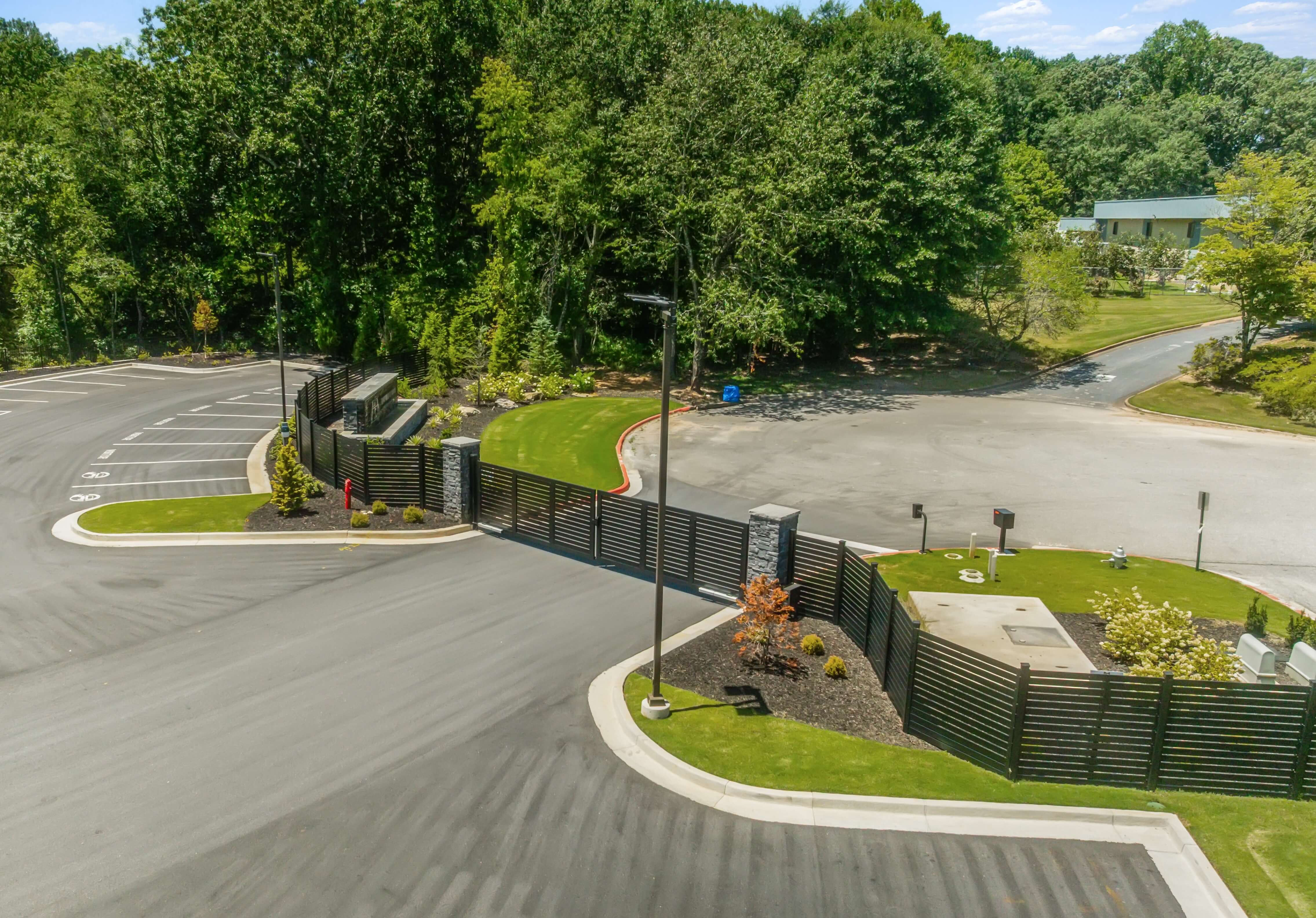
Below image is one of our own rolling gates, designed to match the fencing.

Where a complete system approach changes things
This is where having a fully developed system makes a significant difference.
With our approach, pedestrian gates are available as pre-assembled, ready-to-install units in standard sizes. This removes variability during installation and ensures consistent performance.
For larger access points, vehicle and driveway gates are pre-designed and engineered to integrate with the rest of the system. Whether it’s sliding, rolling, or cantilever, the design, structure, and finish are aligned with the fence.
Everything ties together:
- the coating and finish
- the framing and proportions
- the structural design and reinforcement
- the overall aesthetic of the project
This eliminates the need to design gates separately or rely on third-party fabrication that may not align with the original system.
Bringing it all together
Gate planning is not just about how many you need. It’s about how the space functions, how people and vehicles move through it, and how the system performs over time.
On commercial and high-profile projects, these decisions have long-term implications. Getting them right upfront avoids costly changes later and ensures the fence system works the way it was intended.
If there’s one takeaway, it’s this - plan gates as part of the system, not as an add-on. That’s where most projects either succeed or run into problems.
If you’re planning a project and want to make sure the fence system is aligned with your site conditions, layout, and engineering requirements, our team can help review your plans and provide guidance early in the process.
Related Posts


Let’s Discuss Your Project
From early planning through installation, our team provides clear technical guidance and coordinated project support.