Fire-Resistant Fence Options: Why Aluminum Is the Top Choice for Fire-Prone Regions
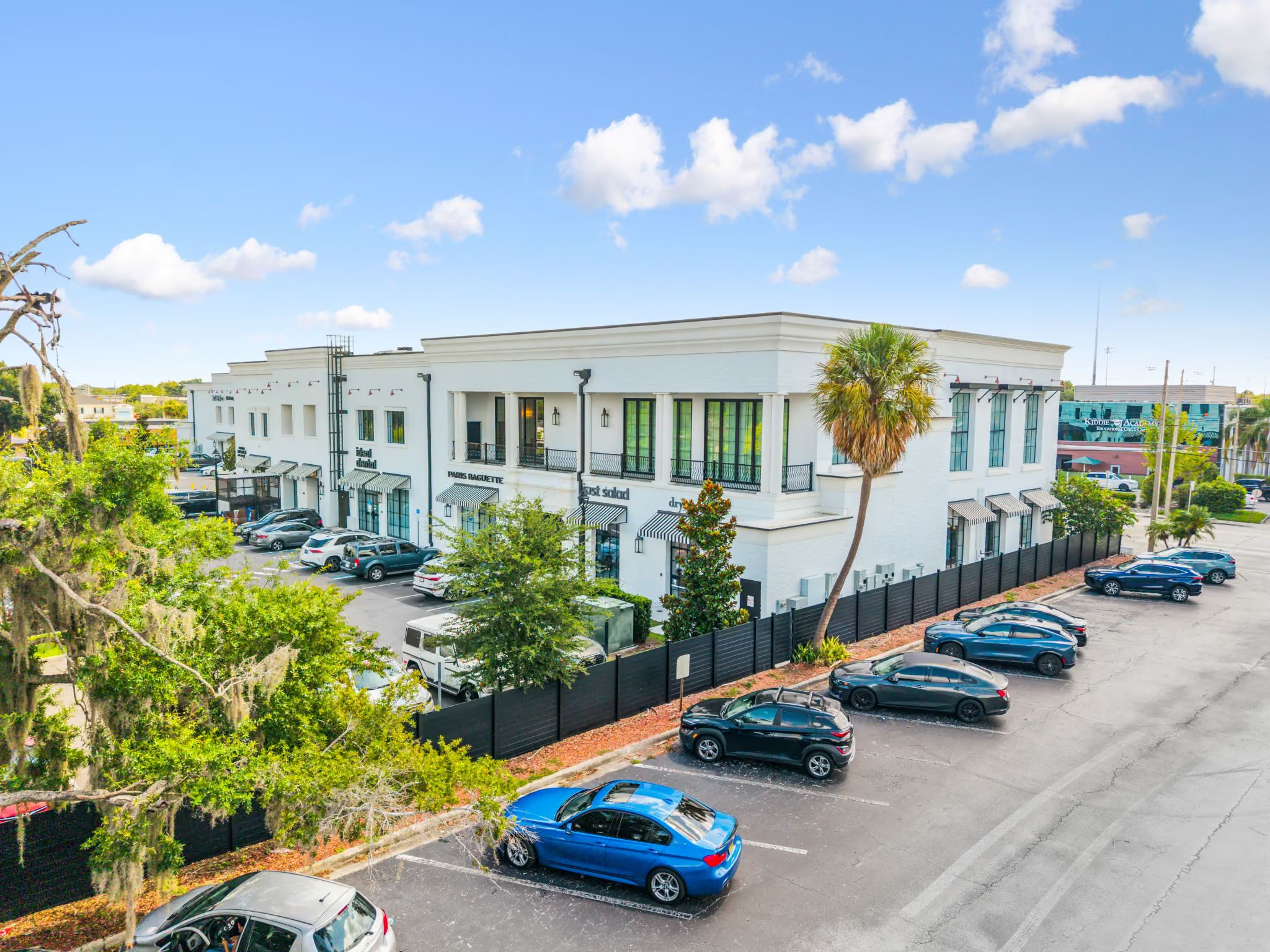
A fire-resistant fence is not just about choosing a material that survives heat. In fire-prone regions, especially WUI zones, the fence can either add fuel to the property or help reduce fuel at the perimeter.
When discussing fire-resistant fencing, we're referring to structural, privacy, and architectural fence systems designed for screening, security, and visual privacy, not basic ornamental aluminum picket fences or decorative boundary fencing.
For property owners, architects, landscape architects, and HOA boards in wildfire-prone regions, the material choice matters. Wood, vinyl, composite, steel, and aluminum all behave differently when exposed to flame, radiant heat, embers, and wind-driven fire conditions.
What Makes a Fire-Resistant Fence Different
A fire-resistant fence is designed to reduce the chance of ignition, slow fire movement, or avoid adding fuel to the fire. That does not mean the fence is indestructible. Direct flame can damage almost any exterior product, including coatings on metal.
The better technical terms are non-combustible, fire-resistant, and ember-resistant. Understanding fire ratings helps explain how materials are evaluated for fire performance.
Non-combustible means the material itself does not burn as fuel. Fire-resistant means the material or assembly has properties that help it resist flame spread or reduce fire involvement. Ember-resistant is more practical in many wildfire settings because wind-blown embers are one of the major ways fires spread into homes and structures.
This distinction matters because “fireproof” is often used in search language, but no fence should be described as literally fireproof. A properly designed aluminum fence can be one of the best fire-resistant options, but it still needs to be installed with proper defensible-space planning.
Why Fences are Often the First Thing to Burn
Fire authorities often describe combustible fences as a path for fire to reach the home. The simple version is this: a wood fence attached to a structure can act like a fuse. If the fence catches fire, it can carry flame directly toward siding, eaves, decks, gates, or other vulnerable areas.
This is especially important in the first 5 feet around a structure. IBHS recommends a 0-5-foot, non-combustible zone around buildings, and CAL FIRE recommends replacing attached combustible fencing or gates with a non-combustible option for the first 8 feet.
Fencing can also collect leaves, pine needles, mulch, dry grass, and other debris at the base. That debris can ignite from embers, and once a combustible fence becomes involved, it becomes part of the fire path.
That is why material selection matters. The fence is not separate from the fire plan. It is part of the perimeter.
Material-by-Material: How Common Fence Types Behave in Fire
Wood
Wood is the weakest choice for fire-prone regions. It may look warm and natural, but in a wildfire setting it is fuel. A wood fence can ignite, burn, and carry flame toward a structure. That is why wood is often the first material removed from the conversation in WUI areas.
Wood may still make sense in low-risk zones where fire exposure is not a serious concern. But if the project is in a fire-prone region, especially near a structure, wood is usually the wrong material.
Vinyl
Vinyl behaves differently from wood, but because it is a plastic material, it can deform, melt, burn under flame exposure, and lose its function as a barrier. It also does not provide the same structural confidence as a metal fence when the goal is to maintain a perimeter barrier during a fire event.
For basic residential projects in low-risk regions, vinyl may still be used. But for a fire-prone property where the fence is expected to support safety, privacy, and long-term appearance, vinyl is not the ideal answer.
Composite
Composite fencing varies widely because different products use different blends of plastic, fibers, fillers, and resin systems. Some products may carry specific ratings, but many are still combustible or heat-sensitive.
This is the problem with broad material labels. “Composite” does not automatically mean fire-safe. Each product needs to be reviewed based on its actual fire testing, composition, installation method, and proximity to the structure.
Steel
Steel is non-combustible, so from a pure fire-fuel standpoint, it has an advantage over wood, vinyl, and many composites. The issue is usually not fire. The issue is long-term performance and aesthetics.
Many solid steel privacy fences are based on thin sheet-metal or roofing-style panels. They may not look architectural, and once the coating is scratched or damaged, rust becomes a long-term concern. That often starts near the base of the post or panel, where weed whackers, maintenance equipment, water, soil, and debris all create abuse.
Steel will not add fuel to the fire, but if it is rusting, thin, poorly supported, or not engineered as a fence system, it may not be the best long-term answer.
Aluminum
Aluminum is non-combustible, does not rust like steel, and can be designed into solid privacy panels that look architectural rather than industrial. That combination is why aluminum is often the strongest overall choice for fire-prone regions.
A solid aluminum privacy fence can help maintain a physical barrier without adding fuel to the fire. Direct flame may damage the coating, and extreme heat can damage the product, but aluminum does not behave like wood, vinyl, or plastic-based materials. It does not feed the fire.
These benefits extend across our aluminum privacy fence systems, including full privacy and semi-privacy designs for residential and commercial projects.
Why Aluminum Performs as a Fireproof Fence Option
“Fireproof fence” is a common search term, but the more accurate term is fire-resistant or non-combustible. Aluminum is not magic. It can be damaged by direct flame and high heat. The coating can be affected, just as a coating on steel can be affected. But aluminum itself does not burn like wood and does not melt and collapse like a plastic fence under heat exposure.
That is why aluminum is so strong for solid privacy fencing in fire-prone regions. A fireproof privacy fence is not just about surviving flame. It is about not adding fuel, maintaining a barrier, and supporting the property’s defensible-space strategy.
SLEEKFENCE uses aluminum and coating systems with tested performance. Aluminum Alloy 6063 has been evaluated under ASTM E136, and the coating system used on architectural aluminum has been tested under ASTM E84. These are important proof points, but they should be understood correctly: test results apply to the tested material or assembly configuration.
The practical point is simple. If the fence is going to sit near a structure, in a WUI zone, or along a property line where fire risk is real, aluminum gives owners and specifiers a much stronger starting point than wood, vinyl, or many composite systems.
ASTM E84 and ASTM E136 evaluate different aspects of fire performance, and understanding how these standards are applied helps put these test results into context.
Fire Code and Defensible-Space Considerations
Fire-prone regions are increasingly focused on defensible space. The most important area is usually the zone closest to the structure. In California, this is commonly discussed as Zone 0, the first 5 feet around the home or building. The goal is to reduce or remove combustible materials where embers, radiant heat, or direct flame could ignite the structure.
Local rules vary, and the authority having jurisdiction should always be consulted. California, Colorado, and other wildfire-prone regions may have different state, county, city, HOA, and insurance requirements.
The general direction is clear: combustible fencing near structures is a risk. Non-combustible fencing, especially where a fence connects to or approaches the building, is preferred in many wildfire guidance documents.
For architects and property owners, this means the fence should be considered early. Waiting until the end of the project can create approval issues, insurance concerns, or last-minute material changes.
Designing a Fire-Resistant Perimeter without Sacrificing Aesthetics
A fire-resistant fence does not need to look industrial. That is one of the biggest advantages of aluminum.
Many owners want the warmth of wood or the privacy of a solid fence, but those goals become more challenging in fire-prone regions. Aluminum addresses that challenge by offering clean horizontal designs, full privacy systems, semi-privacy systems, and wood-grain finishes without relying on combustible materials.
This matters for high-end homes, HOAs, commercial properties, resorts, healthcare campuses, and architect-led projects. The fence still needs to look good. It still needs to support the design. It still needs to create privacy, screening, and security.
With aluminum, the fire-resistant fence materials do not force the project into a basic utilitarian look. The fence can be modern, warm, private, and non-combustible at the same time.
Regional Notes: California, Colorado, and Other High-Risk Areas
California is the clearest example because wildfire regulations, insurance pressure, and Zone 0 discussions are already influencing material decisions. Property owners should confirm current requirements before installing fencing near a structure, especially where a fence attaches to the home.
Colorado has a different landscape but a similar risk. The Front Range and high-altitude WUI areas often combine dry vegetation, wind, slope, and ember exposure. In those settings, combustible perimeter materials deserve careful review.
Other regions should use the same basic logic. Consult the local fire authority, building department, HOA, and insurance carrier. The exact requirements may change, but the principle does not: remove fuel from the perimeter wherever possible.
The Role of Wind in Fire-Prone Regions
Fire and wind should not be treated separately. Wildfires are often wind-driven, and extreme fires can create their own local weather patterns, including fire-induced winds and erratic conditions. Wind can also move embers ahead of the main fire front.
This is one reason a solid privacy fence in a fire-prone region should still be reviewed as an engineered fence. The fire risk does not remove the need for structural performance. If anything, it makes the system-level design more important.
A solid fence catches the wind. It acts more like a sail than an open picket fence. That is why the post system, base connection, fastening method, and engineering matter. A non-combustible material is only one part of the answer. The system still has to stand up to the conditions around it.
A Real-World SLEEKFENCE Example
We have seen this matter in the field. In one customer-submitted case, photos showed a SLEEKFENCE aluminum privacy fence remaining in place after a neighborhood fire and helping stop the fire from continuing through that fence line.
That does not mean any fence should be treated as a guaranteed firewall. It does not replace defensible space, fire-smart landscaping, evacuation planning, or local fire-code requirements.
But it does show the practical value of a solid, non-combustible aluminum barrier. The fence did not become fuel. It did not carry the fire forward the way a wood fence could have. It maintained enough of its structure to matter.
That is the point.
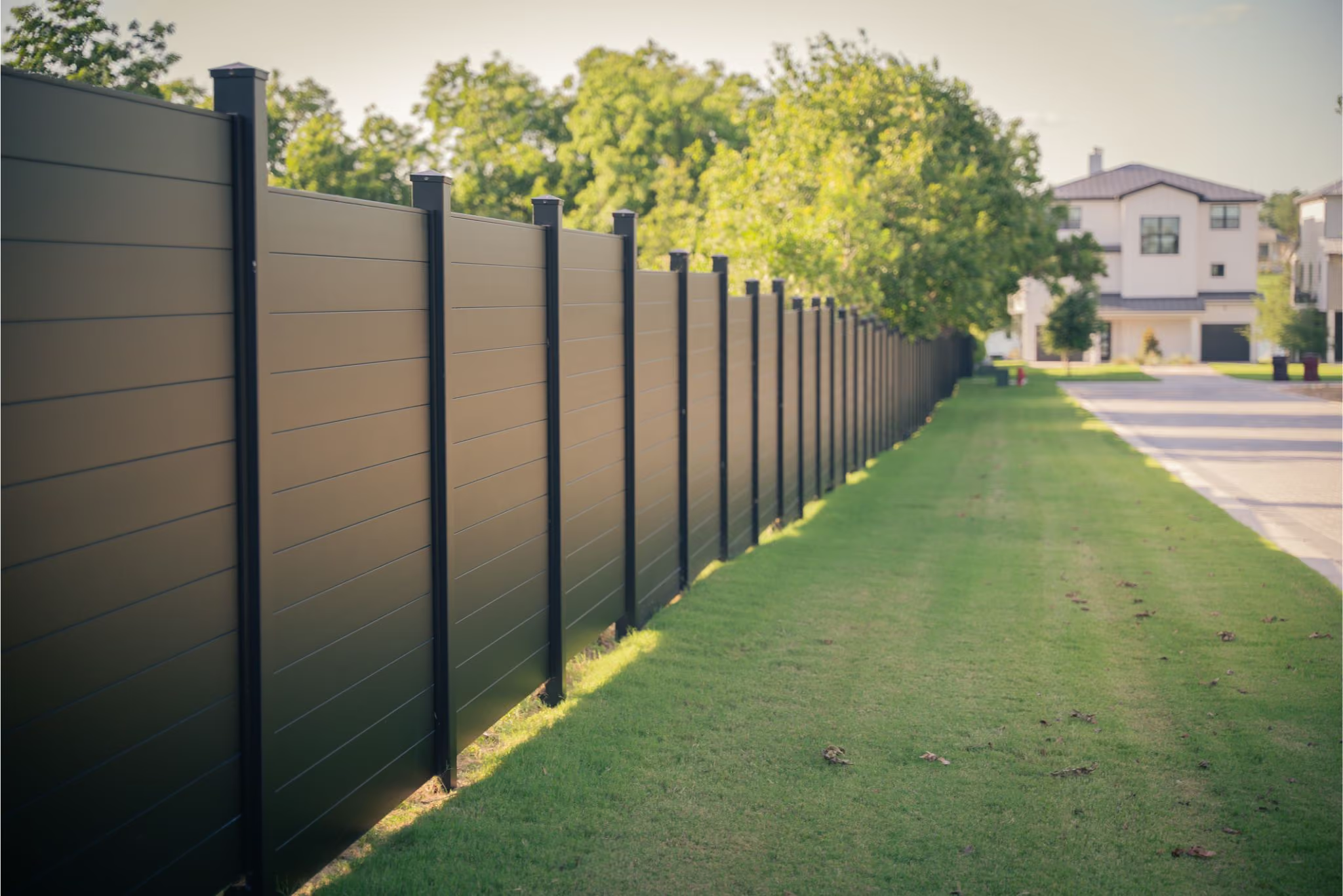
Fire-resistant aluminum privacy fence used as a non-combustible perimeter barrier in a WUI zone.
FREQUENTLY ASKED QUESTIONS
What is the most fire-resistant fence material?
Non-combustible materials are usually the best starting point. That includes aluminum, steel, masonry, concrete, and fiber cement. For privacy fencing that also needs to look architectural, aluminum is often the strongest overall choice because it is non-combustible, durable, rust-resistant, and design-flexible.
Is a fireproof fence really fireproof?
No fence should be described as literally fireproof. “Fireproof fence” is common search language, but the better terms are fire-resistant and non-combustible. Direct flame and extreme heat can still damage coatings and materials. The goal is to avoid adding fuel and to maintain a better barrier than combustible materials.
Does a metal fence get hot enough to ignite a structure?
Metal can get hot when exposed to fire, but it does not burn as fuel. Whether a fence creates risk for a nearby structure depends on distance, design, vegetation, radiant heat, flame exposure, and local conditions. This is why defensible space and local code review still matter.
Are there fence codes for fire-prone areas?
Yes, but the rules vary by location. California, Colorado, and other wildfire-prone regions may have state, local, HOA, or insurance requirements related to combustible materials, defensible space, and fencing near structures. Always confirm with the local authority having jurisdiction.
Why is aluminum the better choice in fire-prone regions?
A fire-resistant fence should do three things well. It should avoid adding fuel, support the design of the property, and maintain a useful barrier for as long as possible under difficult conditions.
Wood adds fuel. Vinyl and many composites can melt, deform, or burn. Steel is non-combustible, but it often brings corrosion and design limitations when used as a solid privacy fence. Aluminum gives property owners and designers a better balance: non-combustible material, clean architectural design, strong privacy options, corrosion resistance, and engineered system performance.
That is why aluminum is the top choice for many fire-prone regions, especially when the project needs a solid privacy fence rather than a basic open picket fence.
If you are planning a project in a wildfire-prone region, our team can help review the site conditions, fencing layout, fire-risk considerations, and system options early in the design process.
References
- American Institute of Architects (AIA) – Resilience Design Toolkit
- CAL FIRE – Defensible Space
- CAL FIRE – Home Hardening
- Insurance Institute for Business & Home Safety (IBHS) – Near-Building Noncombustible Zone
- International Code Council (ICC) – International Wildland-Urban Interface Code (IWUIC)
- National Fire Protection Association (NFPA) – Wildfire Guidance
- National Wildfire Coordinating Group (NWCG) – Guide to Fire Behavior Assessment
- The Aluminum Association – Health & Safety
- UC ANR Fire Network - Fence
- Wildfire Partners – Fences Are Fuses
Related Posts

Let’s Discuss Your Project
From early planning through installation, our team provides clear technical guidance and coordinated project support.