Anti-Climb Fence: How Smooth Aluminum Fence Design Improves Security

Security fencing has traditionally relied on exposed steel components, spikes, barbed wire, or other visible deterrents to discourage unauthorized access. While these approaches can be effective in certain environments, they often create an industrial appearance that isn't appropriate for today's commercial, institutional, and public-sector projects.
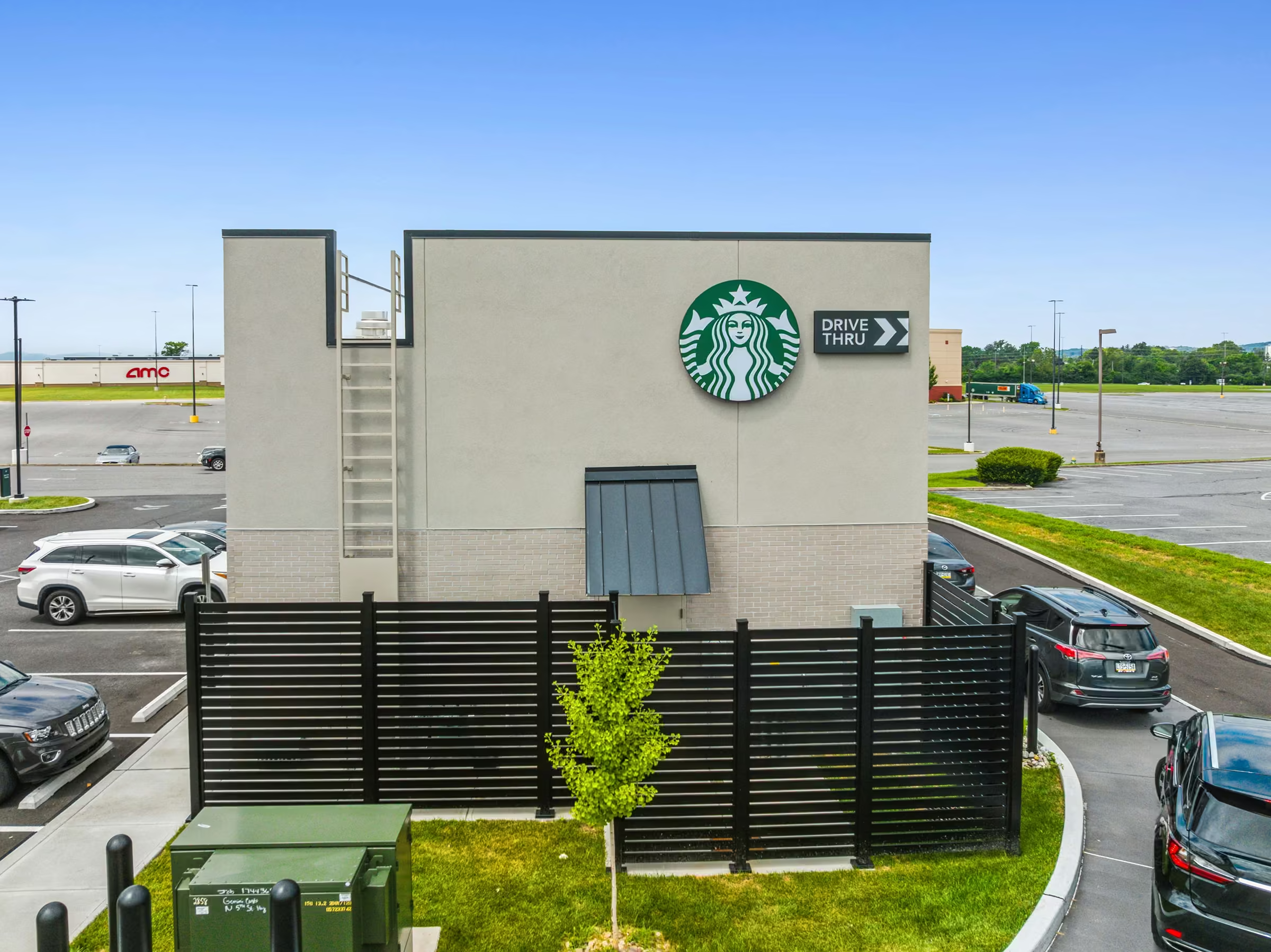
The SLEEKFENCE Lineara Full Privacy aluminum fence takes a different approach.
Instead of relying on added deterrents, it helps discourage climbing through intelligent fence design. Its smooth, continuous privacy surface eliminates accessible handholds and footholds across the panel face while creating a clean architectural appearance that complements modern buildings and landscapes.
Available in heights of up to 12 feet, the Lineara Full Privacy system combines privacy, security, durability, and contemporary design within a fully engineered aluminum fence system.
Security Begins with the Fence Design
The most effective anti-climb fences don't simply add spikes or barriers to an otherwise climbable fence.
They begin by reducing climbing opportunities through the fence design itself.
A smooth exterior surface, appropriate height, strong structural performance, and controlled access points work together to create a perimeter that is inherently more difficult to climb.
The SLEEKFENCE Lineara Full Privacy system was designed around these principles.
Its anti-climb performance comes from the fence geometry itself, without relying on spikes, spear tops, or other added deterrents as the primary security strategy.
What Is an Anti-Climb Fence?
An anti-climb fence is designed to make unauthorized climbing significantly more difficult by reducing or eliminating features that can be used as handholds or footholds.
Effective anti-climb design typically incorporates:
- Smooth, continuous exterior surfaces
- No accessible handholds or footholds
- Appropriate fence height
- Strong structural performance
- Secure pedestrian and vehicle access points
Rather than depending solely on visible deterrents, anti-climb performance begins with thoughtful engineering and intelligent fence design.
Why Smooth Fence Design Matters
Many traditional fencing systems unintentionally provide opportunities for climbing.
Examples include chain link fencing, ornamental steel fencing, palisade fencing, expanded metal mesh, open-design picket security fencing, and fences with exposed rails or structural members.
These systems often contain openings, rails, wire patterns, vertical components, or projecting elements that can be used to gain leverage while climbing.
This is one reason spikes, pointed pales, spear tops, and similar deterrents are frequently associated with open security fencing: the underlying fence geometry may still contain elements that can assist a climbing attempt.
The SLEEKFENCE Lineara Full Privacy aluminum fence approaches the problem differently.
Its continuous horizontal privacy panels form a smooth exterior barrier without exposed rails or open structural elements across the panel face. The anti-climb characteristic is therefore created by the fence itself rather than primarily by accessories added to it.
Privacy as Part of Perimeter Security
Perimeter security is not only about discouraging unauthorized entry. It can also involve controlling visibility into the property being protected.
Open picket, palisade, mesh, and chain link systems create a physical perimeter but may leave buildings, equipment, vehicles, operations, and other assets visible from outside the site.
A Full Privacy fence adds visual screening to the perimeter, helping limit direct visibility into protected areas. This can be particularly relevant for police and public safety facilities, utilities, data centers, government properties, corporate campuses, and other projects where activities or assets inside the perimeter should not be readily visible.
Effective perimeter security can therefore address two separate objectives: controlling access and controlling visibility.
Data Center & Critical Infrastructure Fencing
Data centers and other critical infrastructure projects often require perimeter fencing that addresses security, privacy, and long-term performance while also reducing the visual impact of equipment, service areas, and large facilities.
For these applications, Lineara Full Privacy combines complete visual screening, anti-climb design, corrosion-resistant aluminum, and a refined architectural appearance, creating a secure perimeter that can complement the surrounding property rather than emphasizing an industrial setting.
Purpose-Built Privacy, Not Privacy Added Later
Privacy should be part of the fence, not an accessory added after the fact.
Some security fence systems achieve privacy by installing separate screening components within an otherwise open fence.
The Lineara Full Privacy system was engineered differently.
Privacy is integrated directly into the fence through continuous aluminum panels, creating a consistent architectural surface from post to post.
This integrated approach provides complete visual privacy, a smooth exterior surface, inherent anti-climb characteristics, consistent appearance across the entire perimeter, and simplified installation.
It also means the system is engineered around Full Privacy from the outset. Adding screening to an originally open fence increases the area exposed to wind and may require posts, horizontal structural members, connections, and foundations to be structurally reassessed for the increased wind load.
With Lineara Full Privacy, privacy and structural performance are addressed together as part of the original fence system. See how fence height, panel type, post spacing, and installation method affect wind ratings and performance.
The result is a fence that delivers privacy and security as one unified system rather than separate components.
Anti-Climb Fence Design Principles
Smooth Surface with No Accessible Handholds or Footholds
The Lineara Full Privacy aluminum fence creates a continuous exterior face without exposed rails, mesh openings, or projecting structural components commonly associated with climbable fencing.
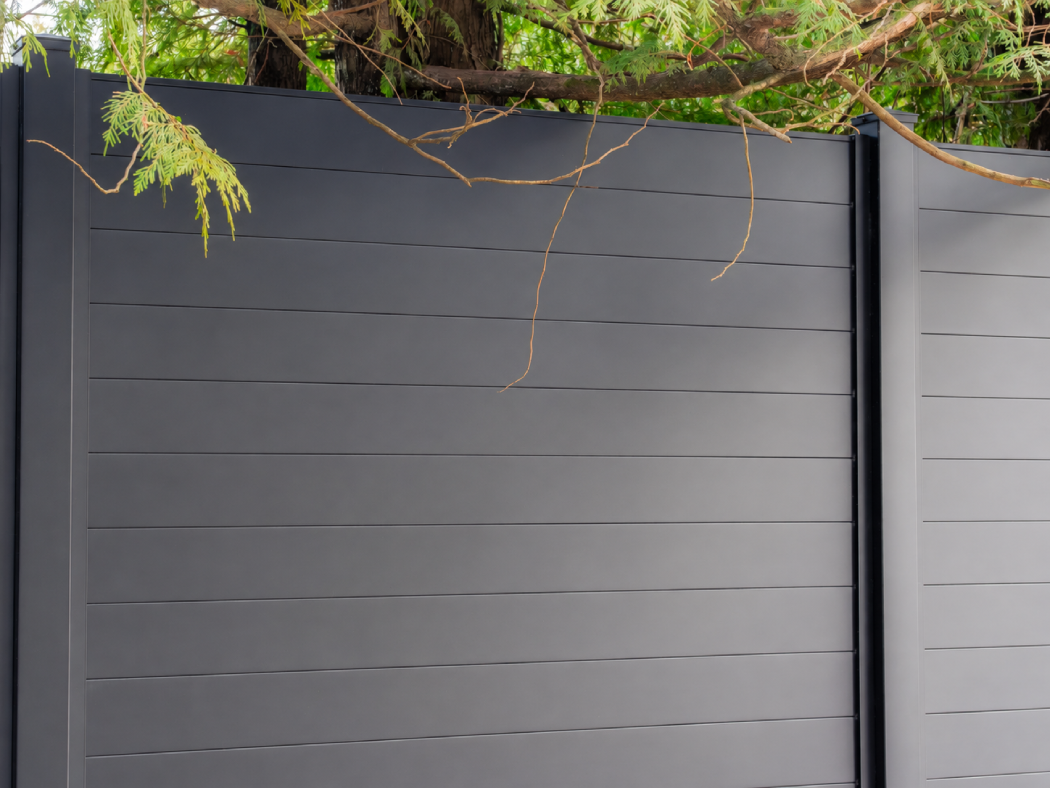
Across the panel face, its smooth surface provides no accessible handholds or footholds, making climbing significantly more difficult while maintaining a refined architectural appearance.
Unlike open fencing systems, there are no large openings that allow hands or feet to pass through the fence and no exposed horizontal rails across the exterior panel face that can readily serve as steps or gripping points.
This is the fundamental anti-climb principle of the system. Rather than adding deterrents to a climbable fence, the design removes the accessible climbing points in the first place.
Height as a Passive Security Feature
Fence height plays a significant role in perimeter security.
SLEEKFENCE aluminum fence systems are available in heights of up to 12 feet, making them suitable for over-height fencing applications where increased perimeter security and privacy are required.
As fence height increases, unauthorized climbing becomes progressively more difficult without relying on aggressive visual deterrents.
Combined with a smooth, non-climbable panel face, increased height provides an additional passive layer of perimeter security.
Controlled Access
A secure perimeter extends beyond the fence itself.
Coordinated pedestrian gates and vehicle gates help control access while maintaining a consistent appearance and engineered performance throughout the project.
Why Anti-Climb Design Can Reduce the Need for Spikes
Many traditional security fences incorporate spikes, barbed wire, spear tops, or other deterrents because the fence itself provides climbing opportunities.
A smooth aluminum privacy fence takes a different approach.
When accessible climbing points are eliminated through the fence design itself, spikes or spear tops may no longer be necessary as the primary anti-climb measure, depending on the project's security requirements.
Height can then become an additional passive security feature rather than compensating for an otherwise climbable fence.
For schools, healthcare facilities, police departments, public safety complexes, corporate headquarters, and civic projects, a taller smooth fence can improve security while presenting a more welcoming appearance.
The objective is to make the fence itself difficult to climb, rather than relying primarily on what is attached to the top of it.
Factory-Assembled Panels Simplify Installation
Installation is an important consideration for every commercial fencing project.
Rather than requiring numerous individual components to be assembled in the field, SLEEKFENCE Lineara Full Privacy panels arrive factory assembled.
Installation typically consists of setting the posts, positioning the completed panels, and securing the panels to the posts.
Reducing field assembly helps improve installation consistency while minimizing repetitive on-site fastening operations and installation labor.
Because privacy is integrated into the panel system, separate privacy inserts or screening components do not have to be added across the fence line as a secondary installation step.
Corrosion Resistance Matters
Security fencing is expected to perform for decades.
Material selection plays a major role in long-term appearance, maintenance requirements, and lifecycle cost.
The Lineara Full Privacy system is manufactured from aluminum, which does not develop red rust.
Unlike steel, aluminum does not rely on a steel substrate protected beneath a coating. If the finish is damaged, there is no exposed steel beneath it that can rust in the same way.
Steel security fencing can provide excellent durability when properly protected through galvanizing and high-performance coating systems. However, its long-term corrosion resistance depends on maintaining the integrity of those protective layers throughout the fence's service life.
For coastal environments, humid climates, and projects where long-term appearance is important, aluminum provides a durable, low-maintenance solution.
Why Specify an Aluminum Anti-Climb Fence?
An aluminum anti-climb fence can address multiple project priorities beyond climbing resistance alone.
Complete Privacy
Integrated privacy panels create a continuous visual barrier that helps limit visibility into the protected property while contributing to the system's anti-climb design.
Modern Architectural Design
A smooth aluminum fence complements contemporary architecture rather than creating the appearance of a high-security compound.
Purpose-Built Anti-Climb Design
Anti-climb performance is created through the smooth, continuous panel design rather than depending primarily on exposed security deterrents.
Corrosion Resistance
Aluminum naturally resists corrosion and will not develop red rust, helping maintain long-term appearance and performance in coastal, humid, and other demanding exterior environments.
Fire Performance
SLEEKFENCE combines a Class A rating under ASTM E84 with a non-combustible aluminum substrate under ASTM E136, supporting use in fire-prone environments. See fire ratings and material performance.
Low Maintenance
Aluminum construction supports a low-maintenance fence system with strong long-term appearance and corrosion resistance.
Fully Engineered System
Panels, posts, gates, and hardware are engineered to work together as one coordinated fence system. Full Privacy configurations are structurally designed for the higher wind loads associated with a solid fence surface.
Security Without an Industrial Appearance
Many commercial and institutional projects require enhanced perimeter security without creating an environment that feels intimidating.
The Lineara Full Privacy aluminum fence helps discourage climbing while maintaining clean lines, complete privacy, and a refined architectural appearance.
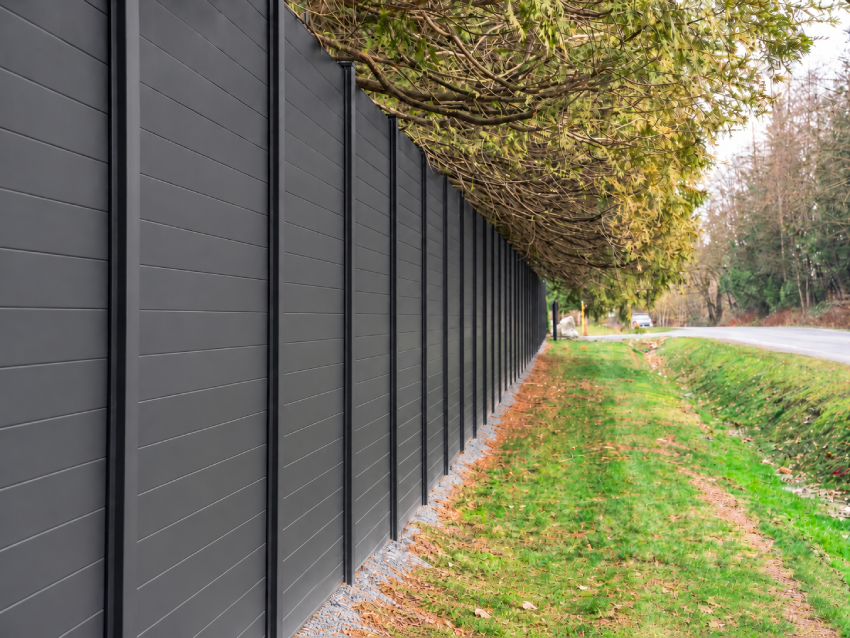
Instead of looking like traditional security fencing, it becomes part of the architecture.
This can allow project teams to address perimeter security without automatically introducing the visual language of exposed pickets, spear tops, spikes, mesh, or barbed wire.
Typical Applications
The Lineara Full Privacy anti-climb aluminum fence is well suited for projects requiring security, privacy, and architectural design. These characteristics make it particularly relevant for commercial security fencing applications where perimeter performance and architectural appearance need to work together.
Public Safety & Government: Police departments, public safety complexes, government buildings, municipal facilities, and courthouses.
Education & Healthcare: Schools, universities, healthcare campuses, and medical office buildings.
Critical Infrastructure: Data centers, water treatment facilities, utility infrastructure, electrical substations, and transportation facilities where security, privacy, long-term durability, and visual screening are important.
Commercial & Residential: Corporate headquarters, multi-family developments, mixed-use developments, public parks and civic spaces, and high-end residential communities.
Anti-Climb Fence vs. Traditional Security Fencing
Choosing the Right Anti-Climb Privacy Fence
The best anti-climb fence is one that balances security, privacy, durability, installation efficiency, and architectural appearance for the specific project.
When evaluating systems, consider surface design, required fence height, over-height fence configurations, privacy requirements, visibility into the property, whether privacy is integral to the engineered system or added later, project-specific wind loads, material durability, corrosion resistance, installation complexity, long-term maintenance, and architectural compatibility.
For many commercial and institutional projects, a smooth aluminum privacy fence offers an ideal balance between perimeter security and contemporary architectural design.
The key is to evaluate privacy, anti-climb performance, structural requirements, and architectural appearance as parts of one perimeter system rather than as separate add-ons.
Frequently Asked Questions
What makes a fence anti-climb?
An anti-climb fence is designed to reduce or eliminate accessible handholds and footholds while incorporating sufficient height and structural performance to make unauthorized climbing more difficult.
In the Lineara Full Privacy system, the continuous exterior panel face provides no accessible handholds or footholds.
Is a privacy fence more difficult to climb?
In many cases, yes. A continuous privacy surface generally offers fewer climbing opportunities than open fencing systems with exposed rails, mesh, or large openings.
The important distinction is the fence design itself. A purpose-built smooth privacy system can combine visual screening with anti-climb characteristics, while not every privacy treatment necessarily does so.
Why does privacy matter for perimeter security?
A secure perimeter may need to control both physical access and visibility. Full Privacy can help prevent direct observation of equipment, vehicles, operations, or other assets inside the protected property.
Are spikes always necessary?
Not necessarily. When anti-climb performance is built into the fence design, a project may not need to rely on spikes or other visible deterrents as its primary climbing defense. Additional security measures should always be selected based on the project's specific risk profile and requirements.
Can privacy be added to an open security fence?
Privacy screening can be incorporated into some open fence systems, but doing so changes the wind loading on the fence. Increasing the solid surface area may require the posts, horizontal structural members, connections, and foundations to be structurally reassessed.
Lineara Full Privacy is engineered as a solid privacy system from the beginning. For a broader explanation of how wind acts on privacy fencing and why system design matters, see High Wind-Resistant Fence Design.
How tall should an anti-climb fence be?
Required height depends on the application and security objectives. SLEEKFENCE Lineara Full Privacy systems are available in heights of up to 12 feet, providing additional passive security while maintaining a clean architectural appearance.
Why choose aluminum for a security fence?
Aluminum offers corrosion resistance, low maintenance, long-term durability, and a refined architectural appearance while supporting modern engineered fence systems for commercial and institutional applications.
Conclusion
The most effective anti-climb fencing begins with thoughtful design rather than relying solely on added deterrents.
The SLEEKFENCE Lineara Full Privacy system combines a smooth exterior surface, integrated privacy panels, heights of up to 12 feet, factory-assembled construction, corrosion-resistant aluminum, and modern architectural design to help discourage unauthorized climbing while creating a perimeter that complements today's commercial, institutional, and public-sector projects.
Its Full Privacy design also limits visibility into the protected area, allowing privacy and perimeter security to work together rather than treating screening as a secondary addition.
Rather than simply adding privacy or security features to a traditional fence, Lineara Full Privacy was engineered as a complete aluminum fence system where privacy, anti-climb performance, structural capacity, and architectural design are considered together from the outset.
Security begins with the fence design itself.
If you are working on a project where perimeter security, privacy, height, wind requirements, or architectural appearance matter, discuss your project requirements with our team to identify the appropriate SLEEKFENCE system and configuration for the site.
Related Posts
Let’s Discuss Your Project
From early planning through installation, our team provides clear technical guidance and coordinated project support.