Does Sound-Reducing Fencing Actually Work?
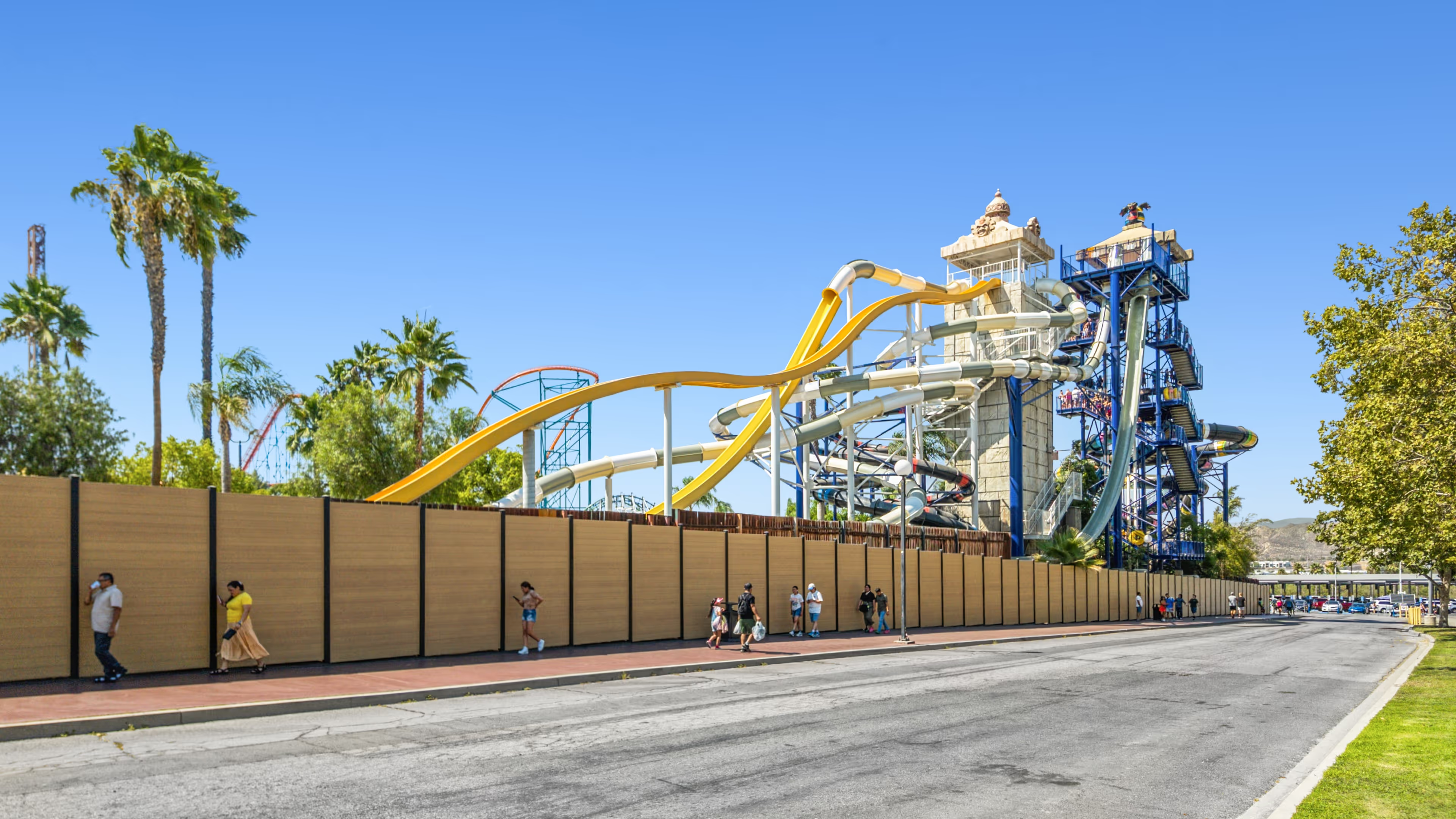
Noise is one of the fastest ways to erode the usability and perceived quality of an outdoor space. Whether it’s traffic, service areas, adjacent tenants, or nearby facilities, uncontrolled sound directly impacts tenant experience, productivity, and overall asset value.
For architects, developers, and contractors, the question is not whether fencing can reduce noise, it’s how effectively it can be designed to do so.
The Reality of “Soundproof” Fencing
There is no such thing as a truly soundproof fence in an open outdoor environment.
Sound travels in multiple ways—directly, by reflecting off surfaces, and by bending over barriers. Even a well-designed fence cannot eliminate all sound.
What is achievable is meaningful reduction. In many cases, that reduction is enough to make a space functional and controlled.
A well-designed system works by limiting:
- Direct transmission
- Reflection
- Diffraction over the top of the barrier
Why Solid Panel Design Is Critical
Most fences fail as sound barriers because they allow air—and sound—to pass through.
Picket fences, ornamental metal, and spaced slats all introduce gaps. Even small openings significantly reduce performance.
A solid, no-gap panel system changes that.
It:
- Blocks direct line-of-sight sound
- Reflects a portion of sound energy
- Reduces sound leakage through the structure
The result is not silence, but a noticeable reduction in perceived noise, especially in common frequencies like traffic, voices, and equipment.
Height Is a Major Performance Driver
Height is one of the most underestimated factors in noise reduction.
Because sound bends over barriers, increasing height makes that path longer and less effective.
In practical terms:
- 6 ft provides limited reduction
- 8 ft delivers noticeable improvement
- 10–12 ft (where permitted) can significantly reduce perceived noise
On larger developments, this becomes a design decision—not just a boundary condition.
Where Sound-Reducing Fencing Adds Value
Noise control fencing is most effective where sound is consistent and directional.
Typical applications include:
- Perimeters along roadways or highways
- Screening loading zones and parking areas
- Courtyards and amenity spaces
- Multi-family and hospitality environments
In these settings, reducing background noise improves usability, tenant satisfaction, and overall project quality.
Material Stability and Long-Term Performance
Performance over time matters just as much as day one.
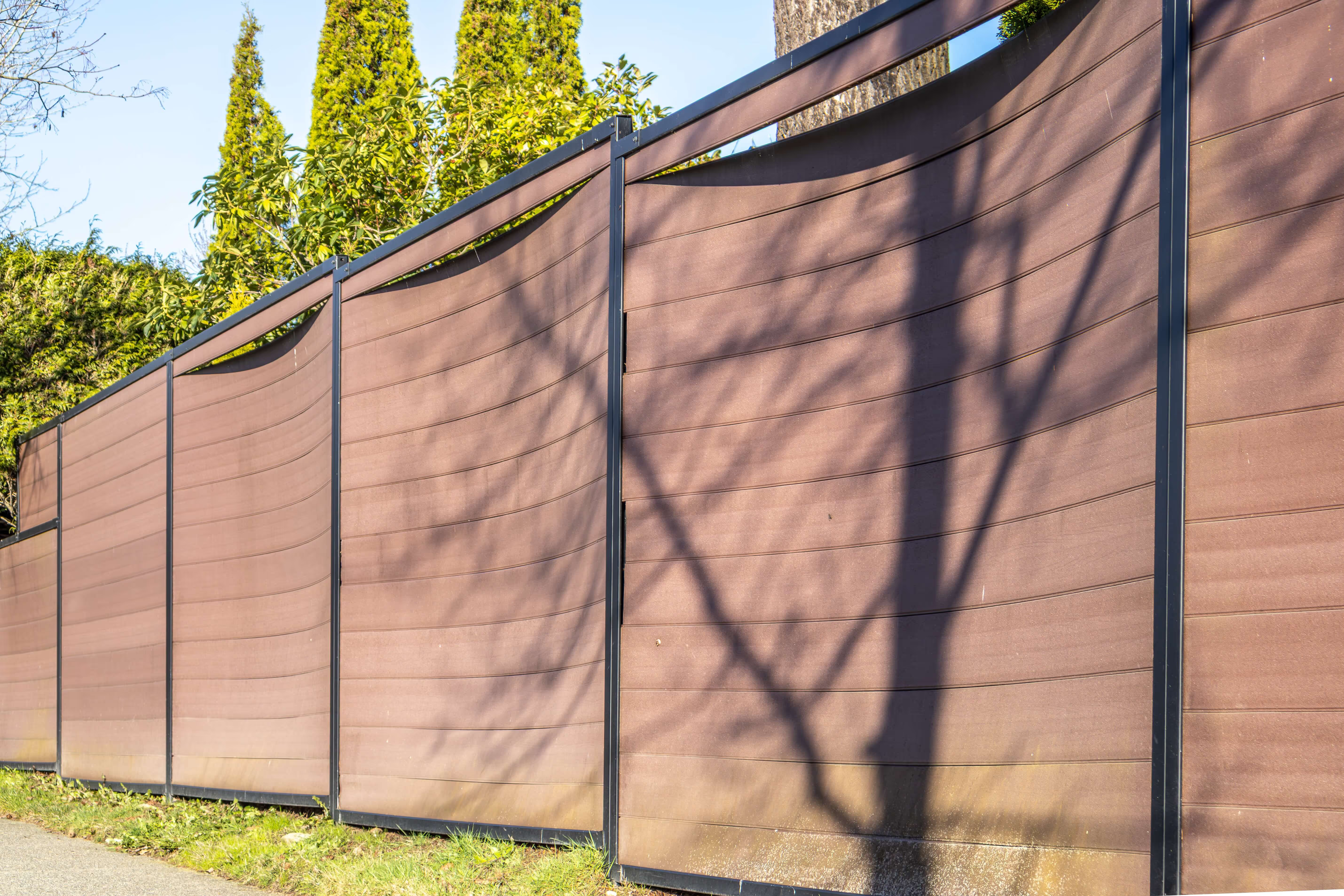
If a fence develops gaps due to warping, shrinkage, or movement, its effectiveness drops quickly. Wood and composite systems are more prone to this over time. (image below)
A rigid aluminum system maintains alignment and preserves a consistent, no-gap barrier. This ensures the acoustic performance remains stable without ongoing maintenance or correction.
Positioning Within a Broader Acoustic Strategy
Fencing works best as part of a larger approach.
It serves as a first layer—reducing direct transmission and improving baseline conditions. When combined with landscaping, berms, and building orientation, overall performance improves further.
This layered strategy is far more effective than relying on any single element.
Why Our Type of System Is Typically Selected
On commercial and architect-led projects, sound-reducing fencing is selected when performance needs to be predictable over time.
Our solid-panel aluminum system offers:
- Consistent, no-gap construction
- Structural rigidity at increased heights
- Minimal maintenance with long-term durability
- Flexibility to adapt to different site conditions
It allows project teams to address noise as part of the design process, rather than reacting to it after occupancy.
For applications where noise reduction, durability, and long-term appearance all matter, it becomes a practical and scalable solution.
If you’re planning a project and want to make sure the fence system is aligned with your site conditions, layout, and engineering requirements, contact us so our team can help review your plans and provide guidance early in the process.
Related Posts


Let’s Discuss Your Project
From early planning through installation, our team provides clear technical guidance and coordinated project support.