Best Fence Systems for Coastal Homes and Waterfront Developments
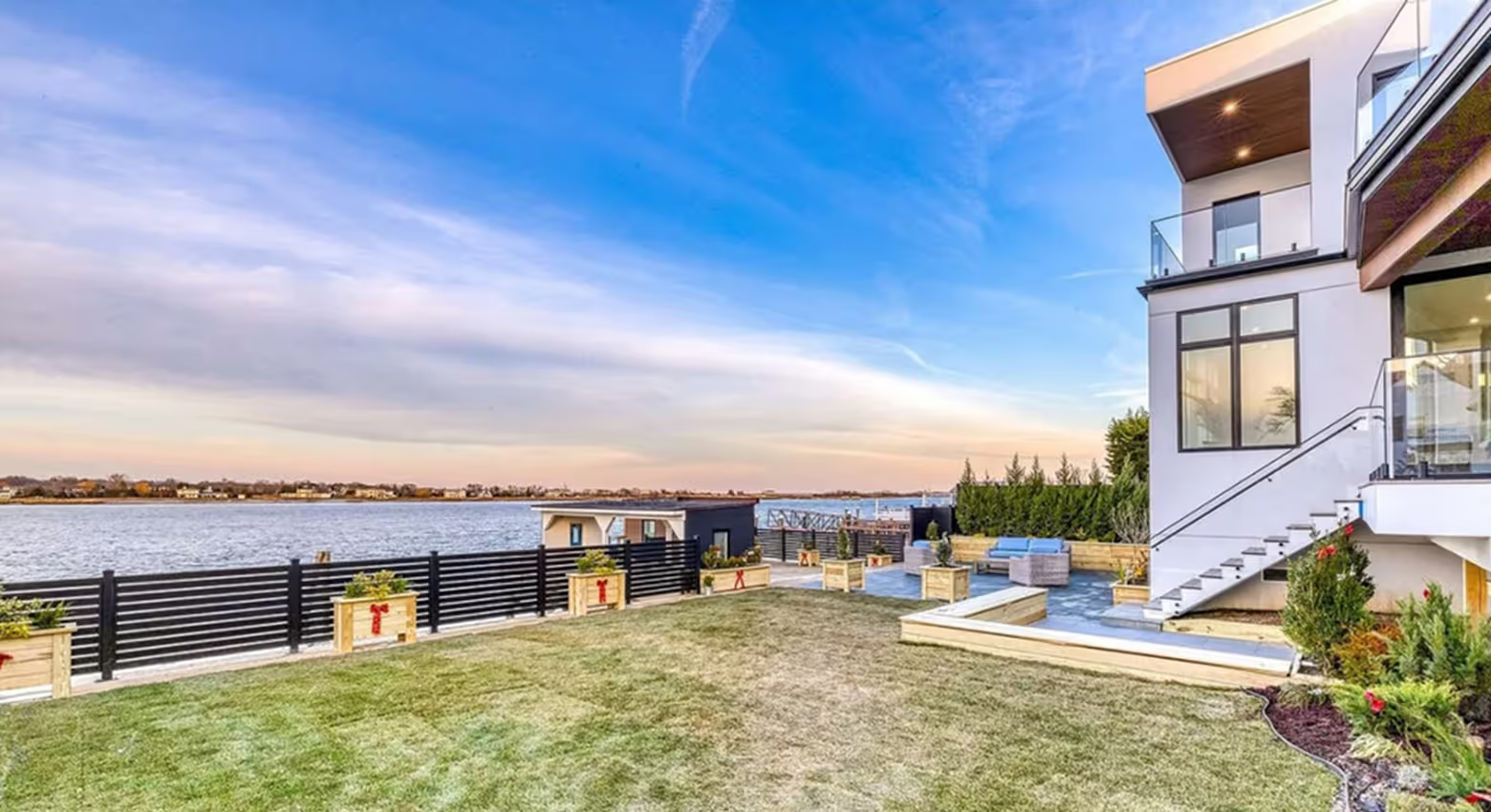
Coastal environments are one of the most demanding conditions any fence will face. Salt air, constant moisture, high UV exposure, and strong winds all work together over time. What looks good at installation can deteriorate quickly if the system isn’t designed specifically for these conditions.
On high-end residential properties and waterfront HOA developments, the expectation is not just durability - it’s long-term consistency. The fence needs to look the same in five, ten, or twenty years as it did on day one.
That requires a different level of material selection, coating quality, and system design.
Why coastal environments are so demanding
Salt is the biggest factor.
Airborne salt accelerates corrosion on most materials, especially at connection points, fasteners, and areas where coatings are compromised. Combine that with constant moisture and UV exposure, and you have a cycle that continuously breaks down lower-quality systems.
Wind is the second major factor. Waterfront properties are often fully exposed, meaning fences are subjected to sustained pressure and gusts without natural wind breaks.
These conditions don’t just test materials - they test the entire system.
Where most fencing systems fail
The failure point is rarely obvious at the start.
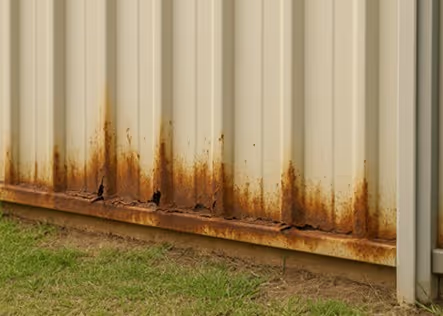
Steel-based systems rely heavily on coatings. Once that coating is scratched, chipped, or worn over time, corrosion begins and spreads. In coastal environments, that process accelerates significantly.
Wood fences absorb moisture, expand and contract, and degrade over time. Even with maintenance, they struggle to maintain a consistent appearance in these conditions.
Composite and vinyl systems avoid corrosion, but introduce other issues around structural performance, expansion, and long-term stability, especially in high wind areas.
The result is the same - inconsistent appearance, increased maintenance, and eventual replacement.
What actually holds up long term
In coastal and waterfront applications, the focus needs to shift from material alone to how the full system performs over time.
Aluminum, when properly specified, provides a strong foundation. It does not rust, and it performs well in environments with constant moisture and salt exposure.
But material alone is not enough.
The longevity of a coastal fence comes down to:
- coating quality and pretreatment process
- how connections are designed and protected
- how the system handles wind load
- whether the structure maintains alignment over time
If any one of these is weak, the system will show it.
Why coating quality matters more than most realize
In coastal environments, coating performance becomes critical.
A powder-coated finish is only as good as the process behind it. Proper pretreatment, controlled application, and batch-level quality checks are what determine whether the coating holds up or begins to fade, chalk, or degrade.
This is one of the biggest unknowns for property owners and architects. Two systems can look identical at installation, but perform completely differently over time depending on coating quality.
On high-end properties and HOA developments, that difference becomes very noticeable within a few years.
Design considerations for waterfront projects
Beyond materials and coatings, design plays a major role in long-term performance.
Wind exposure needs to be accounted for early. Solid privacy fencing acts like a sail, especially in open coastal environments. In some cases, incorporating airflow through screen-style designs can reduce peak pressure and improve overall performance.
Mounting conditions also matter. Whether the fence is installed in-ground, on a retaining wall, or as part of a larger structural element, the system needs to be designed to handle those conditions without introducing weak points.
Consistency across large developments is another factor. Waterfront HOAs often involve long fence runs, shared boundaries, and multiple phases of installation. The system needs to maintain a uniform appearance over time, even as different crews work across the project.
Where our system fits into coastal applications
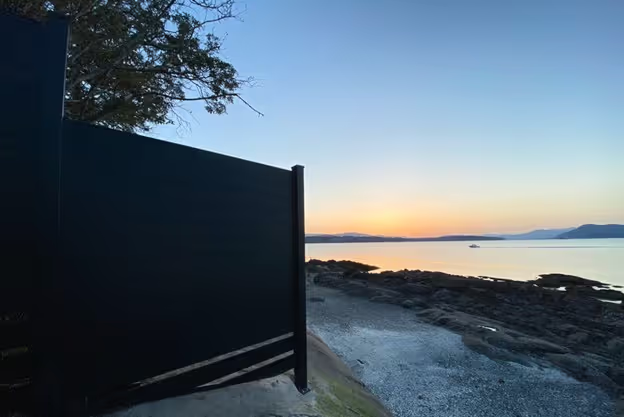
Our system is designed to address the full set of challenges that come with coastal and waterfront environments.
Because aluminum is the base material, there is no risk of rust. The focus then shifts to ensuring the coating and structural system perform at a high level over time.
Panels and gates arrive pre-assembled, which removes variability during installation and ensures consistent quality across the project. This is particularly important on large HOA developments where multiple crews may be involved.
The post system allows for internal reinforcement where required, helping the fence handle higher wind loads without compromising the exterior appearance.
And because the system is designed to be configurable, it can adapt to different site conditions while maintaining a consistent, high-end finish.
Bringing it all together
Coastal fencing is not just about choosing a material that won’t fail quickly. It’s about selecting a system that can handle continuous exposure while maintaining its appearance and structural integrity over time.
On high-end residential properties and waterfront developments, that standard is higher.
The goal is not just to install a fence that works today, but one that continues to perform and look right years into the future.
If you’re planning a coastal or waterfront project and want to ensure the system is aligned with environmental conditions, layout, and long-term expectations, our team can help review your plans and provide guidance early in the process.
Related Posts

Let’s Discuss Your Project
From early planning through installation, our team provides clear technical guidance and coordinated project support.