Coating Quality: The Biggest Variable in the Market
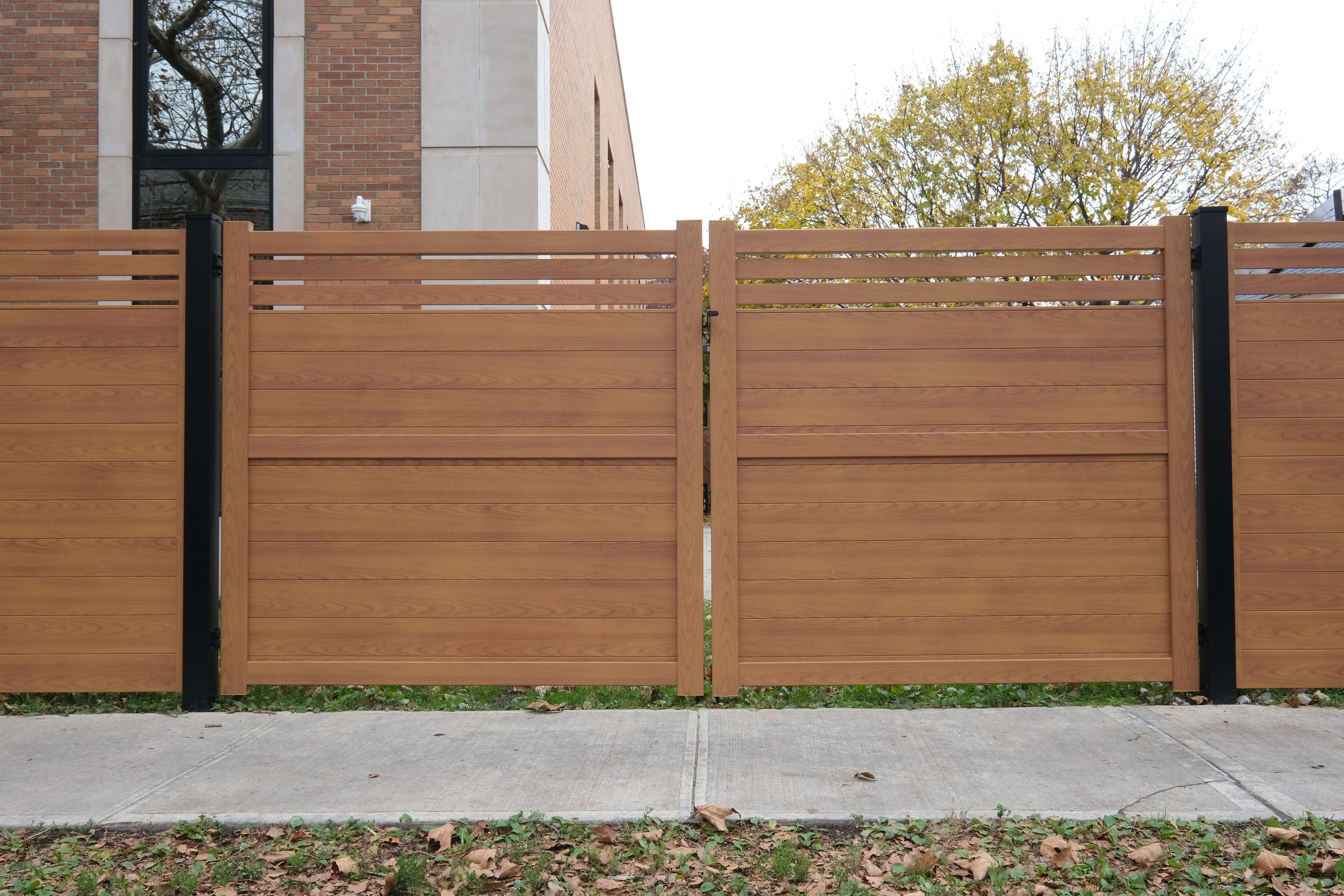
Aluminum fencing is widely considered one of the most reliable materials available for modern commercial and high-end residential projects. It’s durable, corrosion-resistant, and adaptable to a wide range of applications.
But like any material, performance depends heavily on how it’s manufactured, specified, and installed.
The reality is that not all aluminum fencing systems are equal. Many of the “problems” associated with aluminum aren’t actually material issues—they’re specification and quality control issues.
If you’re working on a project where long-term performance matters, these are the areas worth paying attention to.
Coating Quality: The Biggest Variable in the Market
The most significant issue in the aluminum fencing market is not the aluminum itself—it’s the coating.
From a distance, most aluminum fences look the same. Clean lines, consistent color, smooth finish. But what you can’t see is how well that coating was applied, and that’s what determines long-term performance.
Powder coating is a multi-step process. The aluminum must be properly cleaned, rinsed, and pretreated before coating. If this step is rushed or inconsistent, the coating won’t bond correctly.
From there, the coating is applied electrostatically and cured in ovens at controlled temperatures. If grounding, temperature control, or curing times are off, the result is a finish that may look good initially but fails prematurely.
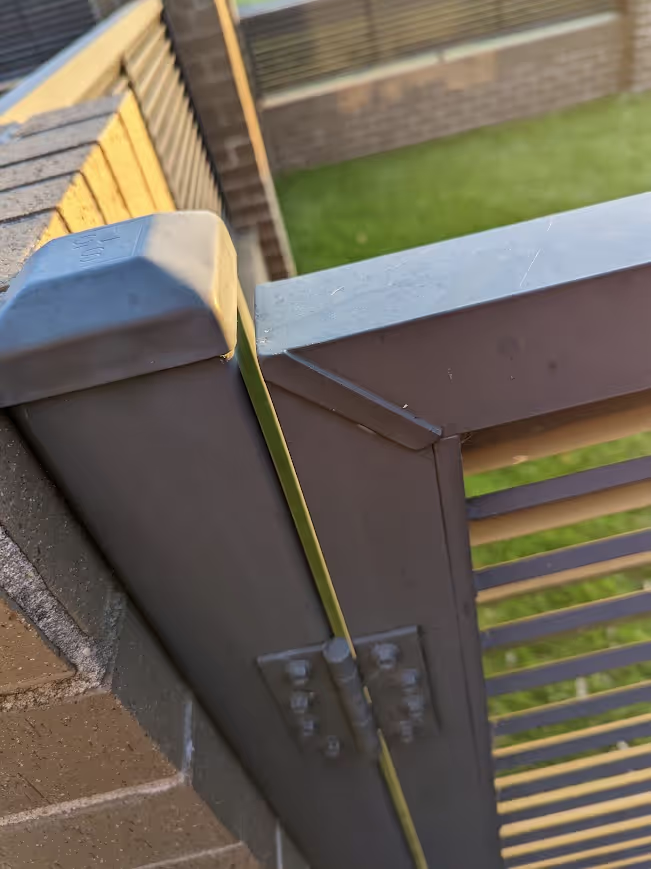
The difference shows up years later: peeling, chipping, or inconsistent fading. The image below shows how extreme fading can be over a few short years.
This is why quality control matters. A well-run manufacturer will have checks throughout the process, along with post-production testing. That includes coating thickness measurements, adhesion testing, impact resistance, and corrosion testing such as salt spray.
For architects and specifiers, this is the key takeaway: you cannot judge coating quality visually. It needs to be verified through documented processes and testing.
Surface Finish Limitations
Another consideration with aluminum is the nature of the finish itself.
Powder coating produces a smooth, consistent surface. Standard finishes typically fall within matte, satin, or gloss ranges, with some variation depending on the powder system used. There are textured powders available, but they are still relatively subtle compared to molded or embossed materials
This means aluminum doesn’t naturally replicate deep wood grain or heavy texture the way composite or vinyl systems can. Woodgrain finishes are available through sublimation processes, but even then, you’re working with a controlled, repeatable pattern rather than a natural variation.
For most modern architectural applications, this is actually an advantage. But for projects specifically trying to replicate natural materials, it’s something to be aware of.
Heat Considerations in Dark Finishes
Like any material, aluminum will absorb heat in darker colors.
Black or darker powder-coated finishes can become hot to the touch in direct sun, particularly in exposed environments. This is not a structural issue, but it can be a user-experience consideration in certain applications, such as daycares or areas with frequent direct contact.
Where that matters, lighter colors such as white or lighter-toned finishes reduce heat absorption. Woodgrain finishes can also moderate surface temperature compared to solid dark colors.
This is a specification decision, not a limitation of the material itself.
Cost Perception vs. Lifecycle Performance
Aluminum is often viewed as a higher-cost option compared to wood, vinyl, or chain link.
But this is largely a framing issue. Aluminum is a structural, long-life material that does not rust, rot, or require ongoing maintenance. When evaluated over the full lifecycle of a project, it typically outperforms lower-cost materials that require replacement or ongoing upkeep.
On projects where long-term performance, consistency, and reduced maintenance are priorities, aluminum is not a cost problem—it’s a value decision.
Where Aluminum Still Requires Attention
Even with a high-quality system, proper specification and installation matter.
Things like correct post spacing, appropriate anchoring for wind loads, and alignment with site conditions all play a role in how the system performs. Aluminum is capable of meeting demanding requirements, but it needs to be engineered and installed accordingly.
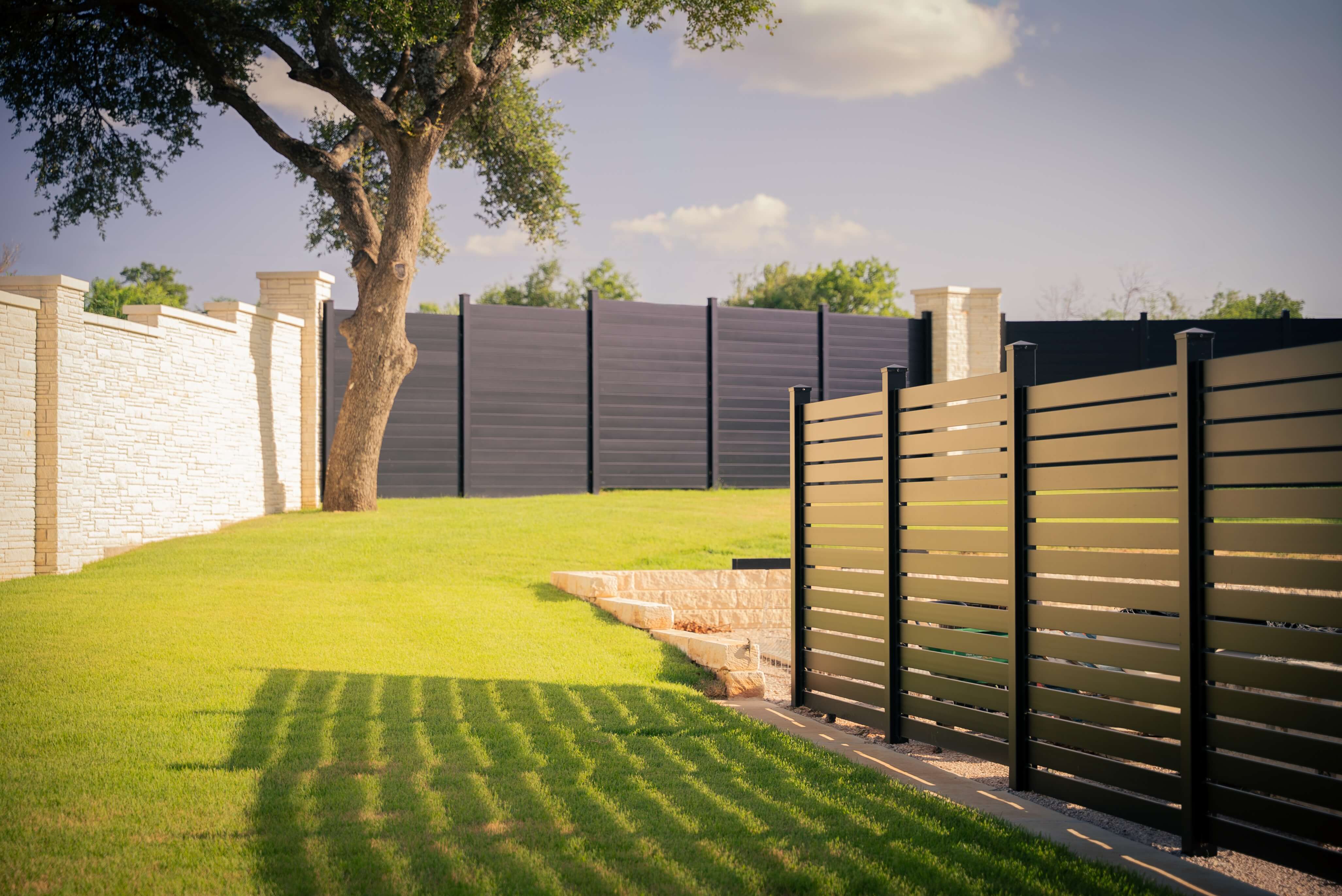
This is where working with a manufacturer that understands commercial applications becomes important. A lot of engineering goes into a fence installed as high as this one in the image below. Being at 10’ high, this fence is acting as a massive sail in a windstorm and must be designed to handle one.
Why Aluminum Is Still the Standard for High-Performance Projects
When specified correctly, aluminum fencing solves most of the issues that other materials introduce.
It doesn’t rely on a material that degrades over time. It maintains its structure, holds its finish, and performs consistently across a wide range of environments. It can be engineered for wind loads, height, and complex applications, and it integrates cleanly into modern architectural design.
The “problems” with aluminum are almost always tied to poor-quality manufacturing or weak specification—not the material itself.
For high-end residential and commercial projects, the focus shouldn’t be on whether aluminum works. It’s on selecting the right system and ensuring it’s produced and installed to the standard the project requires.
If you’re working on a project with specific wind load, mounting, or design requirements, contact us so we can support with system recommendations and help ensure everything is aligned with engineering and specification needs.
Related Posts


Let’s Discuss Your Project
From early planning through installation, our team provides clear technical guidance and coordinated project support.