Aluminum Fence vs Wood vs Vinyl: The Commercial Fencing Material Comparison
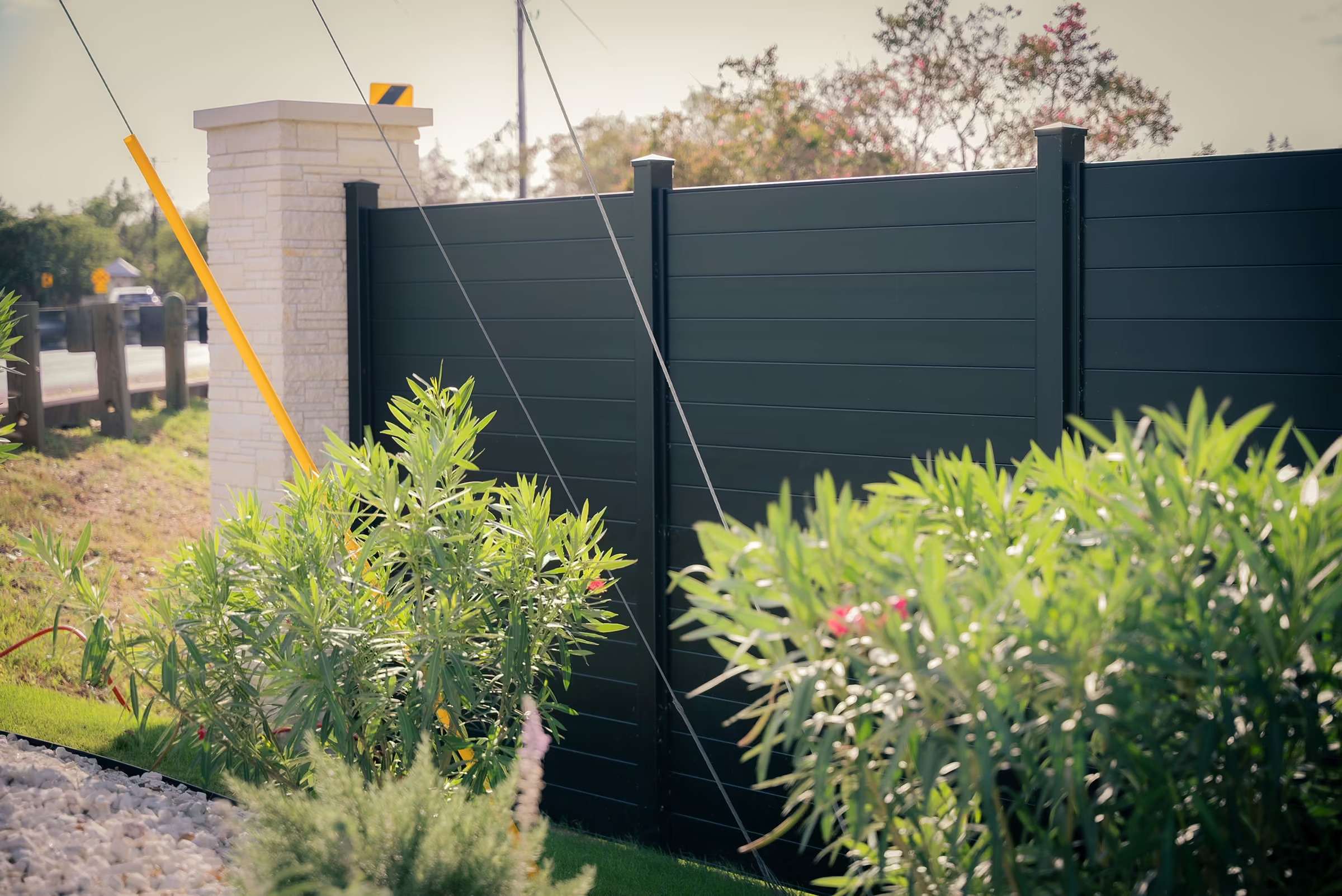
Choosing between aluminum fence vs wood is not just a material decision. On a commercial, institutional, multi-family, or high-end residential project, the fence affects the look of the property, the long-term maintenance burden, and the way the site performs over time.
Wood, vinyl, and aluminum all have a place. The problem is that traditional materials are often selected out of habit, not because they are actually the best fit for the project. A fence is no longer just a line around a property. On higher-profile projects, it becomes part of the design, part of the security plan, and part of the long-term value of the site.
That is why the material choice matters.
Why Material Choice Matters in Commercial Fencing
On a small residential project, a fence failure or poor-looking section is annoying. On a commercial project, it becomes a bigger issue. The architect's original design is compromised. The contractor gets callbacks. The property owner is left with maintenance, repairs, and a site that starts to look tired.
Commercial fencing materials need to be evaluated differently than backyard materials. The questions are not just “what does it cost?” or “does it look good today?” The better questions are: how long will it keep its shape, what maintenance does it require, can it handle wind and weather, and will it still support the property in 10 or 20 years?
This is where the differences between wood, vinyl, and aluminum become very obvious.
Aluminum Fence vs Wood: Where the Differences Show Up
Wood is popular for a reason. It is familiar, it has natural warmth, and on certain residential or rustic projects it can look excellent. It is also usually less expensive upfront than aluminum. For a detailed breakdown of initial costs, long-term maintenance expenses, and lifecycle value, see our Aluminum Fence vs. Wood Fence Cost Guide. If the goal is a traditional look and the project does not have major long-term performance requirements, wood can still make sense.
The issue is what happens over time. Wood moves, twists, checks, cracks, absorbs moisture, and eventually decays. Posts are especially vulnerable because they are constantly exposed to moisture at the base, even when set in concrete. Every fastener and connection point depends on the integrity of the wood. As the wood ages, those connection points weaken.
That is the part that gets missed in a lot of project planning. A wood fence may look acceptable and even pass initial requirements at installation, but it does not maintain the same structural condition over time. Once decay starts, the fence is no longer performing the way it did on day one.
Aluminum is different. It does not rot, does not absorb moisture, and does not rely on organic material holding fasteners together as it ages. A properly designed aluminum fence system can be engineered for height, wind load, gates, surface mounting, and site-specific conditions.
From a design standpoint, aluminum also gives architects a cleaner and more consistent material to work with. It can be powder coated, finished in black, white, custom colors, or woodgrain, and built into modern profiles that wood struggles to hold over time.
Aluminum vs Wood Fence: The Real Design Decision
The aluminum vs wood fence decision often comes down to how long the project needs to look good.
If the property is being built quickly for sale and nobody is thinking about the fence after handover, wood may seem attractive because of the lower upfront cost. But if the owner is keeping the property, or if it is a high-end residence, commercial site, HOA, resort, or institution, the long-term picture changes.
Wood requires a maintenance cycle. Staining, sealing, replacing boards, tightening fasteners, dealing with leaning posts - this becomes part of owning the fence. Even with good maintenance, it will not look the same after years of sun, moisture, and temperature changes.
Aluminum has a higher first cost, but it avoids most of that cycle. For serious projects, that is the whole point.
Aluminum vs Vinyl: Side-by-Side
The aluminum fence vs vinyl comparison is different from wood, but the conclusion is similar for commercial projects.
Vinyl is usually selected because it is lower cost and low maintenance. For a comparison of pricing and longevity, see our Aluminum Fence vs. Vinyl Fence Cost Guide. That can work for basic residential applications where appearance and structural performance are not major priorities. But vinyl is still a plastic product, and that creates limitations.
In darker colors, vinyl absorbs more heat. That can lead to warping, bowing, or panel deformation if the system is not designed extremely carefully. In cold weather, vinyl becomes less flexible and can be more vulnerable to cracking under impact. Over time, it can fade, yellow, chalk, or age inconsistently across a long run.
This is why vinyl is a difficult fit for high-profile commercial projects. It is hard to imagine a premium healthcare facility, national coffee brand, car wash chain, or luxury property choosing a plastic fence as the long-term exterior design solution. That is not meant as a cheap shot. It is just the reality of the material. When the property is high-profile, the fence needs to look like it belongs.
Aluminum gives the project a different level of finish and structure. It is more rigid, more design-flexible, and far better suited to projects where the fence is visible and expected to perform over time.
The Real Cost Comparison: First Cost vs Lifetime Cost
Most fence cost comparisons focus too much on installation cost. That is only part of the picture.
Wood is usually cheaper upfront, but the maintenance adds up. Over 10 or 20 years, you may be paying for staining, sealing, repairs, post replacement, board replacement, and eventually full replacement.
Vinyl sits somewhere in the middle. It has a lower upfront cost than aluminum and less maintenance than wood, but the long-term appearance can become the issue. If the fence fades, yellows, cracks, or warps, the fact that it was “low maintenance” does not matter much.
Aluminum usually carries the highest upfront cost of the three, but it is designed for a much longer service life with far less maintenance. That is why the cost of aluminum fence vs wood needs to be judged over the life of the project, not just at purchase.
Performance in Commercial Conditions
Commercial projects put more stress on a fence than typical residential projects. There are longer runs, more gates, more public exposure, more maintenance concerns, and often higher expectations around wind, fire, and long-term appearance.
Wood struggles in these conditions because it is constantly moving and degrading. Vinyl struggles because it lacks rigidity and has heat, impact, and aging limitations. Steel can perform structurally, but if the coating is damaged or poorly applied, rust becomes the major concern.
Aluminum is well-suited to these conditions because it does not rust, rot, or absorb moisture. It is also light enough to work across complex applications, while still being strong when designed properly. With the right post system, reinforcement, and mounting method, aluminum can be engineered for high wind loads, rooftop applications, surface-mounted conditions, and taller fence heights.
This is also where terms like fire-resistant fencing and hurricane-rated fencing become relevant. The material matters, but the full system matters more. Post size, reinforcement, panel assembly, fastener spacing, mounting condition, and gate design all affect how the fence performs.
Maintenance and Lifecycle: What Each Material Demands
Wood requires the most maintenance. It needs staining or sealing, inspections, repairs, and eventually replacement. The issue is not just appearance. As posts and connection points decay, the structure itself becomes less reliable.
Vinyl is lower maintenance, but not maintenance-free in the way people sometimes assume. It still needs cleaning, and older vinyl can become discolored, brittle, warped, or damaged. If the fence is visible on a high-profile property, the appearance becomes the problem.
Aluminum is the lowest-maintenance option when the system and coating are done properly. It generally needs periodic cleaning, not repainting, staining, or sealing. The key is choosing a manufacturer with serious coating quality control, because powder coating quality is not something you can judge just by looking at the fence when it is new.
For facility managers and long-term owners, this matters. Less maintenance means fewer interruptions, fewer complaints, and less money spent keeping the property looking acceptable.
Design and Specification Considerations for Architects
For architects, the best fence is not just the one that looks good in a rendering. It is the one that can actually be built consistently and still look right after installation.
That means thinking about profile dimensions, panel rhythm, post spacing, gate integration, finish quality, wind load, slope handling, and how the system ties into the rest of the site. It also means asking whether the manufacturer can provide drawings, samples, engineering support, and clear installation guidance.
Pre-assembled aluminum systems have a major advantage here because they reduce field variability. If panels and gates are assembled piece by piece on site, the final result depends heavily on the installer. On large projects with multiple crews, that creates risk.
A properly developed aluminum system gives the architect more control. The fence can be specified as a complete system rather than a loose collection of parts. That protects the original design and makes the project easier for contractors to execute. Architects can review a complete aluminum fence system example here.
When Wood or Vinyl Still Makes Sense
Wood and vinyl are not useless materials. They just belong in the right context.
Wood makes sense when the goal is a natural look, the project is lower-risk, and the owner accepts the maintenance. It can work well for rustic settings, agricultural applications, or residential projects where the warmth of real wood is the priority.
Vinyl makes sense when budget is the main driver and the expectations are lower. It can work for simple residential projects where a light-colored, low-maintenance fence is enough.
But neither material is ideal when the project requires long-term appearance, strong structural performance, modern design, or commercial-level durability. That is where aluminum becomes the better category answer.
FREQUENTLY ASKED QUESTIONS
Which lasts longer, aluminum or wood fencing?
Aluminum fencing typically lasts much longer with far less maintenance. Wood fencing can last for years if maintained well, but boards, posts, and fasteners all degrade over time. In commercial conditions, that maintenance cycle becomes a major disadvantage.
Is aluminum fencing more expensive than wood and vinyl?
Yes, aluminum usually costs more upfront than both wood and vinyl. Over the life of the project, the comparison changes because aluminum avoids much of the maintenance, repair, and replacement cost tied to traditional materials.
Can aluminum fencing match the look of wood?
Yes. Woodgrain aluminum can provide warmth without the maintenance problems of real wood. It will not have the exact variation of natural wood, but it gives designers a strong option when they want a warmer finish with better long-term consistency.
Is aluminum fencing suitable for hurricane and high-wind zones?
A properly engineered aluminum fence system can be designed for high wind and hurricane-prone regions. This depends on the full system - posts, reinforcements, mounting method, panel design, and engineering requirements. It is not just about the material.
What is the best material for commercial fencing?
For most commercial, institutional, hospitality, and high-end residential projects, aluminum is typically the strongest overall choice because it balances durability, design flexibility, low maintenance, and engineered performance.
Why aluminum is typically selected
The aluminum fence vs wood decision is not really about which material is cheaper on day one. It is about what the project needs over time.
Wood works when natural warmth matters most and maintenance is acceptable. Vinyl works when budget is the main driver and expectations are lower. Aluminum is selected when the fence needs to support the property, maintain its appearance, and perform as part of a long-term commercial or high-end design.
For architects, contractors, and property owners who care about lifecycle performance, aluminum is usually the more reliable path.
If you are planning a project and want to make sure the fence system is aligned with your site conditions, layout, and engineering requirements, our team can help review the application and recommend the right system early in the process.
Related Posts
Let’s Discuss Your Project
From early planning through installation, our team provides clear technical guidance and coordinated project support.