What Is 6063-T6 Aluminum?

If you’re researching aluminum fencing, you’ve likely come across the term “6063-T6 aluminum.” It’s often positioned as a key indicator of quality - and it is an important factor.
But on commercial and architect-led projects, material grade alone is not what determines whether a fence performs.
The reality is, most reputable aluminum fence manufacturers use similar base materials. What separates systems is not just the alloy - it’s how the entire fence system is designed, reinforced, and installed to meet real-world conditions like wind load, height, and mounting constraints.
What Is 6063-T6 Aluminum?
6063-T6 aluminum is a high-performance alloy widely used in architectural applications where both strength and appearance matter.
The “6063” refers to the specific blend of aluminum, magnesium, and silicon, which provides a smooth surface finish and strong corrosion resistance. The “T6” designation refers to a heat-treatment process that increases strength and durability.
You may also come across 6061 aluminum, which is technically stronger in raw form. However, it is more brittle and less suitable for applications where flexibility and clean extrusion profiles are important. 6063-T6 offers a better balance of strength, workability, and finish quality, which is why it is commonly used in fencing and other architectural systems.
It’s also worth noting that this alloy is used across multiple industries—including marine, automotive, and aerospace—where durability, weight, and corrosion resistance all matter.
Why 6063-T6 Aluminum Works Well for Fencing
From a material standpoint, 6063-T6 aluminum is well-suited for outdoor fence systems.
It offers:
- Strong resistance to corrosion, meaning it won’t rust or rot
- Good structural performance relative to its weight
- A clean, consistent surface ideal for powder coating
- Durability under normal environmental exposure
These properties make it a reliable base material for fencing, particularly in environments where long-term appearance and low maintenance are important.
But this is where the conversation usually stops - and where it needs to go further.
Why Material Alone Doesn’t Determine Fence Performance
While 6063-T6 aluminum is a solid material choice, it is not what makes a fence system structurally sound on its own.
Fence performance is determined by the system as a whole.
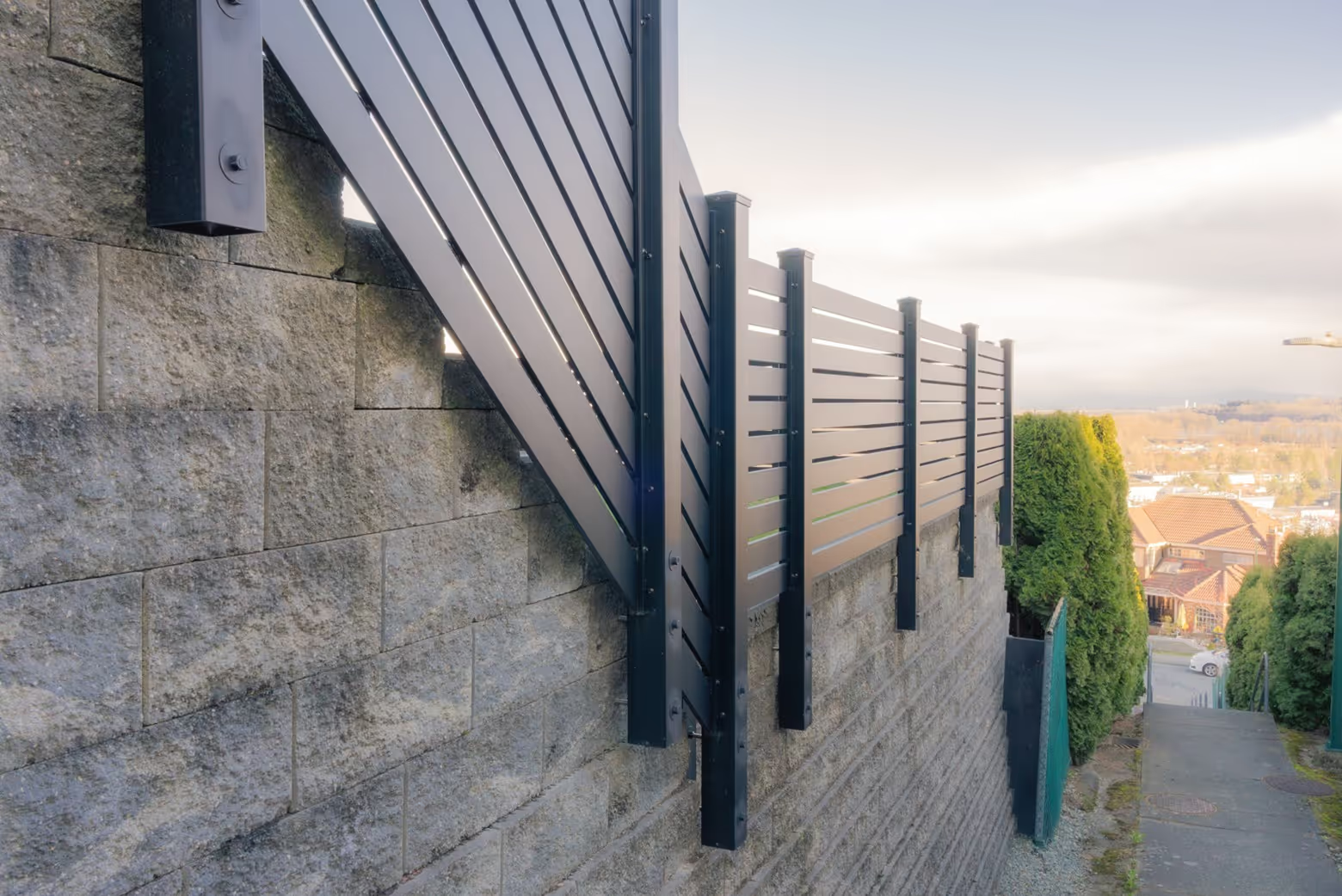
Wind load, fence height, post design, mounting method, and reinforcement strategy all play a larger role than the alloy itself. A fence made from 6063-T6 aluminum can still fail if those elements are not properly designed.
This becomes especially important on:
- Taller fence applications
- Rooftop or elevated installations
- High-wind or hurricane-prone regions
- Surface-mounted systems
In these scenarios, the question is not just what material is used, but how the system is engineered to handle the conditions it will face.
What Actually Makes a Fence System Structurally Sound
A high-performance aluminum fence is the result of multiple components working together.
Post design is one of the most critical factors. The post is where all loads transfer—wind pressure, gate movement, and long-term stress. Larger, hollow posts allow for internal reinforcement, which significantly increases structural capacity when required.
Reinforcement strategy is another key element. In higher-demand applications, steel is introduced strategically to strengthen specific parts of the system.
This can include:
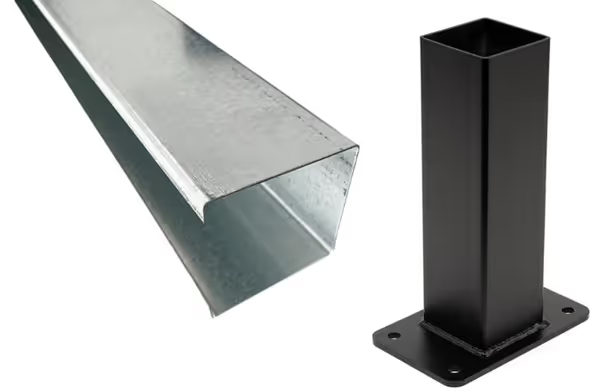
- Structural steel post base systems anchored into concrete, with aluminum posts sleeved over
- Internal steel channels used to reinforce posts in direct-bury applications
- Reinforced gate posts to handle movement, weight, and repeated use
These details are what allow a system to meet engineering requirements without changing its outward appearance.
Our steel post inserts (left) and concrete mount bases (right) strengthen the aluminum posts to give extra protection from heavy winds.
Mounting method also plays a major role. Whether posts are set into concrete, surface-mounted to a structure, or anchored in specialized conditions, the installation approach must align with both the design and the site.
When all of these elements are coordinated, the system can be engineered to meet building code requirements, wind load ratings, and long-term performance expectations.
The Real Difference: System vs. Material
Because 6063-T6 aluminum is widely used across the industry, it is not the differentiator on its own.
The real difference comes down to how the system is designed to perform as a whole.
Our approach is built around that principle. The material is only one part of the equation. The system is designed to accommodate a wide range of applications - different heights, mounting conditions, and environmental demands—by integrating reinforcement, post design, and installation methods into a cohesive solution.
This is what allows the system to be engineered for more demanding applications, rather than being limited to standard conditions.
Why This Matters
6063-T6 aluminum is a strong, reliable, and appropriate material for fencing.
But focusing on material alone can be misleading.
For projects where performance, safety, and longevity matter, the priority should be understanding how the entire fence system is designed to function under real conditions.
That’s what ultimately determines whether the fence performs the way it should - not just on day one, but over time.
If you’re planning a project and want to make sure the fence system is aligned with your site conditions, layout, and engineering requirements, contact us so our team can help review your plans and provide guidance early in the process.
Related Posts


Let’s Discuss Your Project
From early planning through installation, our team provides clear technical guidance and coordinated project support.